

Climate adaptation and Indigenous food safety in Canada: Current approaches and the role of environmental public health

Key Messages |
|
Introduction
Climate change is increasingly recognized as a significant driver of environmental public health risks in Canada, including risks that affect food safety. Climate variables such as temperature and precipitation influence pathogen survival, food contamination risks, and the environmental conditions that shape food production, processing, and distribution.1 As environmental conditions continue to shift, food safety must increasingly be considered within the broader context of climate adaptation and environmental public health (EPH) practice.2
Environmental Public Health Professionals (EPHPs), including Public Health Inspectors (PHIs), play a central role in protecting community health through food safety oversight, water quality monitoring, environmental hazard control, and emergency response. Their work is increasingly shaped by climate change, which is altering key environmental determinants of health. Across Canadian jurisdictions, adaptation planning identifies a range of climate-driven risks that are expected to increase demands on EPH programs and require greater anticipation of evolving hazards.2
Within this broader context, food systems represent a key area where climate-related risks are becoming more evident. Climate change can affect food safety through multiple pathways, including changes in pathogen growth conditions, shifts in animal and wildlife reservoirs, disruptions to production and distribution systems, and increased contamination risks following extreme weather events.1,3 Evidence from Canada further indicates that rising temperatures are associated with increased incidence of foodborne pathogens such as Salmonella, Campylobacter, and Escherichia coli, underscoring the sensitivity of foodborne disease patterns to a changing climate.4
Climate-related changes also have distinct implications for land-based and traditional food systems. Shifts in wildlife distribution, ice and water conditions, and broader ecosystem changes can affect harvesting practices, species availability, and access to country foods, with implications for both food safety and food security.5 Traditional foods remain central to diet, culture, and well-being in many Indigenous communities, and environmental change will influence how these foods are harvested, stored, and shared.5,6
Climate strategies and adaptation plans can support policy developed by governments and organizations to anticipate, prepare for, and respond to the impacts of climate change across sectors. These plans commonly address infrastructure, water, health, and ecosystems, with some recognition of food systems as climate sensitive. While many adaptation plans discuss food system resilience and food security, explicit attention to food safety, and Indigenous food safety as a distinct operational priority, is less consistent, highlighting an important area for further examination. The work presented below examines these issues through a scan of major Canadian federal, provincial, and territorial climate strategies.
This report is intended for EPHPs and related public health practitioners involved in food safety, environmental health, and climate adaptation. Its purpose is to translate analysis of climate strategies and plans into practical context for EPHPs by highlighting how these documents intersect with environmental public health responsibilities and identifying where additional guidance or policy development may be needed.
Methodology
The primary research questions addressed in this study are:
- What are the existing strategies and frameworks in Canada addressing the impact of climate change on Indigenous food safety?
- How can these approaches be strengthened to support the preservation of Indigenous food practices and improve resilience to climate-related risks?
A jurisdictional scan and policy analysis, rapid literature review, and examination of case examples were used to address these questions in the form of a narrative discussion from an environmental public health perspective.
Jurisdictional scan and policy analysis
Climate adaptation plans in Canada were analyzed through a comparative analysis of strengths, weaknesses, opportunities and threats (SWOT) to assess if and how food safety and Indigenous food safety considerations were addressed. The analysis sought to identify ways to better integrate environmental public health practice into adaptation planning. A jurisdictional scan of 20 (three federal/nationwide and 17 provincial/territorial) publicly available climate plans was conducted in mid-2025.
Climate change strategies or plans were identified through the jurisdictional scan and reviewed using a structured content analysis approach to determine the explicit presence or absence of key elements. The key elements were informed by a systems-based understanding of food safety recognizing that food safety and Indigenous food safety are interconnected with factors such as food security, food sovereignty, and broader food system and water-related considerations. The key elements reviewed were:
- Food safety (explicit consideration of food safety in the context of climate change)
- Food security/food sovereignty (as they relate to food safety)
- Indigenous food systems (inclusion of Indigenous food systems and traditional food practices)
- Water for food (as it pertains to food safety, such as water used in food production or protection of water sources that provide food, like fish-bearing rivers)
- Foodborne illness
When scanning for the “Indigenous food systems” element, the following lenses were applied:
- Security and sovereignty, recognition of Indigenous governance, knowledge systems, and self-determination
- Suggested creation of a mandate to ensure resources are allocated in the plan to support First Nations, Inuit, and Métis in managing climate-driven food safety risks.
A gap analysis was conducted to assess the extent to which existing Canadian climate change plans, strategies, and frameworks address the “food safety” element within diverse food systems. Seven plans were further examined using a SWOT analysis to assess feasibility of implementation, inclusivity of reviewed key elements, and opportunities for improvement. The plans were selected to span a range of practice (from those containing no key elements to those containing all key elements) and geographical diversity (two national level, one east coast (PEI), one west coast (BC), one territory (NWT), and two Prairies (SK)). Findings were synthesized to identify common themes, strengths, and gaps.
The seven plans analyzed were:
- Health of Canadians in a Changing Climate7
- Assembly of First Nations 2023 National Climate Strategy8
- BC Climate Preparedness and Adaptation Strategy9
- Saskatchewan Climate Change Strategy – Prairie Resilience10
- Saskatchewan Adaptation / Resilience Framework11
- Prince Edward Island Climate Adaptation Plan12
- Northwest Territories 2030 Climate Change Strategic Framework13
Based on this synthesis, key deficiencies in the current climate change planning landscape are highlighted with recommendations for improvements.
Literature review and case examples
A review of recent (last 10 years) peer-reviewed and grey literature was conducted with key terms (Appendix A) related to climate change and food system safety, Indigenous food sovereignty and food safety, and public health system adaptations in Canada and comparable settings. Sources were identified through targeted database and organizational searches (Google Scholar, PubMed, and Saskatchewan Health Authority Library), as well as citation chaining from other resources, with priority given to recent and policy-relevant publications. Findings were synthesized to incorporate emerging evidence and practice-informed insights.
Illustrative case examples were developed to provide applied context and demonstrate implementation of food safety and Indigenous foods safety in practice. These were identified through the literature review and professional networks and selected based on relevance to EPHP scope of work, climate change, Indigenous food systems and food safety, and environmental public health policy or program responses in Canada. Information was drawn from publicly available sources and supplemented by contextual knowledge. These cases are not intended as comprehensive evaluations, but as examples that highlight key themes, promising practices, and implementation considerations. A synthesis of the above was used to inform the development of practical, evidence-informed guidance and recommendations.
Results and discussion
Jurisdictional scan and analysis of climate plans
Jurisdictional scan
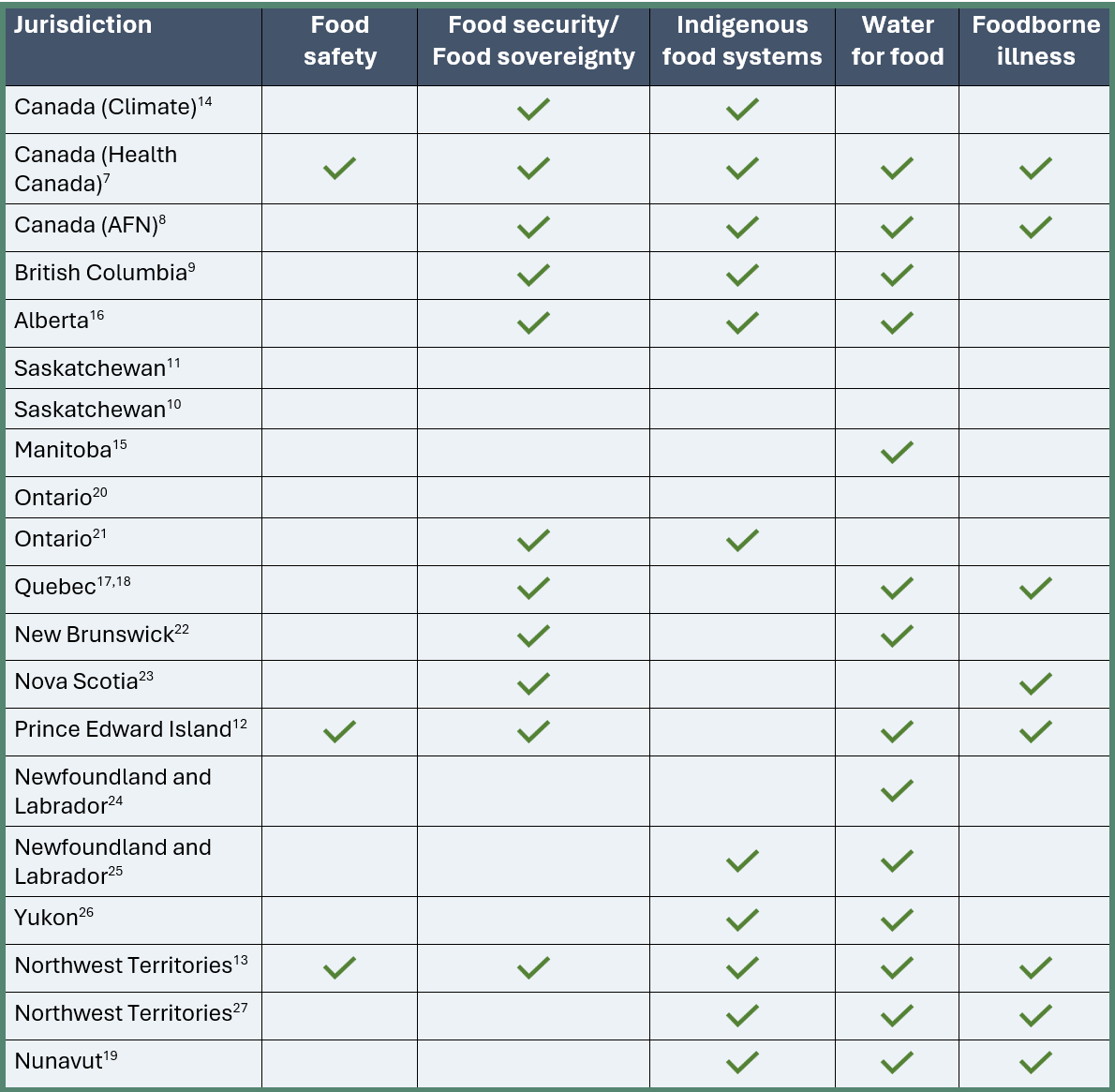
Twenty jurisdictional climate plans were reviewed (full list in Appendix B), with Table 1 providing a summary of the presence or absence of the key elements defined earlier. The water for food element is explicitly mentioned most frequently (14/20) and food safety is explicitly mentioned the least frequently (3/20). Of the remaining key elements, food security/sovereignty was mentioned in 11/20, Indigenous food systems in 11/20, and foodborne illness in 8/20.
Only Health of Canadians in a Changing Climate7 and Government of the Northwest Territories 2030 NWT Climate Change Strategic Framework13 mention all five key elements. The Pan-Canadian Framework on Clean Growth and Climate Change14 addresses only food security/food sovereignty and Indigenous food systems. The Assembly of First Nations (AFN) National Climate Strategy8 emphasizes food security, Indigenous food systems, water for food, and foodborne illness (4/5 elements) but does not explicitly mention food safety.
Across all provincial and territorial (PT) plans, coverage of the key elements varies widely, ranging from zero to five (see Table 1). Notably, the Northwest Territories shows the most comprehensive inclusion of the elements, covering all five, including explicitly mentioning food safety.13 At the other end of the range, Saskatchewan plans did not explicitly cover any of the five elements, and Manitoba only covered one (water for food).10,11,15 Several provinces explicitly cover three of the five elements as illustrated with British Columbia and Alberta both mentioning food security, Indigenous food systems, and water for food, but do not include food safety or foodborne illness; Quebec explicitly mentions food security, water for food, and foodborne illness; and Nunavut addresses Indigenous food systems, water for food, and foodborne illness.9,12,16-19
Overall, the data reveal a systemic gap, with climate and food adaptation planning prioritizing food security and resilience, but largely neglecting food safety, Indigenous food safety, and foodborne illness, underscoring the need for integrated, Indigenous-informed food safety frameworks in climate change plans.
Table 1. Summary of jurisdictional scan of climate change strategy plans
Climate change planning gap analysis
The scan of 20 existing Canadian climate change plans and frameworks (list in Appendix B) revealed that despite growing recognition of climate-related risks to food systems, current strategies largely do not address food safety explicitly. Across federal, provincial, and territorial plans, references to food safety are limited or absent, and few documents recognize the distinct challenges faced by Indigenous food systems in maintaining food safety, including for traditional and country foods. Most climate plans and strategies do not explicitly address food safety, nor do they identify resources or culturally relevant tools to support Indigenous sovereignty to manage climate-related food safety risks. This gap undermines efforts in environmental public health, food sovereignty, and climate change resilience, and highlights critical areas where strengthened policy action or strategic direction is needed.
SWOT analyses were completed on the seven plans identified in the Methodology and reviewed for patterns, gaps, and strategic implications. The detailed analyses of the plans can be found in Appendix C. Figure 1 presents an integrated summary of the SWOT analyses across the selected plans, focused specifically on food safety, Indigenous food safety, and Indigenous food systems. The most significant opportunity identified was the potential for alignment across jurisdictions. This could be achieved by using the evidence from federal health assessments, the governance vision of the AFN strategy, and the operational capacity of provincial/territorial (PT) plans to build Indigenous-led and climate-resilient food safety systems.
The Pan-Canadian Framework on Clean Growth and Climate Change was excluded from the SWOT analyses because it lacked mention of most of the key elements assessed, specifically food safety, Indigenous food safety (though Indigenous food systems are mentioned), water as it relates to food safety, and foodborne illness. There is an opportunity to fortify these concepts and actions in this document for national alignment, though it should be noted Saskatchewan has not adopted the Pan-Canadian Framework at this time, and many existing PT plans do not integrate the information from the Framework within their respective plans.
Figure 1. Summary of SWOT analyses
|
Key findings from the SWOT analysis of seven climate plans |
|
|
Strengths: What the plans do well collectively
|
Weaknesses: Systemic gaps across plans
|
|
Opportunities: Where alignment and progress are possible
|
Threats: Risks across all plans
|
In summary, the SWOT analysis of these selected plans found:
- Strengths: Some plans provide general climate adaptation guidance or refer to public health risk management, which could serve as a foundation for integrating food safety considerations.
- Weaknesses: Explicit inclusion of food safety, Indigenous food systems, and culturally relevant food safety strategies are largely absent. Implementation mechanisms are unclear, and allocation of resources to Indigenous Peoples is minimal.
- Opportunities: Planning approaches could be strengthened by incorporating Indigenous knowledge into jurisdictional plans, clarifying governance roles, and providing tools and resources for climate-resilient food safety management.
- Threats: Without targeted policy action, climate-driven risks to both conventional and Indigenous food systems may undermine food safety, public health, and community resilience.
Overall, the analysis demonstrates a significant gap in Canadian climate strategy planning. Food safety, particularly for Indigenous food systems, is not sufficiently addressed. Existing plans provide limited actionable guidance, lack mechanisms for Indigenous participation and authority, and do not consistently integrate culturally relevant tools or resources. Addressing these gaps is critical to safeguarding public health, supporting Indigenous self-determination, and enhancing resilience to climate-related food safety risks.
Environmental public health perspective and case examples
The literature consistently demonstrates that climate change is fundamentally reshaping Indigenous food systems across Canada, with direct implications for traditional Indigenous food safety, sovereignty, and environmental public health practice. EPHPs play a critical role in protecting public health through food safety, water quality oversight, environmental hazard control, climate impact mitigation measures, and emergency response. As climate change accelerates, many of the environmental conditions and environmental determinants of health that EPHPs manage are becoming increasingly unstable, complex, and difficult to regulate within existing frameworks. In Canada, climate adaptation plans increasingly recognize climate-driven risks to food, water, and Indigenous food systems. However, analyses of these plans show that operational guidance, particularly around food safety and traditional Indigenous food safety, remains nearly absent. This section aims to bridge the gap between climate adaptation planning and practical implications for EPHPs, highlighting the evolving role of frontline practitioners in supporting safe Indigenous food systems under changing environmental conditions.
Linking climate impacts on Indigenous food systems to food safety risks
Traditional Indigenous foods, also called country foods or land-based foods, include a wide range of culturally significant wildlife, plants, and locally processed foods central to the health, identity, and food sovereignty of First Nations, Inuit, and Métis communities. These foods can include wild game, birds, fish and shellfish, foraged plants and mushrooms, fruits and berries, roots, and seaweed. Traditional food processing methods are often applied and may include wind drying, smoking, and fermenting. Storage may be in personal or community freezers or ice cellars. Many foods and preparation practices carry deep social, cultural, and spiritual meaning. The foods are often nutritionally superior to many market alternatives (particularly in remote areas) and are essential for community health and well-being.28,29
Climate-driven environmental change is disrupting the ecological foundations of traditional Indigenous food systems and affecting nearly all environmental determinants of health, including water quality, wildlife health, and pathogen dynamics. In Inuit communities such as Igloolik and Ulukhaktok, warming temperatures, sea ice loss, and shifting seasonal patterns are reducing safe access to harvesting areas and altering the distribution and health of key species.30,31 Permafrost thaw and unpredictable freeze–thaw cycles are compromising traditional food storage systems such as ice cellars, increasing the risk of spoilage and contamination.31 These changes introduce new and uncertain food safety risks, including increased exposure to contaminants, zoonotic diseases, and spoilage due to unpredictable storage conditions. Similarly, research on beluga whale harvesting in Nunavik highlights how changing marine ecosystems are affecting both the safety and cultural significance of country foods.32 Warming temperatures and changing hydrological systems can increase risks such as exposure to harmful algal blooms, water contamination, and foodborne illness.33
Many communities also hold concerns about harvested food safety due to increases in zoonotic illnesses.34,35 Food safety in Indigenous contexts cannot be separated from environmental conditions, requiring EPHPs to adopt a broader ecological lens in their work and assess emerging hazards that introduce new food safety risks associated with climate change, environmental impacts, and ecosystem disruption.
The absence of explicit consideration of food safety in climate adaptation plans risks overlooking emerging hazards and allocating resources to address them. It also provides an opportunity for EHPHs to advocate for inclusion of these key elements and to advise on strategies that integrate a broader range of knowledge. Indigenous knowledge systems play a critical role in identifying and responding to environmental change. Indigenous food harvesting practices function as forms of social–ecological monitoring, providing detailed, place-based observations of changes in species behaviour, ecosystem health, and environmental conditions.36,37 Studies from coastal British Columbia and the Northwest Territories demonstrate how Indigenous knowledge has documented declines in key species, shifts in migration patterns, and changes in plant availability long before these trends are captured by current monitoring systems.38,39
The integration of Indigenous knowledge with Western science is widely identified as essential for effective climate adaptation and improved food safety. Mixed-methods research, such as the beluga whale study in Nunavik, shows how combining Indigenous observations with laboratory analysis improves understanding of contaminant risks and ecosystem change.32 Similarly, fisheries management and water governance case studies demonstrate that incorporating Indigenous knowledge into decision-making leads to more adaptive and context-specific management strategies.40,41 For EPHPs, this underscores the importance of engaging with Indigenous knowledge holders and communities as equal partners in monitoring, risk assessment, and communication on climate food safety impacts.
Successful knowledge integration requires changes to how Indigenous knowledge is integrated into the decision-making structures and processes that guide and shape climate adaptation planning. Current systems often treat Indigenous knowledge as supplementary rather than foundational, limiting its influence on decision-making.42 Climate change disproportionately affects Indigenous populations, not only through environmental exposure but also through systemic inequities rooted in colonial policies and socio-economic marginalization.43,44 These inequities are evident in both remote and urban contexts, where food insecurity and safety risks are shaped by limited access to traditional foods, reliance on expensive and less nutritious market foods, and inadequate supporting infrastructure.45,46
In contrast, community-led initiatives, such as Indigenous-led fisheries, wild rice revitalization projects, and local food system development in northern communities, demonstrate the effectiveness of Indigenous governance models in enhancing food system and safety resilience.47-49 Strengthening food safety and resilience requires emphasizing food sovereignty, local control, and ecological stewardship, aligning closely with holistic understandings of health and environment.
EPHPs are uniquely positioned to support these approaches and often act as partners to Indigenous communities by providing microbiological testing, assisting in wildlife contamination assessments, and collaborating with local knowledge holders to ensure safety without undermining cultural protocols or food sovereignty.50 Rather than relying solely on standardized regulatory frameworks, EPHPs increasingly engage in relationship-based, adaptive, and culturally informed work. Unlike their regulatory role in market food systems, environmental public health work that involves traditional Indigenous foods is collaborative rather than prescriptive, aligning with principles of cultural safety and self-determination. This includes supporting community food spaces, assessing water quality used during food preparation, providing technical food safety advice on food preparation methods, translating scientific findings into locally relevant guidance, responding to community concerns about harvested food, and offering environmental public health support during outbreaks or contamination events.
There is a need to explicitly incorporate traditional Indigenous food safety into climate adaptation planning, including clear roles for EPHPs and resources to support implementation. Climate adaptation strategies can be strengthened by prioritizing community-based monitoring and Indigenous-led governance of local food systems, recognizing the value of local knowledge and leadership. A greater emphasis may be needed on preventive and adaptive public health approaches, enabling EPHPs to anticipate and respond to emerging risks rather than reacting to crises. Strategic cross-sector collaboration between health, environment, and Indigenous governance systems is essential to address the interconnected nature of climate change and food systems. Realizing this potential requires resources and support for community-based monitoring and a shift toward collaborative, culturally safe approaches that recognize Indigenous knowledge as foundational rather than supplementary.
Case examples
Provincial and federal adaptation plans, including the Pan-Canadian Framework on Clean Growth and Climate Change and the National Climate Strategy,14 recognize vulnerabilities in water systems, fisheries, and northern infrastructure. However, they consistently lack explicit attention to microbial risks, traditional food safety, and foodborne illness within Indigenous food systems.7,9,14 EPHPs thus operate at the interface of climate impacts, food safety, and public health, filling gaps not yet addressed in policy while supporting culturally grounded food sovereignty and resilience in Indigenous communities.
The five case examples presented below highlight the roles EPHPs can play in these spaces and the impacts of the gaps in climate adaptation plans. Across Canada, climate change is altering water and temperature conditions in ways that compromise the safety of traditional Indigenous foods, including marine species in British Columbia, freshwater fish in Saskatchewan, Ontario and Quebec, ice-cellar-stored meats in northern Inuit communities, and coastal shellfish in the Maritimes.
Common challenges include increased microbial contamination from warming waters and thaw driven by changing temperature patterns, and increased runoff, drought, and flooding, driven by changing melt and precipitation patterns. These changes elevate the risks of spoilage and foodborne illness. EPHPs have a critical role in monitoring water and food quality, implementing culturally appropriate handling and processing guidance, advising on safe consumption, and collaborating with Indigenous harvesters to preserve both food safety and food sovereignty.5,51,52
|
Case #1 – British Columbia: Herring eggs (spawn-on-kelp) and marine food safety |
|
Image

Rising sea temperatures and altered nearshore runoff patterns increase risks of microbial contamination in herring eggs, a culturally significant food for coastal First Nations. Environmental change can also disrupt marine species abundance and harvest timing.51
|
|
Case #2 – Saskatchewan: Drought lowering lake levels and freshwater fish safety |
|
Image
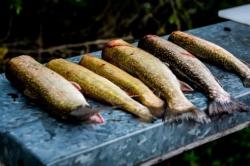
Prolonged drought concentrates bacteria and cyanotoxins in lakes, increasing chemical and pathogen exposure risk in fish traditionally harvested and processed, especially during cleaning and preparation.53,54
|
|
Case #3 – Far north (Inuit Nunangat): Permafrost thaw and traditional food storage |
|
Image
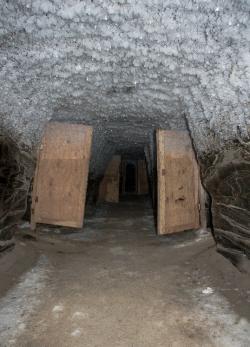
Thawing permafrost increases water infiltration into ice cellars, which increases microbial growth and spoilage risks for stored caribou, seal, and fish. Broad climatic instability also affects travel and timing of harvests.31,32
|
|
Case #4 – Maritimes and other coastal communities: Shellfish contamination and traditional harvests |
|
Image

Warming ocean temperatures, increased precipitation, and coastal runoff contribute to elevated microbial loads and biotoxin risks for shellfish — a key traditional food source for Mi’kmaq and other coastal Nations.55
|
|
Case #5 – Central Canada (Ontario/Quebec): Changing water patterns, wildlife movement, and food safety |
|
Image

Changing precipitation patterns, altered hydrology, and increased frequency of flooding and drought in central Canada are reshaping terrestrial and freshwater ecosystems. These changes influence the distribution, health, and behavior of wild game species such as moose and other land-based food sources relied upon by Indigenous communities. Shifts in water availability and quality affect forage conditions, habitat stability, and migration routes, contributing to observed declines and changes in harvested species.31,36
|
Future directions
The jurisdictional scan of Canadian climate plans, SWOT analysis, literature review, and case examples provide important insights into current gaps in addressing the climate impacts on food safety and Indigenous food safety. This section includes high-level policy considerations that can be used to strengthen climate adaptation policy and planning activities, followed by detailed recommendations for environmental public health to help address identified gaps and support future improvements.
Policy and plan considerations
The review of existing climate plans identified gaps in addressing food safety. There are several opportunities to better integrate food safety, particularly within Indigenous food systems, into climate adaptation frameworks. The following policy considerations emphasize opportunities to strengthen governance approaches, monitoring of key food safety indicators, and improving practice to address emerging climate-related risks while supporting Indigenous knowledge systems and community-led approaches.
- Recognize conventional and Indigenous food safety systems in climate planning:
Governments can formally recognize conventional and Indigenous food safety knowledge, practices, and indicators in climate adaptation plans and strategies as valid and essential components of food safety governance. This includes acknowledging community-defined protocols for harvesting, preparation, storage, and sharing of traditional foods.
- Co-develop climate-adapted food safety monitoring:
Establish and provide resources for food safety monitoring programs that integrate traditional knowledge with Western scientific methods. Monitoring could include wildlife health, water quality, environmental contaminants, and ecological changes that may affect food safety for specific communities. Community-led monitoring in Indigenous communities can support identification of priority risks. For jurisdictions with existing monitoring systems, review suitability against current and predicted needs, and improve access and ability to optimize use of available data. Plans should include consideration for integrating multiple data sources including those from local initiatives, citizen science, and other disparate sources.
- Embed food safety into climate adaptation planning:
Climate adaptation plans and strategies at all levels should explicitly address food safety, including traditional Indigenous foods. Plans should include Indigenous food system indicators, cross-sector coordination (health, environment, emergency management), environmental public health, and, if applicable, sustainable funding considerations.
- Support climate-resilient food infrastructure:
Support evaluation of infrastructure needs to support food safety in Indigenous food systems, such as cold storage, safe water access, harvesting access, processing facilities, and emergency food preparedness based on community priorities. Develop policy and programs to support the identified needs and allocate resources to enable improvements.
Incorporating the considerations above into new climate adaptation policies, strategies, and plan updates can ensure that food safety risks due to climate change are more consistently identified and addressed through appropriate resourcing. Distinguishing food safety considerations within Indigenous food systems can support the identification of community-specific or food-specific hazards that may not be apparent in broader food system approaches. This is needed to help inform the prioritization of risk-reducing measures. These efforts can be supported through Indigenous-led or co-developed food safety governance or advisory mechanisms. Support through funding for community-based, community-led, climate-adapted food safety monitoring and knowledge transmission approaches would further strengthen these efforts and increase the beneficial impact on food safety. Additionally, food safety regulatory frameworks may benefit from further review to ensure alignment with Indigenous food sovereignty principles and changing climate conditions.
Environmental public health (EPH) recommendations
The following recommendations emphasize opportunities to strengthen climate considerations in the EPH profession, programs, and practices to ensure that emerging climate-related risks to food safety are addressed, particularly those that disproportionately affect Indigenous food systems.
- Integrate a climate lens into all EPH practice:
Embedding climate change considerations into routine inspections, risk assessments, and food safety evaluations, can allow for anticipation of emerging hazards such as temperature-related spoilage, shifting pathogens, and extreme weather impacts on infrastructure. - Strengthen community-based monitoring systems for climate-sensitive food safety risks:
Expanding monitoring systems can ensure that emerging food safety risks linked to climate change such as zoonotic diseases, contaminants in wildlife, and harmful algal blooms can be identified. Supporting and co-developing local monitoring programs with Indigenous and local communities can help track environmental changes, wildlife health, water quality, and food safety indicators, using both Western scientific and Indigenous knowledge approaches. - Advance braided knowledge approaches in practice:
Treating Indigenous knowledge systems as equal to Western science can ensure they are incorporated into surveillance, risk assessment, and decision-making processes, particularly for traditional food safety systems. - Enhance cultural safety and competency among EPHPs:
Providing training and professional development can ensure EPHPs can work with Indigenous communities in a culturally safe manner, recognizing the cultural, spiritual, and social importance of traditional foods. - Shift from regulatory to collaborative practice models:
Moving beyond compliance-focused approaches toward relationship-based, advisory roles can support Indigenous food sovereignty and self-determination in food safety decision-making. - Develop guidance for traditional food safety under climate change:
Creating practical, context-specific tools and protocols can improve assessment and management of risks associated with traditional food harvesting, preparation, and storage in changing environmental conditions. - Support adaptive infrastructure and food storage solutions:
Working with communities can help to identify safe alternatives to traditional storage methods and ensure that water used for food preparation and processing remains safe under variable climate conditions. - Strengthen intersectoral collaboration and policy integration:
Setting out clear roles for EPHPs in climate adaptation frameworks and plans can ensure collaboration across health, environment, wildlife, and Indigenous governance responsibilities to address interconnected risks. - Promote Indigenous-led food sovereignty and resilience initiatives:
Supporting and providing resources for community-driven programs such as local food production, land-based education, and Indigenous-led fisheries and harvesting initiatives can enhance food safety and climate resilience.
Summary
This paper explored the inclusion of food safety, particularly Indigenous food safety considerations, in climate adaptation planning across Canada and examined the role of EPHPs in supporting Indigenous food safety systems in a changing climate.
Rapid environmental changes, such as shifts in water patterns, permafrost thaw, wildlife movement, and emerging pathogens, are impacting the safety, availability, and reliability of traditional foods. Climate change can compromise food safety through impacts on species, harvest, storage, and transport.
Despite these growing risks, the jurisdictional scan revealed that food safety is rarely addressed in climate adaptation planning, and the SWOT analysis provided further considerations of areas for improvement. Consideration of Indigenous food safety and sovereignty and the unique challenges faced by traditional food systems is particularly lacking. This lack of integration may exacerbate existing inequities in food systems, and the lack of resources and culturally relevant tools to support Indigenous-led approaches also compromises the capacity to manage climate-related food safety risks.
EPHPs are well positioned to support holistic, systems-based, culturally informed, and culturally led approaches to climate adaptation and food safety. Indigenous knowledge offers essential insights that complement Western science, yet policies and adaptation plans rarely provide guidance for environmental public health programs, operationalized by EPHPs, on integrating this knowledge into practice to support culturally safe food safety practices. Community-based monitoring and risk assessment for climate-related food safety risks is also largely absent.
EPHPs, federal, provincial, and territorial agencies involved in climate adaptation policy, strategy, and plan developments, communities, and health authorities will benefit from applying a climate impact lens across public health work and implementing adaptation and mitigation measures that are essential for public health protection. Through interdisciplinary collaboration, public health can support integration of Indigenous knowledge, strengthen operational guidance, and support community-led initiatives that promote safe, resilient, and culturally grounded food systems for future generations.
About the author
Kelsie Dale is the Food Safety Environmental Health Consultant for the Ministry of Health, Saskatchewan. She is the chair of the Pan-Canadian Traditional Indigenous Foods Community of Practice, a board member of the Canadian Association of Food Law and Policy and is a regular guest lecturer at the University of Saskatchewan providing environmental public health and food safety education in the Master of Public Health program. Kelsie is also actively involved in the Canadian Institute of Public Health inspectors (CIPHI) where she currently holds the National President position.
Acknowledgements
Thank you to Dr. Juliette O’Keeffe, Tina Chen, and Dr. Sarah Henderson, NCCEH, for your guidance and support in developing this document, and to Casey Neathway, First Nations Health Authority, and Priya Goundar, Saskatchewan Ministry of Health, for your time and thoughtful review.
Appendix
Download the PDF for appendices A to C.
References
- Smith BA, Fazil A. How will climate change impact microbial foodborne disease in Canada? Can Commun Dis Rep. 2019;45(4):108-13. Available from: http://doi.org/10.14745/ccdr.v45i04a05.
- Berry P, Schnitter R. Health of Canadians in a changing climate: advancing our knowledge for action. Ottawa, ON: Government of Canada; 2022. Available from: https://climateriskinstitute.ca/wp-content/uploads/2022/03/CCHA-Presentation-to-NRCan-Adaptation-Platform.pdf.
- Zeuli K, Nijhuis A, Macfarlane R, Ridsdale T. The impact of climate change on the food system in Toronto. Int J Environ Res Public Health. 2018;15(11):2344. Available from: http://doi.org/10.3390/ijerph15112344.
- Fleury M, Charron D, Holt J, Allen O, Maarouf A. A time series analysis of the relationship of ambient temperature and common bacterial enteric infections in two Canadian provinces. Int J Biometeorol. 2006;50:385-91. Available from: http://doi.org/10.1007/s00484-006-0028-9.
- Snook J, Harper S, Perrin A, Balasubramaniam A, Alisauskas R, Basterfield M, et al. Understanding the effects of climate change on food security in northern Indigenous communities. Ottawa, ON: Polar Knowledge Canada; 2022. Available from: https://www.canada.ca/en/polar-knowledge/publications/aqhaliat/volume-4/climate-change.html.
- Robin T, Burnett K, Parker B, Skinner K. Safe food, dangerous lands? Traditional foods and Indigenous Peoples in Canada. Front Commun. 2021;6:749944. Available from: http://doi.org/10.3389/fcomm.2021.749944.
- Health Canada. Health of Canadians in a changing climate: advancing our knowledge for action. Ottawa, ON: Government of Canada; 2022. Report No.: 978-0-660-41525-3. Available from: https://changingclimate.ca/site/assets/uploads/sites/5/2022/02/CCHA-REPORT-EN.pdf.
- Assembly of First Nations. National climate strategy. Ottawa, ON: AFN; 2023. Available from: https://afn.bynder.com/m/77556e1d9da51db7/original/2023-Climate-Strategy-Report.pdf.
- Government of British Columbia. Climate preparedness and adaptation strategy: actions for 2022-2025. Victoria, BC: Government of BC; 2022. Available from: https://www2.gov.bc.ca/assets/gov/environment/climate-change/adaptation/cpas.pdf.
- Government of Saskatchewan. Prairie resilience: a made-in-Saskatchewan climate change strategy. Regina, SK: Government of SK; 2017. Available from: https://www.saskatchewan.ca/business/environmental-protection-and-sustainability/a-made-in-saskatchewan-climate-change-strategy/saskatchewans-climate-change-strategy.
- Government of Saskatchewan. Saskatchewan climate resilience measurement framework. Regina, SK: Government of SK; 2018. Available from: https://publications.saskatchewan.ca/api/v1/products/92479/formats/109479/download.
- Province of Prince Edward Island. Building resilience: climate adaptation plan. Chartlottetown, PEI: Government of PEI; 2022 Oct. Available from: https://www.princeedwardisland.ca/sites/default/files/publications/building_resilience_climate_adaptation_plan_oct_2022.pdf.
- Government of the Northwest Territories. 2030 NWT climate change strategic framework. Yellowknife, NWT: Government of NWT; 2018. Available from: https://www.gov.nt.ca/ecc/sites/ecc/files/resources/128-climate_change_strategic_framework_web.pdf.
- Environment and Climate Change Canada. Pan-Canadian framework on clean growth and climate change. Gatineau, QC: Government of Canada; 2016. Available from: https://publications.gc.ca/site/eng/9.828774/publication.html.
- Government of Manitoba. A made-in-Manitoba climate and green plan. Winnipeg, MB: Government of MB; 2017. Available from: https://www.gov.mb.ca/asset_library/en/climatechange/climategreenplandiscussionpaper.pdf.
- Government of Alberta. Emissions reduction and energy development plan. Edmonton, AB: Government of Alberta; 2023. Report No.: 978-1-4601-5713-8. Available from: https://www.alberta.ca/emissions-reduction-and-energy-development-plan.
- Gouvernement du Québec. 2030 plan for a green economy. Quebec, QC: Gouvernement du QC; 2023. Available from: https://www.quebec.ca/en/government/policies-orientations/plan-green-economy.
- Gouvernement du Québec. Plan d’action 2013-2020 sur les changements climatiques. Quebec, QC: Gouvernement du QC; 2012. Report No.: 978-2-550-64839-0. Available from: https://www.environnement.gouv.qc.ca/changements/plan_action/pacc2020.pdf.
- Government of Nunavut. Climate change impacts and adaptation in Nunavut. Iqaluit, NU: Government of NU; 2010. Available from: https://climatechangenunavut.ca/sites/default/files/3154-315_climate_english_reduced_size_1_0.pdf.
- Government of Ontario. A made-in-Ontario environment plan. Toronto, ON: Government of ON; 2020. Available from: https://www.ontario.ca/page/made-in-ontario-environment-plan.
- Government of Ontario. Ontario’s climate change strategy. Toronto, ON: Government of ON; 2014. Available from: https://docs.ontario.ca/documents/4928/climate-change-strategy-en.pdf.
- Province of New Brunswick. Our pathway towards decarbonization and climate resilience: New Brunswick’s climate change action plan 2022–2027. Fredericton, NB: Government of NB; 2022. Available from: https://www2.gnb.ca/content/dam/gnb/Corporate/Promo/climate/climate-change-action-plan.pdf.
- Province of Nova Scotia. Our climate, our future: Nova Scotia’s climate change plan for clean growth. Halifax, NS: Government of NS; 2022 Dec. Available from: https://climatechange.novascotia.ca/sites/default/files/uploads/ns-climate-change-plan.pdf.
- Government of Newfoundland and Labrador. Climate change mitigation action plan 2025–2030. St. John’s, NL: Government of NL; 2025. Available from: https://www.gov.nl.ca/eccc/files/25207-Climate-Change-Mitigation-Plan-June-27-.pdf.
- Government of Newfoundland and Labrador. Climate change adaptation action plan 2025–2030. St. John’s, NL: Government of NL; 2025 Jun. Available from: https://www.gov.nl.ca/eccc/files/25208-Climate-Change-Adaptation-Plan-June-27.pdf.
- Government of Yukon. Our clean future: a Yukon strategy for climate change, energy, and a green economy. Whitehorse, YK: Government of Yukon; 2020. Available from: https://our-clean-future.yukon.ca/sites/default/files/2023-10/env-our-clean-future.pdf.
- Government of the Northwest Territories. 2030 NWT climate change strategic framework 2019-2023 action plan. Yellowknife, NWT: Government of NWT; 2019. Available from: https://www.gov.nt.ca/ecc/sites/ecc/files/resources/128-climate_change_ap_proof.pdf.
- Kuhnlein HV, Erasmus B, Spigelski D. Indigenous peoples' food systems: the many dimensions of culture, diversity and environment for nutrition and health. Rome, Italy: Food and Agriculture Organization of the United Nations; 2009. Available from: https://www.fao.org/4/i0370e/i0370e00.htm.
- Rosol R, Huet C, Wood M, Lennie C, Osborne G, Egeland GM. Prevalence of affirmative responses to questions of food insecurity: International Polar Year Inuit Health Survey, 2007–2008. Int J Circumpolar Health. 2011;70(5):488-97. Available from: http://doi.org/10.3402/ijch.v70i5.17862.
- Ford JD, Smit B, Wandel J, Allurut M. Vulnerability of Inuit food systems to food insecurity as a consequence of climate change: a case study from Igloolik, Nunavut. Reg Environ Change. 2009;9(2):83-100. Available from: http://doi.org/10.1007/s10113-008-0060-x.
- Naylor AW, Ford JD, Pearce T, Fawcett D, Clark D, van Alstine J. Monitoring the dynamic vulnerability of an Arctic subsistence food system to climate change: the case of Ulukhaktok, NT. PLoS ONE. 2021;16(9):e0258048. Available from: http://doi.org/10.1371/journal.pone.0258048.
- Little M, Winters N, Achouba A, Magesky A, Ayotte P, Palliser T, et al. Weaving together Inuit knowledge and western science: a mixed-methods case study of qilalugaq (beluga whale) in Quaqtaq, Nunavik. Arct Sci. 2023;9(3):616-34. Available from: http://doi.org/10.1139/as-2022-0039.
- Singh BK, Delgado-Baquerizo M, Egidi E, Guirado E, Leach JE, Liu H, et al. Climate change impacts on plant pathogens, food security and paths forward. Nat Rev Microbiol. 2023;21(10):640-56. Available from: http://doi.org/10.1038/s41579-023-00900-7.
- Parlee B, Ahkimnachie K, Cunningham H, Jordan M, Goddard E. “It’s important to know about this” -risk communication and the impacts of chronic wasting disease on Indigenous food systems in Western Canada. Environ Sci Pol. 2021;123:190-201. Available from: http://doi.org/10.1016/j.envsci.2021.05.012.
- Indigenous Circle of Experts. We rise together. Achieving Pathway to Canada Target 1 through the creation of Indigenous Protected and Conserved Areas in the spirit and practice of reconciliation. Ottawa, ON: Parks Canada; 2018. Available from: https://publications.gc.ca/collections/collection_2018/pc/R62-548-2018-eng.pdf.
- Priadka P, Moses B, Kozmik C, Kell S, Popp JN. Impacts of harvested species declines on Indigenous Peoples’ food sovereignty, well-being and ways of life: a case study of Anishinaabe perspectives and moose. Ecol Soc. 2022;27(1). Available from: http://doi.org/10.5751/ES-12995-270130.
- Thompson KL, Hill C, Ojeda J, Ban NC, Picard CR. Indigenous food harvesting as social–ecological monitoring: a case study with the Gitga'at First Nation. People Nat. 2020;2(4):1085-99. Available from: http://doi.org/10.1002/pan3.10135.
- Young L, Shukla S, Wilson T. Indigenous values and perspectives for strengthening food security and sovereignty: learning from a community-based case study of Misko-ziibiing (Bloodvein River First Nation), Manitoba, Canada. Front Sustain Food Syst. 2024;8:1321231. Available from: http://doi.org/10.3389/fsufs.2024.1321231.
- Turner NJ, Turner KL. Where our women used to get the food: cumulative effects and loss of ethnobotanical knowledg eand practice; case study from coastal British Columbia. Botany. 2008;86(2):103-15. Available from: http://doi.org/10.1139/B07-020.
- Awume O, Patrick R, Baijius W. Indigenous perspectives on water security in Saskatchewan, Canada. Water. 2020;12(3):810. Available from: http://doi.org/10.3390/w12030810.
- Ban NC, Eckert L, McGreer M, Frid A. Indigenous knowledge as data for modern fishery management: a case study of Dungeness crab in Pacific Canada. Ecosyst HealthSustain. 2017;3(8):1379887. Available from: http://doi.org/10.1080/20964129.2017.1379887.
- Ojeda-Zavala N. Erring on the dide of Indigenous peoples: traditional knowledge, scientific uncertainty, and Indigenous participation in decision-making. Nord J Int Law. 2022;91(3):453-508. Available from: http://doi.org/10.1163/15718107-91030008.
- National Collaborating Centre for Indigenous Health. Climate change and Indigenous People’s health in Canada. Prince George, BC: NCCIH; 2022. Available from: https://www.nccih.ca/Publications/Lists/Publications/Attachments/10367/Climate_Change_and_Indigenous_Peoples_Health_EN_Web_2022-03-22.pdf.
- Rall K, LaFortune R. My fear is losing everything: the climate crisis and First Nations’ right to food in Canada. New York, NY: Human Rights Watch; 2020. Report No.: 9781623138738. Available from: https://www.hrw.org/report/2020/10/21/my-fear-losing-everything/climate-crisis-and-first-nations-right-food-canada.
- Shafiee M, Lane G, Szafron M, Hillier K, Pahwa P, Vatanparast H. Exploring the implications of COVID-19 on food security and coping strategies among urban Indigenous peoples in Saskatchewan, Canada. Nutrients. 2023;15(19):4278. Available from: http://doi.org/10.3390/nu15194278.
- Sutter G, Ogie E, Fletcher A, Antonini N, Mantta KC, Cazakoff I. Food security, food sovereignty, and the neoliberal food system in Saskatchewan. Can Food Stud. 2025;12(2):67-81. Available from: http://doi.org/10.15353/cfs-rcea.v12i2.712.
- Spring C, Temmer J, Skinner K, Simba M, Chicot L, Spring A. Proposing dimensions of an agroecological fishery: the case of a small-ccale Indigenous-led fishery within Northwest Territories, Canada. Conservation. 2025;5(1):13. Available from: http://doi.org/10.3390/conservation5010013.
- Desmarais S. Returning the rice to the wild: revitalizing wild rice in the Great Lakes region. LLJ. 2019;3(1):36. Available from: https://llj.lakeheadu.ca/article/view/1611.
- Orttung RW, Powell J, Fox J, Franco C. Strengthening food security near the arctic circle: case study of Fairbanks North Star Borough, Alaska. Sustainability. 2019;11(10):2722. Available from: http://doi.org/10.3390/su11102722.
- Andrade-Rivas F, Kassem H, Mok K, Cassidy-Matthews C, Little M, Lemire M, et al. Community engagement in Indigenous food systems contamination studies. PLoS ONE. 2025;20(11):e0336439. Available from: http://doi.org/10.1371/journal.pone.0336439.
- Abernethy P, Waters S, Kulchyski T, Rolston D, Swinkels H, Luttrell G, et al. Climate change and Vibrio cholerae in herring eggs. Int J Indig Health. 2021;16(2). Available from: http://doi.org/10.32799/ijih.v16i2.33236.
- Domingo A, Charles KA, Jacobs M, Brooker D, Hanning RM. Indigenous community perspectives of food security and sustainable food systems. Int J Environ Res Public Health. 2021;18(9):4404. Available from: http://doi.org/10.3390/ijerph18094404.
- Bondad-Reantaso MG, Garrido-Gamarro E, McGladdery SE. Climate change-driven hazards on food safety and aquatic animal health. In: Barange M, Bahri T, Beveridge MCM, Cochrane KL, Funge-Smith S, Poulain F, editors. Impacts of climate change on fisheries and aquaculture. Rome, Italy: Food and Agriculture Organization of the United Nations; 2018. p. 517-33. Available from: https://openknowledge.fao.org/handle/20.500.14283/i9705en.
- Pick FR. Blooming algae: a Canadian perspective on the rise of toxic cyanobacteria. Can J Fish Aquat Sci. 2016;73(7):1149-58. Available from: http://doi.org/10.1139/cjfas-2015-0470.
- Lee MJ, Henderson SB, Clermont H, Turna NS, McIntyre L. Health risks of marine biotoxins associated with high seafood consumption. Heliyon. 2024;10(5):e27146. Available from: https://doi.org/10.1016/j.heliyon.2024.e27146.
Citation
Related Resources


Using advanced surveillance tools to understand norovirus evolution, public health impacts, and to enhance outbreak response
 view
view