

Extreme heat risk, preparedness, and response

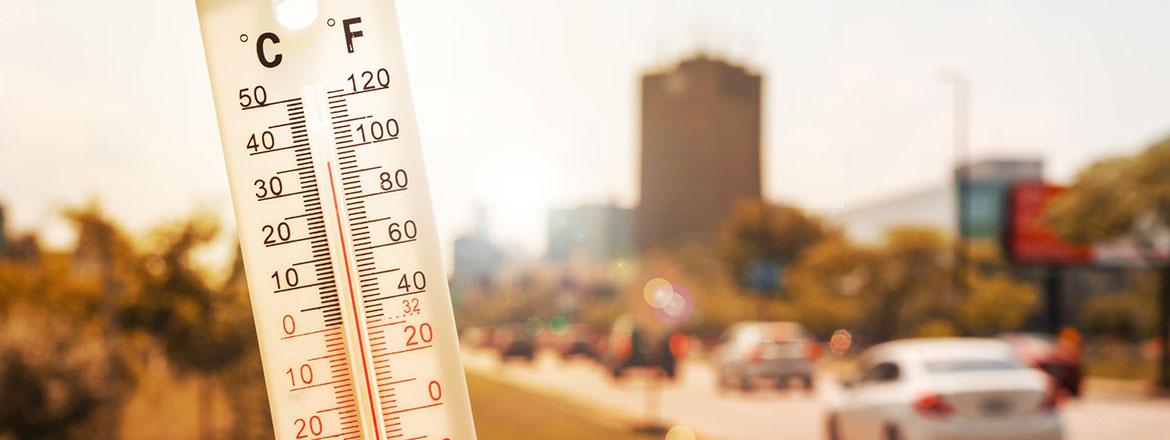
Human caused climate change is increasing the frequency, duration, and intensity of the extreme heat events (also known as heat waves) in Canada. Daytime and overnight average temperatures are projected to increase almost everywhere across the country, and extreme heat events will become longer, hotter and more common. Regions that have historically mild climates are not prepared for extreme heat may be most susceptible to the impacts. For example, the Canadian arctic experienced its warmest summer on record in 2025, and many northern communities face increasing heat-related risks because their housing and infrastructure were largely designed for cold climates.
The health impacts of extreme heat range from mild to life-threatening, depending on individual susceptibility, duration, and exposure. Hyperthermia is a condition where the body’s core temperature rises above a normal value of approximately 37°C. When core temperatures increase to 38-39°C, it can cause heat exhaustion and heat illness with symptoms such as headache, nausea, dizziness, heat rash, swelling, cramps or severe fatigue. Heat stroke is a severe and life-threatening form of hyperthermia that can occur when core temperatures exceed 40°C, with symptoms such as confusion, seizures, or loss of consciousness.
The people most susceptible to extreme heat are those with chronic mental and physical health conditions, seniors, those who live alone or are socially isolated, and those living in poverty. A study on deaths during the 2021 heat dome in BC reported the most heat-specific risk among people receiving income assistance and people with schizophrenia, ischemic stroke, or chronic obstructive pulmonary disease (COPD). The association between extreme heat and chronic conditions is often the result of complex and interacting factors. For example, some specific medications (e.g., antipsychotics) e) are known to interfere with thermoregulation. Furthermore, severe mental illness is associated with stigmatization and social isolation, which are independent risk factors for extreme heat-related illness and mortality. Mapping where people live who are most susceptible, and effective communication with the public before and during extreme heat events is essential to convey these health risks and encourage uptake of protective actions.
This subject guide provides a list of curated resources about preparing for and responding to extreme heat events. The first section lists resources directed at individuals, households and communities, while the second section lists resources directed at public health practice and health protection professionals. The third section has resources on heat response planning and governance for resilient communities, and the fourth section has resources on risk communication for extreme heat events.
For more information on preventing indoor overheating and building community heat resilience, please see our companion subject guide here.
Practical strategies to protect individuals, households, and communities from extreme heat
- NCCEH Spotlight: Low-cost body cooling strategies to tackle overheating during strenuous activity in hot environments (NCCEH, 2026)
This spotlight highlights a systematic review by O’Connor et al., 2026 that evaluated practical and simple personal cooling strategies to address non-life-threatening hyperthermia (between 38°C and 40°C). While the review is focused on addressing overheating in workers, the results are applicable to other settings where strenuous activity increases the risk of overheating.
- Preparing for heat events (BCCDC, 2026)
This webpage offers guidance for individuals and communities on planning ahead, protecting susceptible people, managing indoor heat, and responding to heat-related health risks during extreme heat events.
- Extreme heat (Government of Ontario, 2026)
This webpage provides an overview of heat-related health risks and prevention strategies, including hydration, cooling measures, identification of vulnerable populations, and access to community cooling resources during extreme heat events.
- Extreme heat (First Nations Health Authority, 2026)
This resource provides info sheets, developed for First Nations communities in BC, to help individuals, families, and communities prepare for and respond to heat events.
- Extreme heat awareness: For community organizations and front-line workers (Government of Quebec, 2025)
This toolkit for community organizations and frontline workers provides practical resources, checklists, and communication tools to help protect vulnerable populations during extreme heat events.
- Extreme heat: Schools and childcare facilities (Vancouver Coastal Health (VCH), 2026)
This guide helps schools and childcare facilities prepare for extreme heat, preventing heat-related illness, and keeping children safe during heat events.
- Prepare together for extreme heat (Hey Neighbour Collective and Building Resilient Neighbourhoods, 2023)
This practical guide helps neighbours prepare for extreme heat through check-ins, shared cooling strategies, and community support.
- Health checks during extreme heat events(NCCEH, 2022)
This tool helps support people doing heat health checks during extreme heat events, helping users assess risk, recognize heat-related illness, and respond appropriately. It is available in English, French, Chinese (Traditional and Simplified), and Punjabi, with a companion explainer video in English.
- Reducing the health effects of hot weather and heat extremes: from personal cooling strategies to green cities (Jay et al., 2021)
This peer-reviewed article describes several accessible and sustainable interventions to reduce the risks of extreme heat and explores the barriers and opportunities for the implementation of these solutions in settings such as long-term care homes, workplaces, schools and mass gatherings.
Public health risk and health protection
For more information on preventing indoor overheating and building community resilience, please see our companion subject guide here.
- Five years after the 2021 heat dome: Building evidence to motivate action (NCCEH, 2026)
This webinar, reflecting five years after BC's historic 2021 heat dome, explores how BCCDC research identified those most at risk from extreme heat and how these research results can inform policies and actions to better protect communities now and in the future.
- The 2024 report of the LancetCountdown on health and climate change: facing record-breaking threats from delayed action (Romanello et al., 2024)
This landmark report tracks the escalating health impacts of climate change, including acute heat-related health risks. and calls for urgent action to reduce risks from extreme heat and strengthen resilience to protect population health.
- Effects of daylong exposure to indoor overheating on thermal and cardiovascular strain in older adults: A randomized crossover trial (Meade et al., 2024)This peer reviewed article explores the physiological impacts of indoor overheating on older adults and highlights how elevated indoor temperatures can increase heat stress and cardiovascular strain during extreme heat events.
- Extreme heat buildings: An analysis of the 2021 Heat Dome related deaths in community housing in British Columbia (BC Housing, 2022)
This report examines heat-related deaths in community housing and identifies building and operational factors that may have increased risk. The findings support strategies to reduce indoor overheating and better protect residents during future extreme heat events.
- Extreme heat and human mortality: A review of heat-related deaths in B.C. in summer 2021 (Report to the Chief Coroner of British Columbia, 2022)
This review analyzes heat-related deaths during BC’s 2021 heat dome and identifies actions to improve preparedness, protect susceptible populations, and strengthen resilience to future extreme heat events.
- Hot weather and heat extremes: health risks (Ebi et al., 2021)
This review summarizes the health impacts of extreme heat, identifies populations at greatest risk, and outlines strategies to protect health and build resilience as temperatures continue to rise.
Heat response planning and governance for resilient communities
Heat alert and response systems
- Heat-health action plan: guidance, second edition (WHO, 2026)
This guidance document outlines evidence-based approaches for planning, implementing, and evaluating heat-health action plans to protect populations and strengthen resilience during extreme heat events. The guidance also includes sector-specific action briefs and a public health message bank to support clear and effective communication of heat-health risks.
- BC Provincial Heat Alert and Response System (BC HARS): 2026 (BCCDC, 2026)
This guidance document outlines British Columbia’s provincial framework for heat preparedness, alerting, and response. It describes heat warning thresholds, warning levels, roles and responsibilities, and recommended actions to help governments, health authorities, Indigenous communities, municipal and other partners protect public health during extreme heat events.
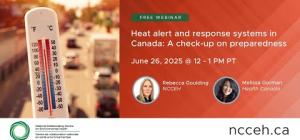
- Heat alert and response systems in Canada: A check-up on preparedness (NCCEH, 2025)
This review assesses the state of Heat Alert and Response Systems (HARS) across Canada using web scans, surveys, and key informant interviews. The review identifies strengths, gaps, and barriers to extreme heat preparedness. The report highlights opportunities to improve heat alerts, community response, communication strategies, and protection for populations at greatest risk from extreme heat.
- Health facilities preparation for extreme heat: Recommendations for retirement and care facility managers (Health Canada, 2024)
This guide supports retirement and care facilities in developing heat preparedness plans, monitoring indoor temperatures, protecting susceptible residents, and maintaining safe operations during extreme heat events.
- Heat Alert and Response Systems (HARS) (Public Health Ontario, 2023)
This environmental scan compares Ontario and other jurisdictions and summarizes common HARS approaches.
- Extreme heat: Heat Alert and Response Systems (HARS) across Canada (Health Canada, 2022)
This webpage provides basic information on Heat Alert and Response Systems in Canada, including a useful figure illustrating the different components of a community HARS with preventative actions to reduce heat-health risks. A link to their guidebook on HARS is also provided.
Heat vulnerability mapping and climate vulnerability assessment
- Climatedata.ca (Climate data, n.d.)
This interactive mapping tool visualizes climate projections across Canada, allowing users to explore indicators such as the hottest day of the year under different climate scenarios.
- Recommendations for advancing heat-health vulnerability mapping in Canada (Lam et al., 2026)
This report provides recommendations for developing heat-health vulnerability maps in Canada to support emergency preparedness, public health planning, risk communication, and equitable heat adaptation. A literature review on heat-health vulnerability mapping is also provided.
- Recommendations for advancing standardized surface and air temperature mapping in Canada (Lam et al., 2025)
This report has recommendations for improving the consistency and accuracy of surface and air temperature mapping across Canada to support urban heat island analysis, climate risk assessment, and heat-resilient planning.
- Climate change and health vulnerability and adaptation assessment: A knowledge to action resources guide (Health Canada, 2021)
This guidance document on climate and health vulnerability assessment includes tools, data sources, and case studies related to extreme heat, helping users identify populations at risk, assess heat-health vulnerabilities, and plan adaptation strategies
Heat response planning for community resilience
- Heat resilience toolkit for small municipalities (Federation of Canadian Municipalities, 2025)
This toolkit provides practical guidance, templates, and examples to help small municipalities reduce heat risks, support susceptible populations, and improve resilience through preparedness planning and community-based interventions.
- Building health capacity to safeguard communities from extreme heat (ClimateData.ca, 2024)
This article summarizes key drivers of heat-health risk and outlines adaptation measures that communities, health systems, and governments can implement to better safeguard populations from extreme heat.
- Heat response planning for Southern Interior B.C. communities: A toolkit (Interior Health, 2022)
This toolkit contains practical advice for local governments, Indigenous communities, and partner organizations in developing heat response plans. It provides guidance on governance, communications, community mobilization, susceptible populations, and long-term adaptation strategies for extreme heat preparedness.
- Social connection as a public health adaptation to extreme heat events (Kafeety et al., 2020)
This commentary outlines how social connection can help protect those at greatest risk during extreme heat events and suggests several strategies public health agencies and their partners should consider fostering greater social connection at the community level.
Extreme heat and wildfire smoke
- Wildfire smoke and extreme heat action plan (Centre for Lung Health, 2024)
This planning tool helps individuals prepare for and respond to wildfire smoke and extreme heat events, with step-by-step guidance to reduce health risks and support personal readiness.
- Extreme heat and wildfire smoke FAQ (VCH, 2024)
This factsheet that answers common questions about staying safe during extreme heat and wildfire smoke events, including health risks, protective measures, and guidance for higher-risk populations.
- Wildfire smoke during extreme heat events (BCCDC, 2024)
This factsheet provides practical guidance for managing the combined health risks of wildfire smoke and extreme heat. It explains how heat and smoke affect the body and outlines symptoms to watch for. Susceptible populations are also identified, and factsheet offers recommendations for staying safe during concurrent smoke and heat events.
- Wildfire smoke with extreme heat (Health Canada, 2024)
This practical guidance resource addresses the combined health risks of extreme heat and wildfire smoke exposure. It outlines health effects, identifies populations at greatest risk, and provides evidence-informed recommendations for staying cool while reducing smoke exposure indoors and outdoors.
- Extreme heat and wildfire smoke action plan (BC Housing, 2023)
This document provides a framework for preparing for and responding to extreme heat and wildfire smoke in community housing. It identifies priority actions to improve preparedness, strengthen building resilience, support susceptible tenants, and enhance emergency response during climate-related events.
Communicating the risks of extreme heat
- Heat-health messaging in Canada: A review and content analysis of public health authority webpages and resources (Tetzlaff et al., 2025)
This peer reviewed article reviews heat-health webpages and resources from public health authorities across Canada, identifying common messages, gaps in content, and opportunities to improve public communication about extreme heat risks and protective actions.
- Updating Health Canada's heat-health messages for the Environment and Climate Change Canada Heat Warning System (Tetzlaff et al., 2025)
This peer reviewed article describes the evidence-informed process used to revise Health Canada's heat-health messages, offering insights into the development of clear, actionable, and equitable public messaging for extreme heat events.
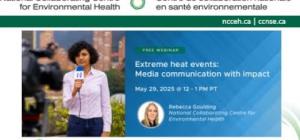
- Extreme heat events: Media communication with impact (NCCEH, 2025)
This review explores the challenges and opportunities faced by media and health professionals of communicating heat-related health risks and provides recommendations for more equitable and impactful extreme heat messaging. A companion evidence brief describes how media coverage can improve public awareness, preparedness, and equitable health protection during periods of extreme heat
- Communicating heat risk: A guide to inclusive, effective, and coordinated public information campaigns (Dunlap, 2024)
This guide provides practical recommendations for designing inclusive and effective heat-risk communication campaigns, with a focus on community engagement, trusted messengers, and reaching populations at greatest risk from extreme heat.
- Recommendations for increasing the reach and effectiveness of heat risk education and warning messaging (VanderMolen et al., 2022)
This peer reviewed article summarized the results of focus groups with heat-susceptible communities in California to elicit recommendations for increasing the reach and effectiveness of heat risk education and warning messaging. Key recommendations from these focus groups are discussed and are applicable in the Canadian context.
- Communicating the health risks of extreme heat events (Health Canada, 2011)
This toolkit for public health professionals provides foundational guidance on communication practices for public health and emergency management officials when communicating about health risks from extreme heat, based on experience gathered both nationally and internationally.
Inclusion of external resources in NCCEH Subject Guides is for information only and does not constitute an endorsement of the organization, author, or content. This list is not intended to be exhaustive. Omission of a resource does not preclude it from having value.