

My ongoing love affair with portable air cleaners

In June 2016, the NCCEH and BCCDC first submitted an article entitled Portable air cleaners should be at the forefront of the public health response to landscape fire smoke to the journal Environmental Health. I was the senior author on that article, and I championed the work because I believed the available evidence for portable air cleaners (PACs) was so compelling. My convictions have only been strengthened by evidence published over the intervening years, and they have enthusiastically expanded to include do-it-yourself (DIY) options since the NCCEH completed its comprehensive review of their effectiveness.
For readers who don’t know me, I am the Scientific Director of the NCCEH and of Environmental Health Services at the BCCDC. I am also a Professor in the School of Population and Public Health at the University of British Columbia. I have been studying wildfire smoke, its population health effects, and effective interventions in Canada and around the world for more than 20 years. Almost half of my peer-reviewed publications are about wildfire smoke, and I’m recognized as a national and international expert in this field. My name is Sarah Henderson, and I want you to know that I love PACs.
Last week the NCCEH and NCC for Methods and Tools (NCCMT) jointly published a new systematic review on the effectiveness of PACs for reducing indoor air pollution and improving indicators of health impacts. This work was done in collaboration with Health Canada, and one objective was to identify evidence gaps where more research support is needed. Unlike the 2016 article published in Environmental Health, this review was focused on fine particulate matter (PM2.5) from biomass combustion to maximize its specificity to wildfire smoke, which is rapidly becoming one of the most important air pollution sources in Canada.
Those who read the review or its executive summary may find the tone somewhat surprising, given our longstanding support for PACs in public health. For example, the first sentence reporting on the findings reads “the evidence suggests air filtration and air cleaning during combustion-derived air pollution episodes may be effective at reducing indoor PM2.5 mass concentrations; the certainty of evidence, specifically with respect to the magnitude of the effect, is low (GRADE).” This doesn’t sound like a ringing endorsement! However, it is important to understand how the evidence was evaluated, and what low means in that context.
Our systematic review used the rigorous Grading of Recommendations, Assessment, Development and Evaluation (GRADE) approach to assess the effectiveness of PACs based on the available evidence. In this framework, which is mostly used for clinical interventions, evidence ratings of high and very high certainty are reserved for those with consistently large effects tested in randomized controlled trials (RTCs). Among all 17 studies included in the PACs review, the reported effectiveness for PM2.5 reduction ranged from 5-99%, with an average of 56%. This wide range (essentially from 0-100%, or the entire possible range) contributed to the low certainty of the evidence using GRADE, regardless of the strong average value.
The meaning of low in this context is that we are highly uncertain whether the average 56% reduction is the true effect of PACs – the real value could be higher or lower. This is not surprising, because the 17 studies reviewed were conducted under variable conditions with different PACs, different building types, and different study designs. However, if we limit the analyses to the 7 studies that had outdoor PM2.5 concentrations higher than 27 mg/m3 (the 24-hour Canadian Ambient Air Quality Standard), the reduction ranged from 34-99%, with an average of 64%. This suggests that PACs are even more effective when the ambient PM2.5 concentrations are highest.
Another important thing to understand about GRADE is that a rating of low or very low does not preclude users from making a strong recommendation in favour of the intervention. Indeed, the handbook reads that GRADE “…allows for strong recommendations on the basis of low or very low confidence in effect estimates” because there are “factors other than the quality of evidence influencing the strength of a recommendation.” In the case of PACs and wildfire smoke these other factors include their widespread availability, lack of other effective interventions, and very low likelihood of their causing health harms.
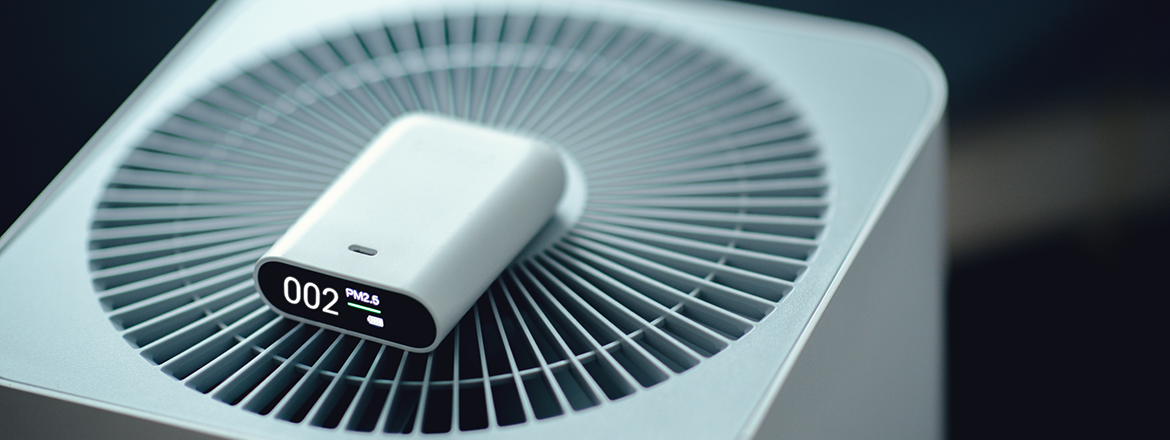
I will continue to strongly recommend PACs for wildfire smoke based on all the available evidence, including this new systematic review. In addition, I will continue to advocate for measuring indoor air quality with low-cost sensors, which provide real-time information about the effectiveness of PACs and other indoor air quality management strategies. I was part of the team that developed ASHRAE Guideline 44 for wildfire smoke, which also recommends indoor PM2.5 measurements as fundamental information for buildings in smoke-prone environments, especially when they serve populations that may be susceptible to smoke exposures.
Although my love affair with PACs has not diminished, my thinking about population health protection has evolved since 2016. There is clear evidence that PACs are effective for reducing wildfire smoke exposures indoors, but expecting all individuals to access and use PACs is not an equitable approach. In this recent commentary, I argue that Canada should consider more top-down policies for indoor air quality in the face of ongoing climate change. For example, establishing an indoor standard for PM2.5 would require changes to building construction and retrofit programs, which would help to protect everyone from wildfire smoke, regardless of their ability to access PACs. Severe wildfire seasons will continue into the decades ahead, and making widespread, equity-centred changes now will have health benefits for generations to come.”