

Indoor air filtration during wildfires: Impacts on air quality and health

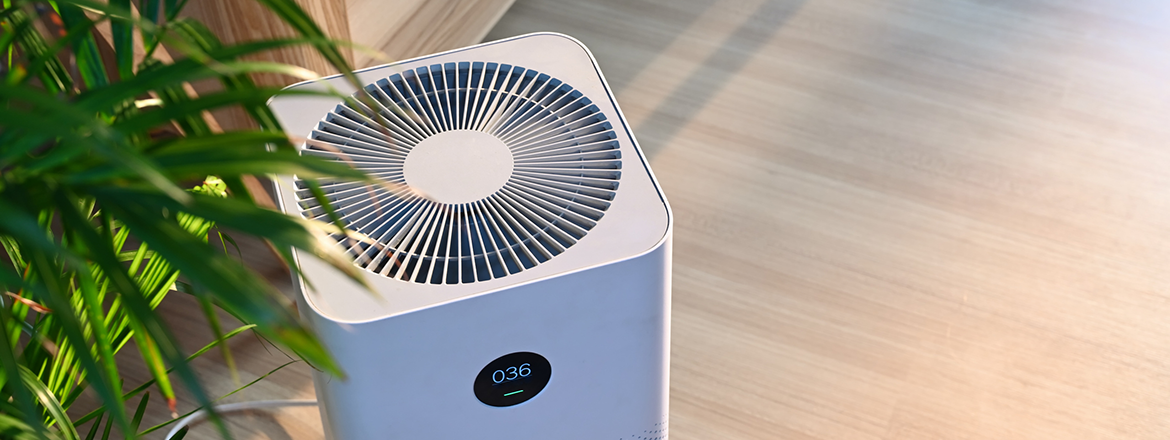
| For more information about portable air cleaners and the framework used for this systematic review, read a personal commentary from its co-author and the NCCEH Scientific Director, Dr. Sarah Henderson. |
Summary
Background
Decades of research have demonstrated that short- and long-term exposure to gaseous and particulate matter (PM) air pollution is associated with a broad range of acute and chronic health outcomes across the life course. The primary mechanisms of harm are inflammation and oxidative stress, which can affect all organ systems in the body. Most of the evidence comes from urban environments, where air pollution is typically generated by traffic, industry and other continuous sources. However, large-scale fires (e.g., landscape and interface fires) can cause local, regional, and widespread episodes of reduced air quality. Such events are becoming more frequent and intense under climate change, leading to periods where large populations can be exposed to the resulting gases and PM for days, weeks or months.
Based on the available evidence, public health authorities recommend indoor air cleaning as an effective intervention to improve indoor air quality and protect human health during smoke episodes. Air cleaning can be achieved through in-duct technologies integrated into existing heating, ventilation and air conditioning (HVAC) systems, or through stand-alone in-room portable air cleaners (PACs). Both in-duct and in-room air cleaning devices typically operate by physically removing particles from the air (e.g., filters, precipitators, absorption), or by destroying organic compounds (e.g., plasma generators, ozone generators). Some systems incorporate more than one technology, and some carry risks of generating harmful by-products, such as ozone (EPA 2018). The effectiveness of these technologies for removing pollutants is affected by multiple factors related to the device and setting. For PACs, these factors include the clean air delivery rate of the device (CADR), measured as treated volume per minute, capacity (i.e., volume of air in the designated room) and placement within the designated room (Health Canada 2021). Systematic reviews of the effectiveness of PACs for removing ambient or traffic-related air pollution (TRAP) found that they reduced PM2.5 by 22–92% and 11–82% compared to relevant controls (Cheek et al. 2021; Zhu et al. 2021). No consistent improvements in cardiovascular and respiratory parameters and pregnancy outcomes were found (Cheek et al. 2021). Less is known about their performance during episodes of combustion-derived air pollution (excluding TRAP and industrial pollution, as defined below) and there is limited field data on the use of filtration to reduce gaseous pollutants. In addition, there is very limited evidence on their association with improved health endpoints, especially during large-scale fires.
Research Questions
This rapid review seeks to identify, appraise and summarize available research evidence to support evidence-informed decision making in public health during episodes of combustion-derived air pollution.
This rapid review includes evidence available up to April 23, 2025, to answer the following questions:
- What effect does indoor air filtration and air cleaning have on concentrations of pollutants during combustion-derived air pollution episodes?
- What effect does using indoor air filtration or air cleaning during combustion-derived air pollution episodes have on human health endpoints?
This rapid review was produced through a collaboration between the National Collaborating Centre for Environmental Health (NCCEH) and the National Collaborating Centre for Methods and Tools (NCCMT).
Definitions
Combustion-derived air pollution episode: Refers to unusual episodes of air pollution caused by combustion events such as wildland, coal mine fires, peat fires, interface fires, landscape fires, agricultural fires, prescribed burns, industrial fires, landfill fires, tire fires, any multi-day structural fires and residential wood combustion. This definition does not include air pollution generated from the combustion of fossil fuels (i.e., TRAP or industrial processes).
Wildfire air pollution episode: Refers to unusual episodes of air pollution caused by combustion events such as wildland, forest, peat fires, interface fires, landscape fires, agricultural fires and prescribed burns.
Haze air pollution episode: Refers to unusual episodes of air pollution caused by regional uncontrolled forest and peatland fires and open biomass burning in Southeast Asia.
Air filtration and air cleaning: Refers to passing air through any technology designed to reduce pollutant concentrations, including filters, electrostatic precipitators, sorbent materials (i.e., activated charcoal) and additive technologies (e.g., ionizers, plasma, ozone generators).
Key Points
Overall
- Current evidence on the effect of air filtration and air cleaning during combustion-derived air pollution episodes is limited. The review identified 30 relevant studies (Table 1), including 29 with information on air quality and four with information on health outcomes (three studies included both).
- This rapid review included a comprehensive search of the peer-reviewed literature and manual searches of relevant special issues. However, it did not include evidence from the grey literature. Subsequent review updates should consider expanded search strategies and inclusion criteria (e.g., unpublished, non-peer-reviewed sources).
Effectiveness of Air Cleaners for Reducing Combustion-Derived Air Pollutants Indoors
- The evidence suggests air filtration and air cleaning during combustion-derived air pollution episodes may be effective at reducing indoor PM2.5 mass concentrations (Table 3); the certainty of evidence, specifically with respect to the magnitude of the effect, is low (GRADE). An average reduction of 56 percent (range 5.3–99 percent, 17 studies) and 18 µg/m3 (range 1.6–75 µg/m3, 14 studies) was reported for sampling periods ranging from 1.5 hours to 117.7 days. These estimates should be interpreted with caution because the methods for measuring PM2.5 concentrations and the interventions varied across all studies.
- The evidence suggests air filtration and air cleaning during combustion-derived air pollution episodes may be effective at reducing indoor/outdoor (I/O) PM2.5 mass concentration ratios (Table 3); the certainty of evidence, specifically with respect to the magnitude of the effect, is low (GRADE). Average I/O ratios across 13 studies from pre- or placebo intervention groups were reduced from 0.69 (range 0.28–1.3) to 0.37 (range 0.003–0.87) post-intervention. The sampling periods ranged from 1.5 hours to 117.7 days. This estimate should be interpreted with caution because the methods for measuring PM2.5 concentrations and the interventions varied across all studies.
- There was insufficient evidence to evaluate the effects of air filtration and air cleaning on indoor concentrations of gaseous pollutants such as VOCs during combustion-derived air pollution episodes (Table 3). The certainty of evidence, specifically with respect to the magnitude of the effect, is very low (GRADE). Two quasi-experimental studies reported results that were not comparable. One test-chamber study reported 4 of 6 commercial PACs with high-efficiency particulate air (HEPA) filters combined with activated charcoal filters effectively filtered the VOCs benzene and toluene (Clean Air Delivery Rates (CADR) > 75 m3/h). The other test-house study reported concentrations of the VOC formaldehyde were reduced by 3.1 percent following a smoke injection when a HEPA, activated carbon filter, and dual polarity ion technology PAC was turned on.
- One study reported PAC use during a combustion-derived air pollution episode reduced total water-soluble ions and trace elements by 74 and 86 percent respectively (Table 3). The certainty of evidence, specifically with respect to the magnitude of the effect, is very low (GRADE); findings are likely to change as new evidence emerges.
Human Health Endpoints
- The evidence is uncertain whether air filtration and air cleaning during combustion-derived air pollution episodes improves cellular-level health outcomes (Table 4). The certainty of evidence is very low (GRADE); findings are likely to change as new evidence emerges. One randomized controlled trial (n=45) found that systemic inflammation and impaired endothelial function (i.e., predictors of cardiovascular morbidity) were positively impacted by HEPA filtration use, while another (n=29) reported no effect.
- The evidence is uncertain whether air filtration and air cleaning during combustion-derived air pollution episodes improves self-reported physical health outcomes (Table 4). The certainty of evidence is very low (GRADE); findings may change as new evidence emerges. One small quasi-experimental study (n=27) and one randomized controlled trial (n=93) reported no effect.
- In one randomized controlled trial of children with asthma impacted by residential wood combustion smoke (n=93), air filtration did not change pediatric asthma quality of life scores, including symptoms, activity limitation and emotional function (Table 4). The certainty of evidence is very low (GRADE); findings may change as new evidence emerges.
Overview of Evidence and Knowledge Gaps
Effectiveness of Air Cleaners for Reducing Combustion-Derived Air Pollutants Indoors
- Of the 29 experimental studies reporting air quality outcomes, 13 were conducted during specific wildfire smoke episodes or seasons, five studies occurred during episodes of haze (biomass, wildfire and urban air pollution), three studies were performed in a chamber or test-facility using smoke generated from pine needles or woodchips, and 10 studies on smoke from residential wood burning (two examined both wildfire and residential wood smoke). Most studies were limited by small sample sizes (Table 1).
- Most air filtration and air cleaner studies (24 of 29) examined the use of PACs during episodes of combustion-derived air pollution (Table 1). Air filtering or air cleaning technologies in these PACs included a HEPA filter (two studies), a HEPA filter combined with an activated charcoal filter (eight studies), a HEPA and activated charcoal filter combined with an ionizer (three studies), a MERV 13 electrostatic filter (nine studies) or electrostatic precipitation filtration combined with a charcoal filter (one study). One chamber-study compared the effectiveness of different PAC technologies in filtering PM generated from the combustion of pine needles and reported that PACs with ionizing technologies performed comparably with HEPA and charcoal filter PACs. There remains a lack of evidence on the effectiveness of HVAC interventions during such episodes.
- No high-quality, peer-reviewed research was identified to assess the effect of air filtration and air cleaning on indoor gases or PM2.5 composition during wildfire episodes. Public health authorities must rely on very limited indirect evidence from other contexts (e.g., haze and test-chambers) to understand their potential impacts on indoor non-PM2.5 mass concentration of components of wildfire smoke.
- Studies on PACs used a range of technologies (both do-it-yourself (DIY) and commercial) placed in different rooms of homes, offices or facilities (including a school, senior assisted living complex and a homeless shelter); however, the evidence is too limited to comment on their ideal location or operation. The capacity (e.g., measured in terms of treatable area) and CADR of PACs also varied across studies. Considering the CADR in context of the building’s area or volume in the study design resulted in more effective air filtration of PM2.5.
- Average outdoor PM2.5 concentrations varied between 4–157 µg/m3 across non-laboratory studies (16 of 26) and between 5–127 µg/m3 across the wildfire-specific studies (9 of 13). Of these, five of 13 reported average PM2.5 concentrations > 27 µg/m3 (24-hour average Canadian Ambient Air Quality Standard) over the sampling periods.
- Average indoor PM2.5 concentrations during combustion events in homes or buildings with no filtration varied (mean 34, range 6-98 µg/m3) across all non-laboratory studies reporting on this parameter (13 of 26). Similar levels were measured in the seven reporting wildfire-specific studies (mean 35, range 7–89 µg/m3). Of note, three of seven wildfire-specific studies reported average indoor PM2.5 levels < 15 µg/m3 (24-h average World Health Organization (WHO) air quality guideline level) (WHO 2021), meaning that the indoor air was relatively clean before any intervention was deployed.
- The methods for determining indoor air pollution concentrations relevant to combustion events were not consistent. Several studies applied censoring algorithms to identify and remove indoor peak concentrations due to indoor sources, such as cooking.
- Across wildfire-specific studies, PAC use resulted in a 57 percent (range 5.3–99 percent, 10 studies) reduction in PM2.5 mass concentrations, and an average reduction of 17 µg/m3 (range 1.6–46.6 µg/m3, eight studies).
- For wildfire-specific events, use of PACs reduced the pre- or placebo intervention group PM2.5 mass concentration I/O ratios from an average of 0.68 (range 0.31–0.93) to 0.34 (range 0.003–0.8) post-intervention in nine of 13 studies reporting on this parameter. Non-intervention I/O ratios varied greatly depending on building age, construction, ventilation (natural or mechanical) and user habits.
- Two laboratory studies examined the effectiveness of PACs (including PACs with activated charcoal filters) on reducing biomass smoke-derived volatile organic compounds (VOCs). Although the results were inconsistent, only devices with activated charcoal filters were shown to reduce VOC levels.
Human Health Endpoints
- Of the four experimental studies that reported health outcomes, only one specifically occurred during a wildfire smoke episode; no included studies reported on the use of emergency services, emergency room visits or hospitalizations as outcomes. The lack of high-quality, peer-reviewed, published research on the effects of air filtration during combustion-derived air pollution episodes on a range of human health endpoints means that public health authorities must rely on indirect evidence of air filtration in other contexts (e.g., residential wood combustion) to inform decisions regarding its use during wildfires. For instance, exposure to ambient particulate matter is known to be associated with a broad range of acute and chronic health outcomes (Health Canada 2023), and there is no health-based limit for exposure to indoor concentrations of PM2.5. It is important to note that strong recommendations can result from low or very low certainty of evidence (GRADE) when the benefits outweigh the potential harms.
- Average outdoor particulate matter (PM2.5) concentrations varied across studies but were typically low (i.e., air filters may have cleaned already relatively clean air). In general, greater improvements in health outcomes were found in studies with higher mean outdoor PM2.5 concentrations.
- All studies involved comparable PACs placed in rooms where residents spent most of their time in their homes; however, the evidence identified in this review is too limited to comment on the ideal location or operation of the filter. In the absence of specific evidence, general guidance on PAC placement for improving indoor air quality by Health Canada may be the most applicable (Health Canada 2021).
- The studies identified in this review provide no evidence for the experiences of populations who live with social and structural inequities, such as Indigenous or racialized communities. Further research is required to ensure the representation of these populations in decision making.
Methods
-
This review was performed using NCCMT’s rapid review process. An overview of the development of NCCMT’s Rapid Evidence Service, including rationale for methodological decisions, has been published (Neil-Sztramko et al. 2021).
Research Question
This rapid review addresses the following research questions, developed in collaboration with public health decision makers:
- What effect does indoor air filtration and air cleaning have on concentrations of pollutants during combustion-derived air pollution episodes?
- What effect does using indoor air filtration or air cleaning during combustion-derived air pollution episodes have on human health endpoints?
The study protocol was registered in PROSPERO (CRD42024550693).
Search
Information specialists from the NCCEH and McMaster University were involved in developing and conducting the search.
On April 23, 2025, the following databases were searched using key terms, including: “wildfire,” “smoke,” “air filter,” “air cleaning,” “air quality”:
A special issue of Environmental Science & Technology — Emissions, Chemistry, and the Environmental Impacts of Wildland Fire — and four other journals, not indexed in the databases above, were hand searched for relevant studies. The reference lists of related systematic reviews were screened and subject matter experts in the field were consulted.
This search builds upon the previous search (November 21, 2024) conducted in the first version of this rapid review. A copy of the full search strategy is available in Appendix 1.
Study Selection Criteria
The titles and abstracts of a proportion of results (14 percent) were screened in duplicate to confirm reviewer agreement; disagreements were resolved through consensus or consulting with a third reviewer. The remaining results were screened by a single reviewer. The full texts of results included in title and abstract screening were retrieved and screened by a single reviewer. Continuous artificial intelligence (AI) reprioritization was used to sort results during both levels of screening, but all references were screened manually.
English-language, peer-reviewed sources were eligible for inclusion; sources published ahead of print, before peer review, and surveillance sources and mathematical modelling studies that exclusively used estimated data were excluded.
1. What effect does indoor air filtration and air cleaning have on concentrations of pollutants during combustion-derived air pollution episodes?
|
|
Inclusion Criteria |
Exclusion Criteria |
|
Population |
General population exposed in residential environments (both indoor and outdoor), clean air spaces, public/institutional buildings (e.g., schools, daycares, malls, libraries, community centres, healthcare centres, long-term care centres, etc.), vehicles |
Population exposed in industrial workplaces |
|
Intervention |
Portable air cleaners (including DIY air cleaners); air or in-duct filtration; car filters/other vehicles’ filters (during fire event); or ionizers, plasma, ozone generators, etc. |
Filters embedded in facemasks or traffic-related air pollution and general vehicle combustion emissions |
|
Comparisons |
Prior to use of air filtration or air cleaning; or spaces not using air filtration or air cleaning |
|
|
Outcomes |
Indoor/outdoor ratio of concentration of non-particulate matter (PM) or PM pollutants; and or concentration of non-PM pollutants |
|
|
Context |
During combustion-derived air pollution episodes that may be caused by fire (wildland, coal mine fires, peat fires, interface fires, landscape fires, agricultural fires, prescribed burns, industrial fires, landfill fires, tire fires, any multi-day structural fires (e.g., 9/11), and residential wood combustion (i.e., wood stoves), including studies that use source attribution methods) |
During non-combustion derived episodes; air pollution events exclusively due to engine exhaust, traffic pollution, coal combustion, etc. (not excluding coal mine fires) |
|
Study Design |
Exposure studies (including randomized and non-randomized), before-and-after studies, case studies, laboratory studies, grey literature (incl. technical reports from standard setting bodies, NRC/NIST, etc.), systematic reviews |
|
|
Setting |
Any country |
|
|
Time |
2004 – 2025 |
|
2. What effect does using indoor air filtration or air cleaning during combustion-derived air pollution episodes have on human health endpoints?
|
|
Inclusion Criteria |
Exclusion Criteria |
|
Population |
General population exposed in residential environments (both indoor and outdoor), clean air spaces, public/institutional buildings (e.g., schools, daycares, malls, libraries, community centres, healthcare centres, long-term care centres, etc.), vehicles |
Population exposed in industrial workplaces |
|
Intervention |
Portable air cleaners (including DIY air cleaners); air or in-duct filtration; car filters/other vehicles’ filters (during fire event); or ionizers, plasma, ozone generators, etc. |
Filters embedded in facemasks or traffic-related air pollution and general vehicle combustion emissions |
|
Comparisons |
No air filtration or air cleaning |
|
|
Outcomes |
Any direct or indirect, acute or long-term health outcomes; use of emergency services, emergency room visits, or hospitalizations; or cellular-level outcomes* (e.g., inflammation markers, oxidative stress) |
|
|
Context |
During combustion-derived air pollution episodes that may be caused by fire (wildland, coal mine fires, peat fires, interface fires, landscape fires, agricultural fires, prescribed burns, industrial fires, landfill fires, tire fires, any multi-day structural fires (e.g., 9/11), and residential wood combustion (i.e., wood stoves), including studies that use source attribution methods) |
During non-combustion derived episodes; air pollution events exclusively due to engine exhaust, traffic pollution, coal combustion, etc. (not excluding coal mine fires) |
|
Study Design |
Randomized and non-randomized trials, cohort studies, panel studies, case-control studies, cross-sectional studies, systematic reviews |
Laboratory studies, modeling studies, non-systematic literature reviews, protocols / in progress studies |
|
Setting |
Any country |
|
|
Time |
2004 – 2025 |
|
*Cellular-level outcomes, as indirect subclinical effects, were originally excluded; they were included after it became clear that the data on more direct health outcomes was limited.
Data Extraction and Synthesis
When reported in the included studies, data relevant to the research question, including study design, setting, location, population characteristics, interventions and outcomes, were extracted by one reviewer and verified by a second. For the question related to human health endpoints, information on the social determinants of health (based on the PROGRESS-Plus framework) was extracted where reported (O’Neill et al. 2014).
The results were synthesized narratively due to the variation in methodology and outcomes for the included studies.
Appraisal of Evidence Quality and Certainty
The quality of included evidence was evaluated using critical appraisal tools, as indicated by the study design below. Quality assessment was completed in duplicate by two independent reviewers; conflicts were resolved through discussion or by a third reviewer.
|
Study Design |
Critical Appraisal Tool |
|
Randomized Controlled Trial |
|
|
Quasi-experimental |
|
|
Analytical Cross Sectional |
Completed quality assessments for each included study are available on request.
The Grading of Recommendations, Assessment, Development and Evaluations (GRADE) (Schünemann et al. 2013) approach provides a framework for assessing health care questions and, importantly, clearly separates rating the confidence in an effect estimate of an intervention from rating the strength of a recommendation on using the intervention. It should be noted that strong recommendations can be formed from low quality evidence and vice versa. The GRADE approach was used to assess the certainty in the findings in quantitative research based on eight key domains.
In the GRADE approach to quality of evidence, observational studies, as included in this review, provide low quality evidence, and this assessment can be further reduced based on:
- High risk of bias
- Inconsistency in effects
- Indirectness of interventions/outcomes
- Imprecision in effect estimate
- Publication bias
and can be upgraded based on:
- Large effect
- Dose-response relationship
- Accounting for confounding
The overall certainty in the evidence for each outcome was determined, considering the characteristics of the available evidence (observational studies, some not peer-reviewed, unaccounted-for potential confounding factors, different tests and testing protocols, lack of valid comparison groups). A judgement of “overall certainty is very low” means that the findings are very likely to change as more evidence accumulates.
In addition to considering the quality and certainty of the included evidence, the findings from this rapid review should be interpreted in the context of the methodological restrictions inherent in a rapid review process (Garritty et al. 2024). For example, limited database searching and single reviewer screening may result in missed studies. Another potential limitation of this review stems from applying the GRADE framework to studies regarding personal air purifiers and cleaners as experimental health interventions, which are not defined as medical devices.
Findings
Summary of Evidence
1. What effect does indoor air filtration and air cleaning have on concentrations of pollutants during combustion-derived air pollution episodes?
This rapid review included 29 single studies. The certainty of the key findings included in this review is as follows:
|
Key Outcome |
Evidence included |
Certainty of Evidence (GRADE) |
|
|
Study design |
n* |
||
|
Air filtration during combustion-derived air pollution episodes may reduce indoor PM2.5 levels by 56% (range 5.3 – 99%). |
Randomized controlled trial
Quasi-experimental
Analytical cross sectional |
6 |
⨁⨁◯◯ LOW1 |
|
Air filtration during combustion-derived air pollution episodes may reduce indoor/outdoor PM2.5 mass concentration ratios from an average of 0.69 (range 0.28 – 1.3) to 0.37 (range 0.003 – 0.87). |
Randomized controlled trial
Quasi-experimental Analytical cross sectional |
3 |
⨁⨁◯◯ LOW1 |
|
The effect of air filtration using a sorbent filter (i.e. activated charcoal) during combustion-derived air pollution episodes at reducing indoor VOC levels is uncertain. |
Quasi-experimental |
2 |
⨁◯◯◯ VERY LOW2 |
|
The effect of air filtration during combustion-derived air pollution episodes at reducing indoor water soluble trace elements and ions is uncertain. |
Quasi-experimental |
1 |
⨁◯◯◯ VERY LOW2 |
*Values exceed the total number of studies (n=29) as some studies contributed to multiple key findings.
1In the GRADE approach to certainty of evidence, experimental studies, as included in this review, provide moderate certainty evidence; this was downgraded to low due to high risk of bias, differences in interventions, and imprecision in effect estimates.
2In the GRADE approach to certainty of evidence, experimental studies, as included in this review, provide moderate certainty evidence; this was downgraded to very low due to high risk of bias and inconsistency, and imprecision in effect estimates.
2. What effect does using indoor air filtration or air cleaning during combustion-derived air pollution episodes have on human health endpoints?
This rapid review included four single studies. The certainty of the key findings included in this review is as follows:
|
Key Outcome |
Evidence included |
Certainty of Evidence (GRADE) |
|
|
Study design |
n* |
||
|
The effect of air filtration during combustion-derived air pollution episodes on cellular-level health outcomes is uncertain. |
Randomized controlled trial |
2 |
⨁◯◯◯ VERY LOW1 |
|
The effect of air filtration during combustion-derived air pollution episodes on self-reported physical health outcomes is uncertain. |
Randomized controlled trial
Quasi-experimental |
1
1 |
⨁◯◯◯ VERY LOW1 |
|
Air filtration may not impact quality of life among children with asthma during combustion-derived air pollution episodes, although the evidence is very uncertain. |
Randomized controlled trial |
1 |
⨁◯◯◯ VERY LOW1 |
*Values exceed the total number of studies (n=4) as some studies contributed to multiple key findings.
1In the GRADE approach to certainty of evidence, experimental studies, as included in this review, provide moderate certainty evidence; this was downgraded to very low due to high risk of bias and inconsistency and imprecision in effect estimates.
Table 1: Summary of study details
Table 2: Summary of air pollution monitoring methods
Table 3: Summary of air filtration outcomes
Table 4: Summary of human health outcomes
References
Allen, R.W., Carlsten, C., Karlen, B., Leckie, S., Van Eeden, S., Vedal, S., … Brauer, M. (2011). An air filter intervention study of endothelial function among healthy adults in a woodsmoke-impacted community. American Journal of Respiratory and Critical Care Medicine, 183(9),1222-1230.
Barn, P., Larson, T., Noullett, M., Kennedy, S., Copes, R., & Brauer, M. (2008). Infiltration of forest fire and residential wood smoke: An evaluation of air cleaner effectiveness. Journal of Exposure Science and Environmental Epidemiology, 18(5), 503-511.
Cao, Q., Chen, A., Zhou, J., & Chang, V.W.C. (2016). Performance evaluation of filter applications in fan-coil units during the 2015 Southeast Asian haze episode. Building & Environment, 107, 191-197.
Cheek, E., Guercio, V., Shrubsole, C., & Dimitroulopoulou, S. (2021). Portable air purification: Review of impacts on indoor air quality and health. Science of the Total Environment, 766, 142585.
Chen, A., Cao, Q., Zhou, J., Yang, B., Chang, V.W.C., & Nazaroff, W.W. (2016). Indoor and outdoor particles in an air-conditioned building during and after the 2013 haze in Singapore. Building & Environment, 99, 73-81.
Dev S., Barnes, D., Kadir, A., Betha, R., & Aggarwal, S. (2021). Outdoor and indoor concentrations of size-resolved particulate matter during a wildfire episode in interior Alaska and the impact of ventilation. Air Quality, Atmosphere & Health, 15, 149-158.
EPA. (2018). Residential Air Cleaners: A Technical Summary. United States Environmental Protection Agency, EPA 402-F-09-002.
Garritty, C., Hamel, C., Trivella, M., Gartlehner, G., Nussbaumer-Streit, B., Devane, D., … King, V.J. (2024). Updated recommendations for the Cochrane rapid review methods guidance for rapid reviews of effectiveness. BMJ, 384, e076335.
Hart, J.F., Ward, T.J., Spear, T.M., Rossi, R.J., Holland, N.N., & Loushin, B.G. (2011). Evaluating the effectiveness of a commercial portable air purifier in homes with wood burning stoves: A preliminary study. Journal of Environmental & Public Health, 2011, 324809.
He, J., Huang, C.H., Yuan, N., Austin, E., Seto, E., & Novosselov, I. (2022). Network of low-cost air quality sensors for monitoring indoor, outdoor, and personal PM2.5 exposure in Seattle during the 2020 wildfire season. Atmospheric Environment, 285(2022), 119244.
Health Canada. (2021). Using a portable air cleaner to improve indoor air. Accessed May 5, 2025, from: https://www.canada.ca/en/health-canada/services/air-quality/indoor-air-contaminants/choosing-portable-purifier.html.
Health Canada. (2023). Health impacts of air pollution from transportation, industry, and residential sources in Canada: Estimates of premature mortality and morbidity outcomes at national, provincial, territorial, and air zone levels. Health Canada, Ottawa, ON.
Henderson, D.E., Milford, J.B., & Miller, S.L. (2005). Prescribed burns and wildfires in Colorado: Impacts of mitigation measures on indoor air particulate matter. Journal of the Air & Waste Management Association, 55(10), 1516-1526.
Holder, A.L., Halliday, H.S., & Virtaranta, L. (2022). Impact of do-it-yourself air cleaner design on the reduction of simulated wildfire smoke in a controlled chamber environment. Indoor Air, 32(11), e13163.
Kajbafzadeh, M., Brauer, M., Karlen, B., Carlsten, C., van Eeden, S., & Allen, R.W. (2015). The impacts of traffic-related and woodsmoke particulate matter on measures of cardiovascular health: A HEPA filter intervention study. Occupational and Environmental Medicine, 72(6),394-400.
Li, J., Link, M.F., Pandit, S., Webb, M.H., Mayer, K.J., Garofalo, L.A., … Farmer, D.K. (2023). The persistence of smoke VOCs indoors: Partitioning, surface cleaning, and air cleaning in a smoke-contaminated house. Science Advances, 9(41), eadh8263.
May, N.W., Dixon, C., & Jaffe, D.A. (2021). Impact of wildfire smoke events on indoor air quality and evaluation of a low-cost filtration method. Aerosol and Air Quality Research, 21(7), 210046.
McNamara, M.L., Thornburg, J., Semmens, E.O., Ward, T.J., & Noonan, C.W. (2017). Reducing indoor air pollutants with air filtration units in wood stove homes. The Science of the Total Environment, 592, 488-494.
Neil-Sztramko, S.E., Belita, E., Traynor, R.L., Clark, E., Hagerman, L., & Dobbins, M. (2021). Methods to support evidence-informed decision-making in the midst of COVID-19: Creation and evolution of a rapid review service from the National Collaborating Centre for Methods and Tools. BMC Medical Research Methodology, 21(231).
Noonan, C.W., Semmens, E.O., Smith, P., Harrar, S.W., Montrose, L., Weiler, E., … Ward, T.J. (2017). Randomized trial of interventions to improve childhood asthma in homes with wood-burning stoves. Environmental Health Perspectives, 125(9),097010.
O'Neill, J., Tabish, H., Welch, V., Petticrew, M., Pottie, K., Clarke, M., … Tugwell, P. (2014). Applying an equity lens to interventions: Using PROGRESS ensures consideration of socially stratifying factors to illuminate inequities in health. Journal of Clinical Epidemiology, 67(1), 56–64.
Prathibha, P., Turner, M., Wei, L., Davis, A., Vinsonhaler, K., Batchelder, A., ... Holder, A.L. (2024). Usage and impact of a do-it-yourself air cleaner on residential PM2.5 in a smoke-impacted community. Atmospheric Environment, 333, 120650.
Schünemann, H., Brożek, J., Guyatt, G., & Oxman, A. (2013). Handbook for grading the quality of evidence and the strength of recommendations using the GRADE approach.
Sharma, R., & Balasubramanian, R. (2017). Indoor human exposure to size-fractionated aerosols during the 2015 Southeast Asian smoke haze and assessment of exposure mitigation strategies. Environmental Research Letters, 12, 114026.
Singh, A., Stephens, B., Heidarinejad, M., Stinson, B. Gall, E., Wagner, J., … Solomon, G. (2025). Development and laboratory evaluation of a do-it-yourself (DIY) filtration solution for residential evaporative coolers to reduce indoor wildfire smoke exposure. Building and Environment, 270, 112475.
Stauffer, D.A., Autenrieth, D.A., Hart, J.F., & Capoccia, S. (2020). Control of wildfire-sourced PM2.5 in an office setting using a commercially available portable air cleaner. Journal of Occupational & Environmental Hygiene, 17(4),109-120.
Stinson, B.W., Laguerre, A., & Gall, E.T. (2024). Particle and gas-phase evaluation of air cleaners under indoor wildfire smoke conditions. ACS ES&T Air, 1(6), 492-501.
Tham, K.W., Parshetti, G.K., Anand, P., Cheong, D.K.W., & Sekhar, C. (2021). Performance characteristics of a fan filter unit (FFU) in mitigating particulate matter levels in a naturally ventilated classroom during haze conditions. Indoor Air, 31(3), 795-806.
Tran, P.T.M., Adam, M.G., & Balasubramanian, R. (2021). Mitigation of indoor human exposure to airborne particles of outdoor origin in an urban environment during haze and non-haze periods. Journal of Hazardous Materials, 403, 123555.
Turner, M.W., Prathibha, P., Holder, A., Rappold, A.G., Hassett-Sipple, B., McCaughey, B., … Chelminski, A.N. (2024). Self-reported health impacts of do-it-yourself air cleaner use in a smoke-impacted community. Heliyon, 10(4), e25225.
Walker, E.S., Noonan, C.W., Belcourt, A., Boulafentis, J., Garcia, C., Graham, J., … Ward, T.J. (2022). Efficacy of air filtration and education interventions on fine particulate matter among rural Native American homes heated with wood stoves: Results from the EldersAIR randomized trial. The Science of the Total Environment, 843, 157029.
Walker, E.S., Stewart, T., & Jones, D. (2023). Fine particulate matter infiltration at Western Montana residences during wildfire season. The Science of the Total Environment, 896, 165238.
Ward, T.J., Semmens, E.O., Weiler, E., Harrar, S., & Noonan, C.W. (2017). Efficacy of interventions targeting household air pollution from residential wood stoves. Journal of Exposure Science & Environmental Epidemiology, 27(1), 64-71.
Wheeler, A.J., Allen, R.W., Lawrence, K., Roulston, C.T., Powell, J., Williamson, G.J., … Johnston, F.H. (2021). Can public spaces effectively be used as cleaner indoor air shelters during extreme smoke events? International Journal of Environmental Research and Public Health, 18(8), 4085.
Wheeler, A.J., Gibson, M.D., MacNeill, M., Ward, T.J., Wallace, L.A., Kuchta, J., … Stieb, D. M. (2014). Impacts of air cleaners on indoor air quality in residences impacted by wood smoke. Environmental Science & Technology, 48(20), 12157–12163.
Wheeler, A.J., Reisen, F., Roulston, C.T., Dennekamp, M., Goodman, N., & Johnston, F.H. (2024). Evaluating portable air cleaner effectiveness in residential settings to reduce exposures to biomass smoke resulting from prescribed burns. Public Health Research & Practice, 34(1), 33232307.
WHO. (2021). WHO global air quality guidelines. Particulate matter (PM2.5 and PM10), ozone, nitrogen dioxide, sulfur dioxide and carbon monoxide. Executive summary. Geneva: World Health Organization, Licence: CC BY-NC-SA 3.0 IGO.
Willis, L., Hart, J., Nagisetty, R., Comstock, C., Gilkey, D., & Autenrieth, D. (2023). The application of portable air cleaners in spaces occupied by vulnerable people during wildfire events. World Safety Journal, 32(2), 1-26.Xiang, J., Huang, C.H., Shirai, J., Liu, Y., Carmona, N., Zuidema, C., … Seto, E. (2021). Field measurements of PM2.5 infiltration factor and portable air cleaner effectiveness during wildfire episodes in US residences. The Science of the Total Environment, 773, 145642.
Zhu, Y., Song, X., Wu, R., Fang, J., Liu, L., Wang, T., … Huang, W. (2021). A review on reducing indoor particulate matter concentrations from personal-level air filtration intervention under real-world exposure situations. Indoor Air, 31, 1707-1721.
Appendix 1: Search Strategy
On April 23, 2025, the following four databases were searched using the search terms and parameters below.
|
Database |
Search parameters |
|
Search terms listed below |
|
A special issue of Environmental Science & Technology – Emissions, Chemistry, and the Environmental Impacts of Wildland Fire – and the following four journals were also hand searched, from 2004 (or journal’s inception) to current issue:
- Journal of Exposure Science & Environmental Epidemiology
- Volumes 14 (2004) to 35 (2025)
- Current Pollution Reports
- Volumes 1 (2015) to 11 (2025)
- Aerosol and Air Quality Research
- Volumes 4 (2004) to 24 (2024)
- International Journal of Disaster Risk Reduction
- Volumes 1 (2012) to 123 (2025)
The reference lists of related systematic reviews were screened and subject matter experts in the field were consulted.
This search builds upon the search conducted in the first version of this rapid review (date limit: January 1, 2004 to November 21, 2024). An archived copy of the previous search strategy is available.
MEDLINE
|
Line |
Query |
|
1 |
(Wildfire or wildfires or forest fire or brushfire or grass fire or bushfire or prescribed fire or controlled burns or vegetation fire or peat fire or fire smoke or wildfire smoke or fire season).mp. [mp=title, book title, abstract, original title, name of substance word, subject heading word, floating sub-heading word, keyword heading word, organism supplementary concept word, protocol supplementary concept word, rare disease supplementary concept word, unique identifier, synonyms, population supplementary concept word, anatomy supplementary concept word] |
|
2 |
Fires/ or Wildfires/ |
|
3 |
((fire or fires or conflagration or combustion or burn*) adj10 (urban or wood or wild or wildland or "wild land" or wilderness or landscape or bush or brush or forest or tree or prescribed or cultural or crop or agricultural or agriculture or vegetation or peat or biomass or pile or residual or lightning or "lightning strike" or ground or surface or interface or "land clearing*" or "land clearance" or building* or home* or house* or residence* or hotel or apartment* or condominium* or multiplex or duplex or multi-unit or highrise* or high-rise* or office* or tower* or urban or container or dockyard or dock or multiunit or "coal mine" or "coal seam" or industrial or infrastructure or landfill* or dump* or refuse or tire* or tyre* or rubber or plastic* or chemical* or metallic* or stove* or woodstove* or cookstove* or fireplace)).ti. or ((fire or fires or conflagration or combustion or burn*) adj10 (urban or wood or wild or wildland or "wild land" or wilderness or landscape or bush or brush or forest or tree or prescribed or cultural or crop or agricultural or agriculture or vegetation or peat or biomass or pile or residual or lightning or "lightning strike" or ground or surface or interface or "land clearing*" or "land clearance" or building* or home* or house* or residence* or hotel or apartment* or condominium* or multiplex or duplex or multi-unit or highrise* or high-rise* or office* or tower* or urban or container or dockyard or dock or multiunit or "coal mine" or "coal seam" or industrial or infrastructure or landfill* or dump* or refuse or tire* or tyre* or rubber or plastic* or chemical* or metallic* or stove* or woodstove* or cookstove* or fireplace)).ab. |
|
4 |
(wildfire* or bushfire* or brushfire* or "prescribed burn*" or "crop burn*" or "biomass burn*" or "cultural burn*" or "agricultural burn*" or "burning home*" or "burning house*").af. |
|
5 |
(fire* adj8 (crown* or canop* or foliage or structure or structural or smoulder* or flam* or char or smok* or woodsmoke or haze or pollut* or "dirty air" or non-PM* or "non-particulate matter" or "fine particle*" or "particle emission*" or "particulate emission*" or "volatile particulate*" or "particle pollution" or gas* or dust or pollen or toxin or fung* or bacteria or mould or mold or CO)).af. |
|
6 |
1 or 2 or 3 or 4 or 5 |
|
7 |
(Air filtration or air filters or air purifiers or air cleaning devices or portable air filters or HVAC systems or HEPA filters or air quality control or air purification systems).mp. [mp=title, book title, abstract, original title, name of substance word, subject heading word, floating sub-heading word, keyword heading word, organism supplementary concept word, protocol supplementary concept word, rare disease supplementary concept word, unique identifier, synonyms, population supplementary concept word, anatomy supplementary concept word] |
|
8 |
Air Filters/ or Air Pollution, Indoor/ |
|
9 |
((filtrat* or filter or vent* or "air clean*" or purifier* or purification or fan* or HEPA or MERV or Corsi-Rosenthal or "box fan*" or sorbent* or "air condition*" or "DIY cleaner" or "do-it-yourself cleaner" or "electrostatic precipitator" or ionizer or "UV germicidal irradiation" or plasma or "air scrubber" or "ozone generator" or "activated carbon" or "air sterilizer" or "photocatalytic oxidation" or charcoal or CADR or "clean air" or hygroscopicity) not (aqueous or water or ventilator* or ventricle* or ventricular or ventral or ventriculitis)).ti. or ((filtrat* or filter or vent* or "air clean*" or purifier* or purification or fan* or HEPA or MERV or Corsi-Rosenthal or "box fan*" or sorbent* or "air condition*" or "DIY cleaner" or "do-it-yourself cleaner" or "electrostatic precipitator" or "ionizer UV germicidal irradiation" or plasma or "air scrubber" or "ozone generator" or "activated carbon" or "air sterilizer" or "photocatalytic oxidation" or charcoal or CADR or "clean air" or hygroscopicity) not (aqueous or water or ventilator* or ventricle* or ventricular or ventral or ventriculitis)).kw. |
|
10 |
7 or 8 or 9 |
|
11 |
6 and 10 |
|
12 |
limit 11 to (english language and yr="2024 -Current") |
Embase
|
Line |
Query |
|
1 |
wildfire/ |
|
2 |
forest fire/ |
|
3 |
fire/ |
|
4 |
smoke/ |
|
5 |
(Wildfire or wildfires or forest fire or brushfire or grass fire or bushfire or prescribed fire or controlled burns or vegetation fire or peat fire or fire smoke or wildfire smoke or fire season).mp. [mp=title, abstract, heading word, drug trade name, original title, device manufacturer, drug manufacturer, device trade name, keyword heading word, floating subheading word, candidate term word] |
|
6 |
((fire or fires or conflagration or combustion or burn*) adj10 (urban or wood or wild or wildland or "wild land" or wilderness or landscape or bush or brush or forest or tree or prescribed or cultural or crop or agricultural or agriculture or vegetation or peat or biomass or pile or residual or lightning or "lightning strike" or ground or surface or interface or "land clearing*" or "land clearance" or building* or home* or house* or residence* or hotel or apartment* or condominium* or multiplex or duplex or multi-unit or highrise* or high-rise* or office* or tower* or urban or container or dockyard or dock or multiunit or "coal mine" or "coal seam" or industrial or infrastructure or landfill* or dump* or refuse or tire* or tyre* or rubber or plastic* or chemical* or metallic* or stove* or woodstove* or cookstove* or fireplace)).ti. or ((fire or fires or conflagration or combustion or burn*) adj10 (urban or wood or wild or wildland or "wild land" or wilderness or landscape or bush or brush or forest or tree or prescribed or cultural or crop or agricultural or agriculture or vegetation or peat or biomass or pile or residual or lightning or "lightning strike" or ground or surface or interface or "land clearing*" or "land clearance" or building* or home* or house* or residence* or hotel or apartment* or condominium* or multiplex or duplex or multi-unit or highrise* or high-rise* or office* or tower* or urban or container or dockyard or dock or multiunit or "coal mine" or "coal seam" or industrial or infrastructure or landfill* or dump* or refuse or tire* or tyre* or rubber or plastic* or chemical* or metallic* or stove* or woodstove* or cookstove* or fireplace)).ab. |
|
7 |
(fire* adj8 (crown* or canop* or foliage or structure or structural or smoulder* or flam* or char or smok* or woodsmoke or haze or pollut* or "dirty air" or non-PM* or "non-particulate matter" or "fine particle*" or "particle emission*" or "particulate emission*" or "volatile particulate*" or "particle pollution" or gas* or dust or pollen or toxin or fung* or bacteria or mould or mold or CO)).af. |
|
8 |
(wildfire* or bushfire* or brushfire* or "prescribed burn*" or "crop burn*" or "biomass burn*" or "cultural burn*" or "agricultural burn*" or "burning home*" or "burning house*").af. |
|
9 |
1 or 2 or 3 or 4 or 5 or 6 or 7 or 8 |
|
10 |
air filter/ |
|
11 |
air pollution control/ |
|
12 |
air cleaning system/ |
|
13 |
air quality/ or air quality control/ |
|
14 |
indoor air pollution/ |
|
15 |
(Air filtration or air filters or air purifiers or air cleaning devices or portable air filters or HVAC systems or HEPA filters or air quality control or air purification systems or ventilation systems or air quality management).mp. [mp=title, abstract, heading word, drug trade name, original title, device manufacturer, drug manufacturer, device trade name, keyword heading word, floating subheading word, candidate term word] |
|
16 |
((filtrat* or filter or vent* or "air clean*" or purifier* or purification or fan* or HEPA or MERV or Corsi-Rosenthal or "box fan*" or sorbent* or "air condition*" or "DIY cleaner" or "do-it-yourself cleaner" or "electrostatic precipitator" or ionizer or "UV germicidal irradiation" or plasma or "air scrubber" or "ozone generator" or "activated carbon" or "air sterilizer" or "photocatalytic oxidation" or charcoal or CADR or "clean air" or hygroscopicity) not (aqueous or water or ventilator* or ventricle* or ventricular or ventral or ventriculitis)).ti. or ((filtrat* or filter or vent* or "air clean*" or purifier* or purification or fan* or HEPA or MERV or Corsi-Rosenthal or "box fan*" or sorbent* or "air condition*" or "DIY cleaner" or "do-it-yourself cleaner" or "electrostatic precipitator" or "ionizer UV germicidal irradiation" or plasma or "air scrubber" or "ozone generator" or "activated carbon" or "air sterilizer" or "photocatalytic oxidation" or charcoal or CADR or "clean air" or hygroscopicity) not (aqueous or water or ventilator* or ventricle* or ventricular or ventral or ventriculitis)).kw. |
|
17 |
10 or 11 or 12 or 13 or 14 or 15 or 16 |
|
18 |
9 and 17 |
|
19 |
limit 18 to (english language and yr="2024 -Current") |
CINAHL
|
Line |
Query |
Limiters/Expanders |
|
S17 |
S10 AND S16 |
Limiters - Publication Date: 20241001-20250531; English Language; Peer Reviewed |
|
S16 |
S11 OR S12 OR S13 OR S14 OR S15 |
Search modes - Proximity |
|
S15 |
(Air filtration OR air filters OR air purifiers OR air cleaning devices OR portable air filters OR HVAC systems OR HEPA filters OR air quality control OR air purification systems OR ventilation systems OR air quality management) |
Search modes - Proximity |
|
S14 |
TI ( (filtration or filtrate or filter or vent or venting or ventilation or "air cleaner” or “air cleaners" or purifier or purification or fan or HEPA or MERV or Corsi-Rosenthal or "box fan" or “box fans” or sorbent or "air conditioner” or “air conditioning" or "DIY cleaner" or "do-it-yourself cleaner" or "electrostatic precipitator" or ionizer or “UV germicidal irradiation” or plasma or “air scrubber” or “ozone generator” OR “activated carbon” or “air sterilizer” or “photocatalytic oxidation” or charcoal or CADR or "clean air") ) NOT TI ( (aqueous or water or ventilator or ventricle or ventricular or ventral or ventriculitis) ) OR AB ( (filtration or filtrate or filter or vent or venting or ventilation or "air cleaner” or “air cleaners" or purifier or purification or fan or HEPA or MERV or Corsi-Rosenthal or "box fan" or “box fans” or sorbent or "air conditioner” or “air conditioning" or "DIY cleaner" or "do-it-yourself cleaner" or "electrostatic precipitator" or ionizer or “UV germicidal irradiation” or plasma or “air scrubber” or “ozone generator” OR “activated carbon” or “air sterilizer” or “photocatalytic oxidation” or charcoal or CADR or "clean air") ) NOT AB ( (aqueous or water or ventilator or ventricle or ventricular or ventral or ventriculitis) ) |
Search modes - Proximity |
|
S13 |
(MH "Ventilation") |
Search modes - Proximity |
|
S12 |
(MH "Air Filters") |
Search modes - Proximity |
|
S11 |
(MH "Air Pollution, Indoor") |
Search modes - Proximity |
|
S10 |
S1 OR S2 OR S3 OR S4 OR S5 OR S6 OR S7 OR S8 OR S9 |
Search modes - Proximity |
|
S9 |
TI (fire n8 (crown or canopy or foliage or structure or structural or smoulder or flames or char or smoke or smoking or woodsmoke or haze or pollution or polluted or pollutant or "dirty air" or non-PM or "non-particulate matter" or "fine particle" or “fine particles” or "particle emission" or "particulate emission" or "volatile particulates" or "particle pollution" or gas or gaseous or gases or dust or pollen or toxin or fungi or bacteria or bacterium or mould or mold or CO)) |
|
|
S8 |
(TI (wildfire or bushfire or brushfire or "prescribed burn" or "crop burn" or "biomass burn" or "cultural burn" or "agricultural burn" or "burning home" or "burning house") |
|
|
S7 |
(TI ((fire or conflagration or combustion or burn) n10 (urban or wood or wild or wildland or "wild land" or wilderness or landscape or bush or brush or forest or tree or prescribed or cultural or crop or agricultural or agriculture or vegetation or peat or biomass or pile or residual or lightning or "lightning strike" or ground or surface or interface or "land clearing" or "land clearance" or building or home or house or residence or hotel or apartment or condominium or multiplex or duplex or multi-unit or highrise or high-rise or office or tower or urban or container or dockyard or dock or multiunit or "coal mine" or "coal seam" or industrial or infrastructure or landfill or dump or refuse or tire or tyre or rubber or plastic or chemical or metallic or stove or woodstove or cookstove or fireplace) ) |
|
|
S6 |
(AB ((fire or conflagration or combustion or burn) n10 (urban or wood or wild or wildland or "wild land" or wilderness or landscape or bush or brush or forest or tree or prescribed or cultural or crop or agricultural or agriculture or vegetation or peat or biomass or pile or residual or lightning or "lightning strike" or ground or surface or interface or "land clearing" or "land clearance" or building or home or house or residence or hotel or apartment or condominium or multiplex or duplex or multi-unit or highrise or high-rise or office or tower or urban or container or dockyard or dock or multiunit or "coal mine" or "coal seam" or industrial or infrastructure or landfill or dump or refuse or tire or tyre or rubber or plastic or chemical or metallic or stove or woodstove or cookstove or fireplace) ) |
Search modes - Proximity |
|
S5 |
(MH "Environmental Exposure") |
Search modes - Proximity |
|
S4 |
(MH "Smoke") |
Search modes - Proximity |
|
S3 |
(MH "Fires") |
Search modes - Proximity |
|
S2 |
(MH "Wildfires") |
Search modes - Proximity |
|
S1 |
(Wildfire OR wildfires OR forest fire OR brushfire OR grass fire OR bushfire OR prescribed fire OR controlled burns OR vegetation fire OR peat fire OR fire smoke OR wildfire smoke OR fire season) |
Search modes - Proximity |
Environment Complete
|
Line |
Query |
Limiters/Expanders |
|
S15 |
S13 AND S14 |
Limiters - Peer Reviewed; Publication Date: 20241120-20250423; English Language Expanders – Apply equivalent subjects Search modes -Boolean/Phrase |
|
S14 |
S10 OR S12 |
Expanders – Apply equivalent subjects Search modes -Boolean/Phrase |
|
S13 |
S5 OR S9 |
Expanders – Apply equivalent subjects Search modes -Boolean/Phrase |
|
S12 |
S6 OR S7 OR S8 OR S11 |
Expanders – Apply equivalent subjects Search modes -Boolean/Phrase |
|
S11 |
(Air filtration OR air filters OR air purifiers OR air cleaning devices OR portable air filters OR HVAC systems OR HEPA filters OR air quality control OR air purification systems OR ventilation systems OR air quality management) |
Expanders – Apply equivalent subjects Search modes -Boolean/Phrase |
|
S10 |
TI ( (filtration or filtrate or filter or vent or venting or ventilation or "air cleaner” or “air cleaners" or purifier or purification or fan or HEPA or MERV or Corsi-Rosenthal or "box fan" or “box fans” or sorbent or "air conditioner” or “air conditioning" or "DIY cleaner" or "do-it-yourself cleaner" or "electrostatic precipitator" or ionizer or “UV germicidal irradiation” or plasma or “air scrubber” or “ozone generator” OR “activated carbon” or “air sterilizer” or “photocatalytic oxidation” or charcoal or CADR or "clean air") ) NOT TI ( (aqueous or water or ventilator or ventricle or ventricular or ventral or ventriculitis) ) OR AB ( (filtration or filtrate or filter or vent or venting or ventilation or "air cleaner” or “air cleaners" or purifier or purification or fan or HEPA or MERV or Corsi-Rosenthal or "box fan" or “box fans” or sorbent or "air conditioner” or “air conditioning" or "DIY cleaner" or "do-it-yourself cleaner" or "electrostatic precipitator" or ionizer or “UV germicidal irradiation” or plasma or “air scrubber” or “ozone generator” OR “activated carbon” or “air sterilizer” or “photocatalytic oxidation” or charcoal or CADR or "clean air") ) NOT AB ( (aqueous or water or ventilator or ventricle or ventricular or ventral or ventriculitis) ) |
Expanders – Apply equivalent subjects Search modes -Boolean/Phrase |
|
S9 |
(AB ((fire or conflagration or combustion or burn) n10 (urban or wood or wild or wildland or "wild land" or wilderness or landscape or bush or brush or forest or tree or prescribed or cultural or crop or agricultural or agriculture or vegetation or peat or biomass or pile or residual or lightning or "lightning strike" or ground or surface or interface or "land clearing" or "land clearance" or building or home or house or residence or hotel or apartment or condominium or multiplex or duplex or multi-unit or highrise or high-rise or office or tower or urban or container or dockyard or dock or multiunit or "coal mine" or "coal seam" or industrial or infrastructure or landfill or dump or refuse or tire or tyre or rubber or plastic or chemical or metallic or stove or woodstove or cookstove or fireplace) ) OR (TI ((fire or conflagration or combustion or burn) n10 (urban or wood or wild or wildland or "wild land" or wilderness or landscape or bush or brush or forest or tree or prescribed or cultural or crop or agricultural or agriculture or vegetation or peat or biomass or pile or residual or lightning or "lightning strike" or ground or surface or interface or "land clearing" or "land clearance" or building or home or house or residence or hotel or apartment or condominium or multiplex or duplex or multi-unit or highrise or high-rise or office or tower or urban or container or dockyard or dock or multiunit or "coal mine" or "coal seam" or industrial or infrastructure or landfill or dump or refuse or tire or tyre or rubber or plastic or chemical or metallic or stove or woodstove or cookstove or fireplace) ) OR (TI (wildfire or bushfire or brushfire or "prescribed burn" or "crop burn" or "biomass burn" or "cultural burn" or "agricultural burn" or "burning home" or "burning house") OR TI (fire n8 (crown or canopy or foliage or structure or structural or smoulder or flames or char or smoke or smoking or woodsmoke or haze or pollution or polluted or pollutant or "dirty air" or non-PM or "non-particulate matter" or "fine particle" or “fine particles” or "particle emission" or "particulate emission" or "volatile particulates" or "particle pollution" or gas or gaseous or gases or dust or pollen or toxin or fungi or bacteria or bacterium or mould or mold or CO)) |
Expanders – Apply equivalent subjects Search modes -Boolean/Phrase |
|
S8 |
(MH “Ventilation”) |
Expanders – Apply equivalent subjects Search modes -Boolean/Phrase |
|
S7 |
(MH “Air Filters”) |
Expanders – Apply equivalent subjects Search modes -Boolean/Phrase |
|
S6 |
(MH “Air Pollution, Indoor”) |
Expanders – Apply equivalent subjects Search modes -Boolean/Phrase |
|
S5 |
S1 OR S2 OR S3 OR S4 |
Expanders – Apply equivalent subjects Search modes -Boolean/Phrase |
|
S4 |
(MH "Smoke") |
Expanders – Apply equivalent subjects Search modes -Boolean/Phrase |
|
S3 |
(MH "Fires") |
Expanders – Apply equivalent subjects Search modes -Boolean/Phrase |
|
S2 |
(MH "Wildfires") |
Expanders – Apply equivalent subjects Search modes -Boolean/Phrase |
|
S1 |
(Wildfire OR wildfires OR forest fire OR brushfire OR grass fire OR bushfire OR prescribed fire OR controlled burns OR vegetation fire OR peat fire OR fire smoke OR wildfire smoke OR fire season) |
Expanders – Apply equivalent subjects Search modes -Boolean/Phrase |