

Key messages |
|
Introduction
In December 2024, ASHRAE released new guidance to mitigate the impact of outdoor smoke from wildland fires on indoor air quality. The document, ASHRAE Guideline 44: Protecting building occupants from smoke during wildfire and prescribed burn events1, covers a broad range of topics and best practices related to building design, safe operation, and maintenance requirements to reduce the health risks associated with prolonged exposure to smoke from wildfires or prescribed burns. It applies to commercial buildings, multi-unit residential buildings, and institutional buildings, including schools and health care facilities.
This NCCEH companion guide aims to support public health practitioners and allied professionals to better understand the factors that affect indoor air quality during wildfires or prescribed burns, especially during prolonged events. It summarizes the key messages from ASHRAE Guideline 44 and outlines the key steps in developing a building-specific smoke-readiness plan (SRP). An SRP enables those responsible for managing buildings to prepare for, respond to, and recover from smoke events. It considers the building envelope, ventilation systems, and operational and administrative actions that can mitigate the exposure of building occupants to smoke. This companion guide explains the features of an SRP and provides checklists to apply the information to planning, preparation, implementation, and returning to normal after a smoke event. Another valuable resource is the US Environmental Protection Agency (EPA) Best practices guide for improving indoor air quality in commercial/public buildings during wildland fire smoke events, which also complements the technical ASHRAE Guideline 44 document.
Definitions
|
Background
Wildland fire smoke (WFS) and PM2.5
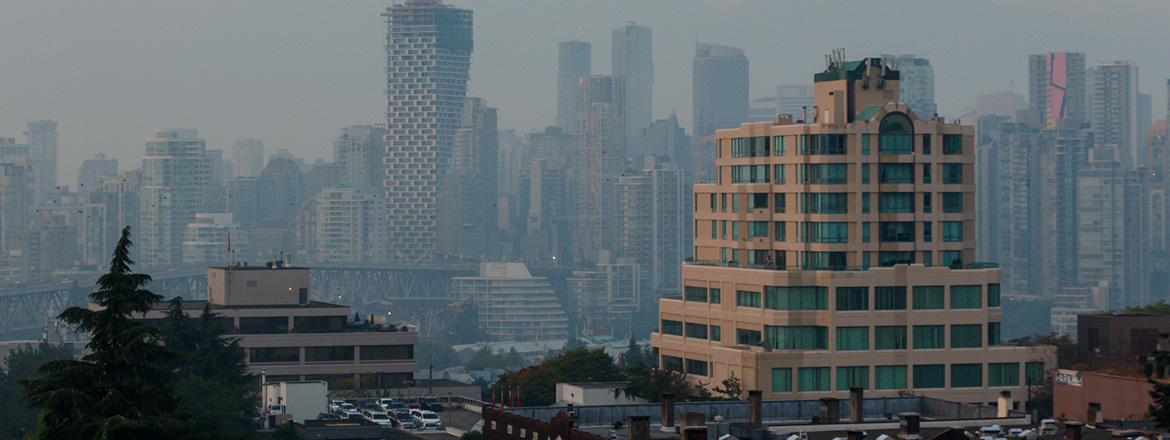
Smoke from wildland fires is a complex form of air pollution containing many contaminants including organic and inorganic gases and particles, especially fine particulate matter measuring less than 2.5 micrometers in diameter (PM2.5). The exact composition and concentrations of contaminants in wildland fire smoke (WFS) can vary depending on the nature of the fire conditions (size, temperature, duration, wind speed, wind direction) and the type of materials burned (natural vs. synthetic).2 The composition of smoke can be more complex when human-made materials and structures burn alongside natural fuels.
The study of smoke composition and its impact on human health is an active area of research; however, PM2.5 is often used as a proxy for the whole smoke mixture for several reasons:
- The impact of PM2.5 on human health has been studied for decades.3-5
- Based on the health evidence, ambient PM2.5 is monitored widely and reliable real-time data are available that can indicate the magnitude of change from background levels.6
- The concentration of PM2.5 in ambient air correlates better with the severity of WFS than the concentrations of other routinely-measured pollutants.2
In addition, the availability of low-cost PM2.5 sensors makes it possible to monitor air quality inside and outside of individual buildings.7 As such, PM2.5 is generally used as an indicator to understand the intensity of smoke and its movement through the building envelope, and to assess the impact of outdoor smoke on the air quality inside a building.
Health effects of PM2.5
The health effects of PM2.5 exposure can depend on the size and composition of the particles, which can include varying levels of organic and elemental carbon, heavy metals, and other contaminants.8-10 When inhaled, PM2.5 deposits deep in the lung, including in the alveolar region where oxygen exchange occurs. This can cause irritation, inflammation, and oxidative stress that affects the entire body.11 Exposure to PM2.5 carries risks at all concentrations, and evidence consistently shows that the health risks increase more sharply with incremental increases at low ambient levels than at higher ones.12 The many gaseous pollutants in WFS can also add to its overall effects on human health. The short-term effects of exposure to WFS and PM2.5 can include:
- Acute respiratory morbidity and mortality4,5
- Acute cardiovascular morbidity and mortality9
- Adverse impacts on cognitive function13
- Weakened immune system14
- Adverse impacts on people with kidney disease15
- Adverse impacts on people with diabetic conditions16
- Adverse birth and early life outcomes1
Some people may be more at risk, including those with pre-existing medical conditions, especially respiratory and cardiovascular diseases, seniors, pregnant women and the developing fetus, infants and young children. Research into the longer-lasting impacts of WFS exposure on human health is increasing, including the effects of repeated seasonal exposures. Evidence on the non-particulate pollutants in WFS is limited, and there is still much to learn about these gaseous exposures, their health effects, and effective interventions.
Understanding baseline PM2.5 concentrations outdoors and indoors
To reduce exposure to WFS PM2.5, it is important to understand baseline concentrations in different settings and to identify where people are most exposed. Outdoor baseline concentrations of PM2.5 in most high-income countries (24-hour average) are generally less than 25 micrograms per cubic metre of air (μg/m3) in urban areas, less than 10 μg/m3 in non-urban areas, and often much lower throughout Canada under normal conditions. Many jurisdictions have established ambient air quality standards (AAQS) for PM2.5 based on systematic reviews of the health evidence and the feasibility of achieving those standards. In Canada, the current AAQS for PM2.5 are 27 μg/m3 (24-hour average) and 8.8 μg/m3 (annual average), which will be reduced to 23 μg/m3 and 8.0 μg/m3, respectively, in 2030. In the United States (US), these values are 35 μg/m3 and 9 μg/m3, respectively. Both countries continuously measure PM2.5 concentrations and compliance with the AAQS at hundreds of air quality monitoring stations.
Throughout Canada, the evidence-based smoke-adapted Air Quality Health Index Plus (AQHI+) is also used to provide further health-based guidance on short-term (ambient 1-hour) PM2.5 concentrations (Table 1). Based on these levels, the recommended health messaging is adjusted for the general population and people at higher risk.17
Table 1 Ambient 1-hour PM2.5 concentrations and associated AQHI+ risk categories
|
PM2.5 concentrations (mg/m3) |
AQHI+ risk rating for short-term (ambient 1-hour) exposure |
|
0–30 |
low risk |
|
31–60 |
moderate risk |
|
61–100 |
high risk |
|
> 100 |
very high risk |
Indoor baseline concentrations of PM2.5 vary between buildings. They can be affected by indoor sources such as smoking, cooking, cleaning, using wood-fired appliances, and the infiltration of outdoor air through openings in the building envelope or the ventilation system. Even the most airtight buildings experience some infiltration of outdoor air. The infiltration coefficient for PM2.5, or the proportion of outdoor air that get inside, is typically not less than 20% for any building.18 There are currently no indoor air quality standards for PM2.5 in Canada or the US. However, measuring baseline indoor PM2.5 can help identify air quality changes during a WFS event and indicate whether interventions to lower indoor PM2.5 are effective.
Indoor PM2.5 concentrations in the context of ALARA
Given that most people in developed nations spend approximately 90% of their time indoors19 and health effects of PM2.5 can occur within hours of exposure, real-time protection from PM2.5 indoors can protect human health. Without health-based indoor air quality standards, the current public health recommendation is to maintain indoor PM2.5 levels as low as reasonably achievable (ALARA). In the context of WFS, the ALARA principle aims to minimize PM2.5 indoors by reducing the infiltration of outdoor sources. ASHRAE Guideline 44 explains the various building design and ventilation factors that can help achieve ALARA for PM2.5 indoors and can be incorporated into a smoke-readiness plan (SRP) for a building. In the absence of indoor PM2.5 standards and alongside ALARA, the AQHI+ (Table 1) can provide some context for assessing indoor PM2.5 exposure risk. Ideally, ALARA will be lower than the 1-hour 30 mg/m3 threshold for the AQHI+ low-risk category. However, this may not be achievable for all buildings, especially when outdoor concentrations of PM2.5 are extreme.
Achieving ALARA
There are four primary principles for achieving ALARA levels for PM2.5 indoors during a WFS event.
- Filter outdoor air entering the ventilation system to reduce the introduction of new pollutants, and filter indoor air to remove accumulated pollutants. Recirculate filtered air throughout the building.
- Maintain positive pressure or cascading positive pressure, meaning the air pressure inside the building is higher than the air pressure outside to prevent outdoor air from being pushed or drawn into the building via infiltration.
- Improve building air tightness to reduce infiltration of outdoor smoke and reduce sources of indoor air pollutants.
- Continuously monitor indoor and outdoor PM2.5 to assess the performance of the SRP and risks to building occupants.
Note: Building design and ventilation technology are complex and evolving fields. Decisions related to adapting the design, operation, or maintenance of heating, ventilation, or air conditioning (HVAC) systems to improve the smoke-readiness of a building should be made in consultation with HVAC professionals. ASHRAE Guideline 44 Section 5 provides in-depth information for designers and engineers on incorporating smoke-readiness principles into the design and commissioning of new buildings. Please refer to the original guideline for additional details.
Developing a smoke-readiness plan (SRP)
ASHRAE Guideline 44 is a step toward bridging the gap between building engineering, public health protection, and climate adaptation, with development of an SRP being the cornerstone of the guidance. ASHRAE defines an SRP as “documentation of the preparatory steps and mitigation strategies that a facility will use before, during, and after a WFS event to maintain indoor air quality.” An SRP combines actions that work together to minimize the exposure of building occupants to outdoor sources of smoke and PM2.5 pollution. The SRP is a living process for any building that experiences smoke exposures.
While the primary focus of an SRP is to protect occupants from the short- and long-term health effects of WFS, there are other benefits. Smoke exposure has significant effects on mental health and social well-being, particularly during prolonged events. Evacuations and displacement, even when temporary, can cause stress and anxiety, particularly for more at-risk groups such as children and people in long-term care. By allowing individuals to remain in familiar spaces, a well-implemented SRP can reduce stress, maintain a sense of belonging, support mental health, and realize economic benefits, for example, by allowing workplaces to remain open, safe, and healthy for workers. In addition, an effective SRP will help to protect building infrastructure and contents from potential WFS damage and associated cleanup.
In this guide, the key features of an SRP fall into four interconnected categories:
- Building design factors: Factors related to the overall design and construction of the building. For the purposes of an SRP this generally focuses on the building envelope and features that impact the air tightness of the envelope, such as windows, doors, and vapour barriers.
- Engineering factors: Factors related to building mechanical systems, especially ventilation and air filtration systems that are interconnected and centrally controlled by the building mechanical team. Electronic sensors, switches, circuits, and monitoring tools are included in the engineering factors.
- Administrative factors: Factors related to the day-to-day use of a building. This may include building maintenance, management, human resources, and access control.
- Occupant factors: Factors related to users or occupants of the building. Factors that are controlled by individuals or groups that relate to indoor air quality are included in this category.
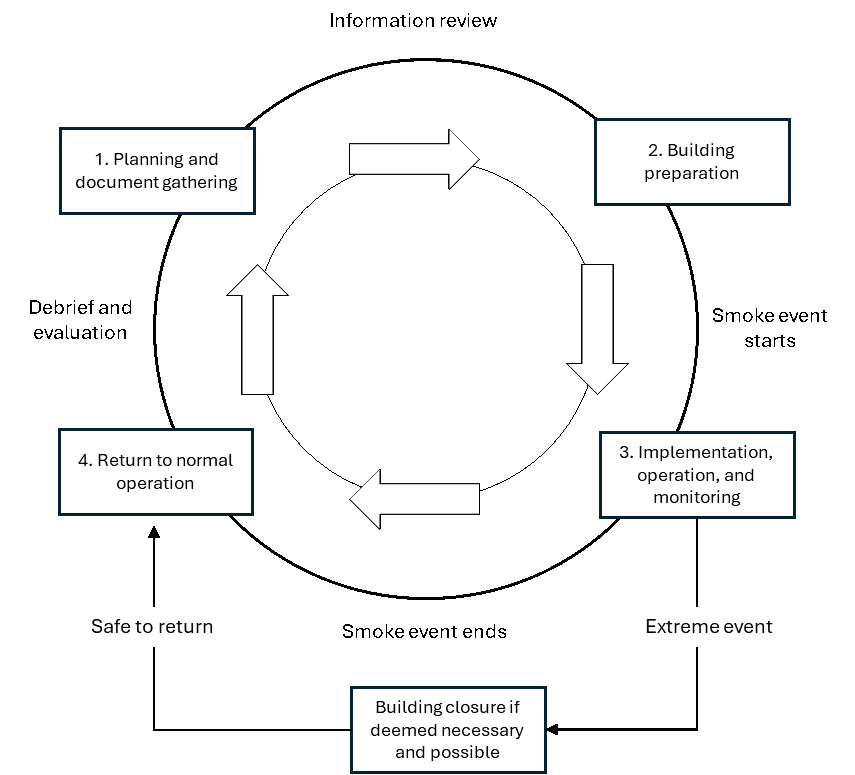
The development and implementation of an SRP is circular in nature, and a feedback loop should be embedded into the plan to address challenges and areas for improvement. Lessons learned throughout the process should be reviewed annually at minimum, and corrective actions should be implemented before the next smoke event to improve the smoke protection for the building occupants and users. Figure 1 highlights the concept of connecting the four phases of the SRP into a continuous process.
Figure 1: Continuous/circular nature of an SRP
To achieve comprehensive smoke protection, substantial improvements in building design and ventilation systems may be required. This presents challenges for building owners or public facilities without adequate resources to implement upgrades. Lower-income households in older multi-unit residential buildings may be particularly impacted because those buildings may not be equipped to accommodate necessary upgrades. Additionally, occupational differences result in varying levels of exposure. Office workers can benefit from improved indoor air quality through an SRP, but those who work outdoors cannot. It is important to note that an SRP is specific to the building type, and adapted to the occupants using the building, which may include staff, residents, or members of the public.
Maximizing the impact of an SRP
Different actions in an SRP can have varying levels of impact. Prioritizing the highest impact actions can support decision-making about where to begin. Most buildings have not been designed with smoke-readiness in mind, meaning that some of the recommended actions may require retrofitting, renovation, or replacement work. To ensure the most efficient use of resources, a hierarchical approach can be applied, prioritizing actions that have the broadest impact across the entire building, while also balancing best-value interventions, ensuring that efforts to improve smoke-readiness are both practical and cost-effective.
In general, building design and engineering modifications have the widest impact by reducing smoke infiltration and improving smoke removal. However, these measures can be complex and costly to implement. In contrast, administrative and personal actions can be easier to implement but may have limited effectiveness if the building has significant design weaknesses or ventilation system vulnerabilities that allow excessive smoke entry.
An SRP must be unique to each building and should account for the characteristics such as building design and envelope, ventilation system, building uses, occupancy types and levels, and the overall risk and intensity of smoke exposure. There are four phases to developing and implementing an SRP. These include:
- Planning and documentation
- Building preparation
- Implementation (operation and monitoring)
- Return to normal operation
The following sections provide an overview of these four phases, with reference to the key features of SRPs (e.g., building design, engineering, administrative and occupant factors) where relevant. Checklists to guide each stage of an SRP are provided in Appendix A and a one-page summary of an SRP is provided in Appendix B.
1. Planning and documentation
The planning phase of an SRP involves an in-depth review of the building design, structural features, and building uses, as well as the design, capacity, and setup of the mechanical ventilation system. The goal of this phase is to develop an overall understanding of building function and evaluate the baseline capacity of the building to be smoke-ready. This work should be done well in advance of smoke season.
Smoke-readiness planning should be a collaborative exercise including the owner/operator of the building, HVAC technicians, the maintenance team, the design team, and the management team. The initial stages should collect information about the building that can be used to support decision-making. Key considerations for planning and gathering documentation are described in sections A to D below.
The planning and documentation phase should culminate in a written SRP that includes all the necessary documentation, observations, and records in one place. The written SRP should also assign roles and responsibilities, establish decision-making thresholds or triggers for action, and include key references to inform any interventions to improve the building envelope or operation of its HVAC systems. The written SRP should be revised as needed following testing or implementation of the plan.
A. Establish baseline PM2.5 levels and anticipate likely smoke exposure scenarios
Gathering weather and air quality data from sensors, where available, and information on previous smoke events can help establish baseline outdoor PM2.5 levels and smoke exposure frequencies for a building. Historical air quality data can help establish baseline outdoor exposure levels under normal conditions. Collecting data on indoor PM2.5 levels using low-cost sensors can provide additional baseline information to evaluate indoor air quality during a smoke event.
- Refer to ASHRAE Guideline 44:
- Informative Appendix A for information on interpreting ambient air quality data during WFS events
- Section 4.10 for additional information on sensor technologies
- Section 5.5.1 for additional information on use and placement of PM2.5 sensors
B. Review building design factors
Building design documents can help evaluate the features of the building envelope that affect smoke-readiness. They describe various parts of the building, structural features, and interconnections between parts of the building. The review of design documents can help identify areas most at risk of outdoor smoke entry, including doors and windows. A review of design documents will also help to locate HVAC system components, mechanical and power systems that are integral to building operations. This review can be supplemented by a building walk-through to observe features, assess conditions, and verify information in reports and documents. The document review and walk-through can help to identify special use areas (e.g., kitchens, labs, loading bays, entries), which may need special attention in the SRP.
- Refer to ASHRAE Guideline 44:
- Section 5.5.3.1 for additional information on understanding building egress and entrance points.
C. Review engineering factors
A review of technical information about ventilation systems will provide details on the capabilities of the system and residual capacity for system modifications. It will also identify potential points of system failure. A review of the number and type of filters, filter assemblies, and fan motors will identify the baseline capacity of the system to remove PM2.5 and areas where higher-MERV filter upgrades may be possible. The input of a trained HVAC professional may be needed to evaluate whether equipment can operate safely with higher-efficiency filters. Understanding the technical specifications of the ventilation system during typical conditions can guide the return to normal after a WFS event. Depending on the building, location, and characteristics of the outdoor air, activated carbon filters are sometimes used in return air vents to control odours during or after a WFS event. The review should consider the use or need for these filters.
D. Review administrative and occupant factors
It is important to gather administrative information pertaining to the use and operation of a building, including its intended use and operation during a WFS event. This includes the number and type of occupants, operations and management policies, and maintenance practices. This information can assist preparedness and response to smoke events and ensure the safety of building occupants. Some buildings such as hospitals, correctional facilities, or long-term care facilities must continue normal operations even in extreme events and may require more detailed assessment of actions to protect indoor air quality.
Identifying roles and responsibilities and assigning technical, administrative, and communications tasks to staff is a necessary part of the SRP. Tasks may include implementing improvements and upgrades to the building, purchasing supplies such as filters and personal protective equipment (e.g., N95 respirators), and developing a communications plan for building occupants. It is essential to identify space to store supplies such as portable air cleaners (PACs), PPE, and filters until they are needed. Administrative tasks can also include financial planning for resources required to develop and implement an SRP.
While individual building users are generally not involved in the planning, information gathering, and documentation of an SRP, their input and perspectives can be considered. Different user groups may have varying needs or require accommodations when interacting with building upgrades or operational changes. Identifying representatives from affected groups may help inform the decision-making process.
Checklist 1 (Appendix A) guides the collection of information, observations, data, and essential documentation for developing and writing an SRP. This checklist should be reviewed and updated annually and inform future retrofitting or upgrades to the building or its ventilation system. The collection of information described above and in Checklist 1 can help prioritize areas for improving smoke-readiness.
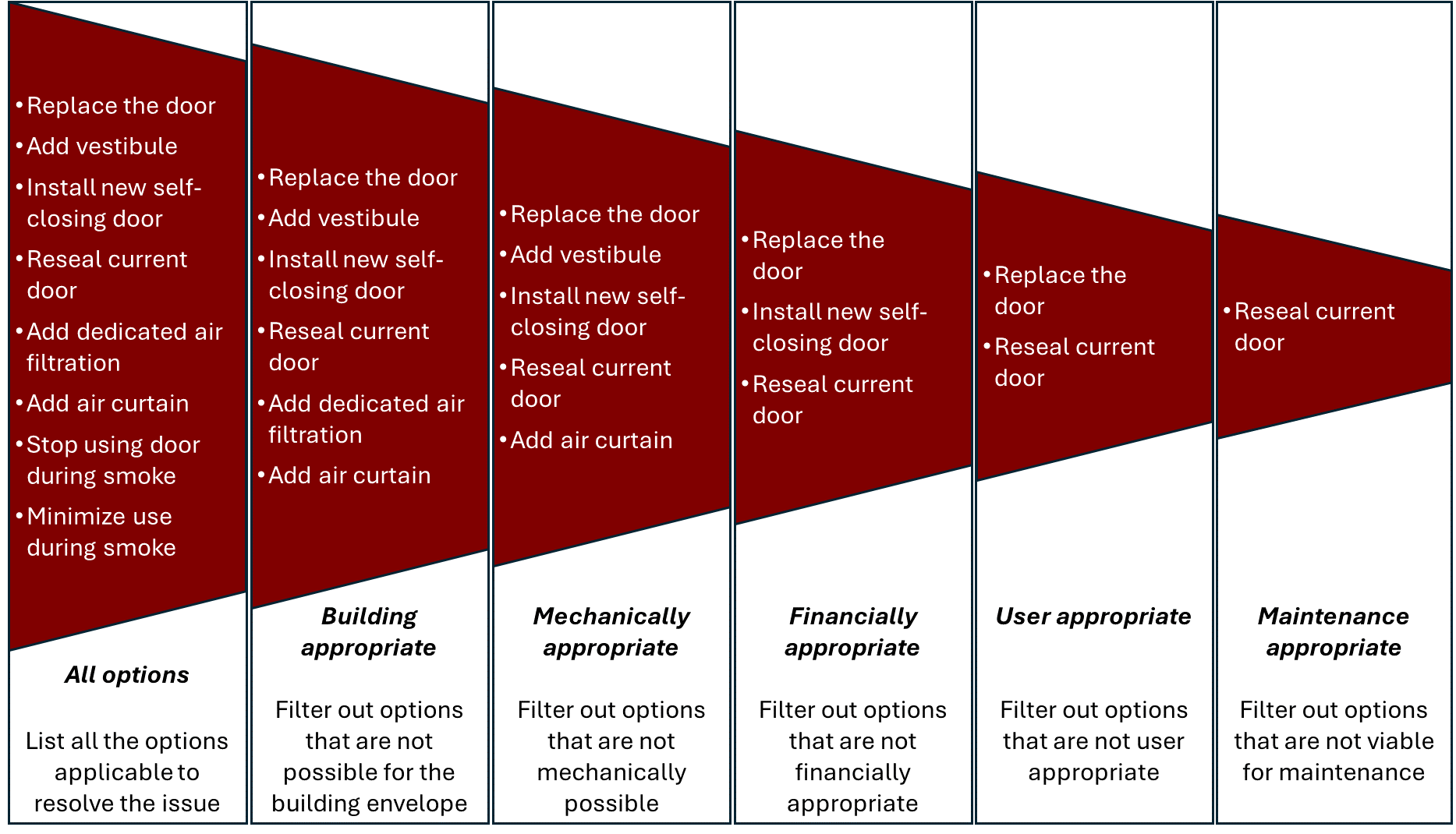
For some factors, there may be multiple actions that can achieve the same outcome. Box 1 provides an example of applying a horizontal funnel review process to decision-making, highlighting how different partners may be involved. The planning phase enables a thorough review of various building features and facilitates decision-making on necessary building preparation work.
|
Box 1. Design and ventilation system: Example of a horizontal funnel review process for deciding which building preparation steps to implement |
|
Hypothetical scenario: During the planning phase, the team identified that the main door is causing air leakage into the building. Several solutions could be implemented from design, engineering, and administrative perspectives. Collective and thoughtful evaluation supports a decision that is practical and impactful, starting with all options and filtering out those that are not feasible or effective from a structural, mechanical, financial, usability or maintenance perspective. For example, closing or minimizing door use does not solve the issue due to leakage, so another option is needed. Image
|
2. Building preparation
The building preparation phase implements the actions decided and documented during the planning phase. Depending on the complexity of the building and the availability of resources, this phase may take considerable time and effort. The primary objective is to identify and implement modifications and/or upgrades that will support smoke-readiness. Key considerations for preparing a building are described in sections A to D below, referencing areas of ASHRAE Guideline 44 and other documents for specific technical information.
A. Building design factors
Making the building envelope as airtight as possible can prevent smoke from entering the building. Achieving air tightness should be pursued within the capacity of building systems to accommodate changes while maintaining adequate ventilation for occupants. It is important to understand and regularly monitor the baseline air leakage of a building, especially after renovations where the building envelop has been impacted. Optimizing the air tightness may mean removing or replacing parts of the envelope that are damaged or totally replacing or upgrading areas that permit air leakage. Operating the building at positive pressure can also help reduce smoke entry via infiltration, especially in situations where further air sealing of the building envelope is not possible or practical.
- Refer to ASHRAE Guideline 44:
- Section 5.5.3 and Section 6.2.4 for information on building envelope tightening
- Refer to ASTM E779 Standard test method for determining air leakage rate by fan pressurization; and ASTM E3158 Standard test method for measuring the air leakage rate of large or multizonal buildings, to determine the air tightness of buildings (acceptable air leakage rates and calculation processes vary between different jurisdictions)
- Refer to ASTM E 1186 Standard practices for air leakage detection in building envelopes and air barrier systems to help identify locations of air leaks
- Refer to US Department of Energy— Air Sealing Your Home for information on reducing air leaks with caulking and weatherstripping
- Refer to ASHRAE Handbook—Fundamentals—Chapter 16 on ventilation and infiltration
B. Engineering factors
The building ventilation system should be maintained as per the specifications of the manufacturer and installer before attempting to implement any updates or upgrades.
- Refer to ANSI/ASHRAE/ACCA Standard 180: Standard practice for inspection and maintenance of commercial building HVAC Systems
- Refer to ANSI/ASHRAE Standard 62.1: Ventilation and acceptable indoor air quality, Section 8 for checklist and standards on maintenance
Modifications and upgrades to the ventilation system should be done with the goal of reducing PM2.5 infiltration from outdoors and improving the filtration of recirculating indoor air. The primary focus should be on the air filters in the HVAC system. The review of the filters, filter assemblies, and fan motor capacity during the planning phase will help identify targeted interventions. The ratings of buildings should not be increased without completing a detailed review of the HVAC system. If the HVAC system cannot accommodate increased filtration, installing filters with higher ratings can result in a negative building pressure, which could increase smoke infiltration and reduce indoor air quality. The ability of the system to accommodate activated carbon filters should also be considered if they are included in the SRP.
- Refer to ASHRAE Guideline 44:
- Section 5.1 for information selection of filters and Section 5.5.4 for filter setup
- Table 6 for guidance on upgrading to higher-efficiency filters
- Section 6.2.2. Air Cleaning
- Refer to ASHRAE Indoor Air Quality Guide, Strategy 7.5, for information on filter combinations to achieve effective indoor air quality
Reducing outdoor air coming into the ventilation system is an important modification to support smoke-readiness. This can reduce filter clogging and the frequency of filter replacement. Planning to address overlapping health hazards, however, may be required for certain buildings and their occupants. Adjusting outdoor air intake and recirculating indoor air may require balancing occupant safety related to indoor air quality, overheating, or periods of elevated risk for diseases caused by infectious aerosols.
- Refer to ASHRAE Guideline 44:
- Informative Appendix B for information on air economizers and demand control ventilation-related modifications to reduce outdoor air intake
- Section 5.4.3 for information on factors affecting filter loading
- Refer to ASHRAE Epidemic Task Force: Building readiness guide Upgrading and improving filtration for information on filter upgrades
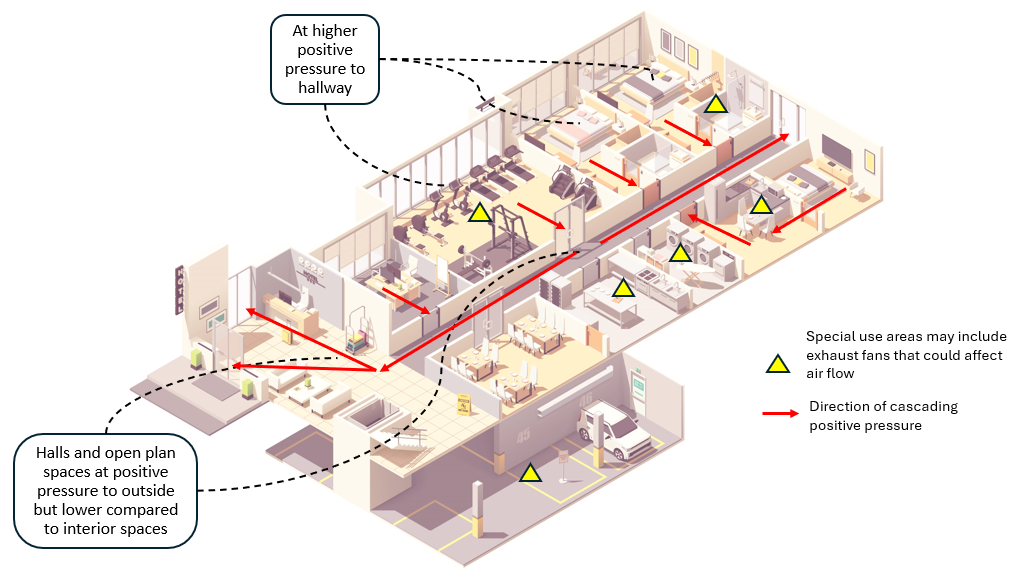
In addition to limiting outdoor air intake through the HVAC system, creating positive pressure in the building can prevent smoke infiltration through openings and leaks in the building envelope. Positive pressure refers to the state when internal air pressure is higher than external air pressure, such that air is flowing from the indoor environment into the outdoor environment, and not vice versa. Maintaining positive pressure requires modifications that reduce air leakage and improve air circulation inside. Box 2 illustrates the direction of cascading positive pressure in a multi-use building.
|
Box 2. Illustration of cascading positive pressure in a multi-use space |
|
Developing cascading positive pressure in a building creates a natural flow of air from inside the building to outside. Indoor positive pressure supports building air tightness by developing a counter air current to incoming smoke from outside. Most interior areas of the building have a constant flow of filtered air from the ventilation system. The communal indoor areas are at lower pressure than individual spaces or rooms. This helps push air from these spaces to common areas, which in turn are maintained at higher pressure compared with the outdoors. The red arrows in the diagram indicate the general direction of cascading positive pressure in a multi-use building. Areas with dedicated exhaust systems, such as bathrooms, kitchens, laundry rooms, gyms, or garages may require special considerations. The use of exhaust fans can reduce indoor pressure and counter the positive pressure. During a smoke event, reducing or modifying the use of exhaust fans may be needed. Always verify with engineering professionals that higher pressure in the building when in smoke-ready mode will not result in the forces required to open doors to exceed allowable code limits. Image
|
For establishing positive pressure, the target should be to keep indoor air pressure at 5 to 17 Pa (0.02 to 0.07 in. of water) higher than outdoor air pressure. More simply put, the intake of outdoor air should be 10% greater than the exhaust airflow, meaning more air is entering the building through the ventilation system than leaves through exhaust.
- Refer to ASHRAE Guideline 44:
- Section 5.5.1.3. for information on building pressure sensors
- Section 5.5.2.2 for information on developing positive pressure in the building
- Section 5.5.2.3 for information on pressure monitoring and control
- Section 6.2.1 on use of mechanical systems to develop/maintain positive pressure
- Informative Appendix B for information on air economizers and demand control ventilation-related modifications to develop positive pressure
The ventilation improvements or modifications listed above should be complemented with real-time monitoring of the indoor environment to maintain safe indoor spaces for occupants and support decision-making during an event. Low-cost and readily available indoor sensors for PM2.5 can support the SRP and help to indicate changes from baseline or infiltration of smoke. Many sensors also record indoor temperature, relative humidity, and air pressure. Information provided by indoor sensors can allow for quick actions to avoid system overloading and failures and provide real-time feedback on the effectiveness of smoke-readiness interventions.
- Refer to ASHRAE Guideline 44:
- Section 6.2.8 for information on indoor and outdoor PM2.5 monitoring
- Refer to US EPA Enhanced air sensor guidebook for information on PM2.5 sensors
Additionally, all the above-mentioned modifications can be supported by modifying building system controls through centralized system operation, where available.
- Refer to ASHRAE Guideline 44:
- Section 5.5.2.1 for information on Building Control System updates
- Section 6.2.3. for Building Automation System information
Any improvements or modifications to the ventilation system should be tested and commissioned by an engineering professional once installed. Depending on the type of the HVAC system in the building, it may be easier to implement some engineering factors over others.
- Refer to ASHRAE Guideline 44, Table 3 for information on the ease of implementation for engineering factors in most common HVAC system types
C. Administrative factors
Administrative preparation includes developing communications and training plans as part of the written SRP. During an event, information about smoke-ready mode must be communicated to occupants and partners. This could include information on the SRP and factors that directly and indirectly impact the building users and occupants. A communications plan should include the messaging required for different building occupants and how to deliver the messaging, such as via direct messaging, signage, or other methods.
Staff should be trained in advance of a smoke event so there are clear roles and responsibilities assigned for implementation, monitoring, and maintenance actions. A mock tabletop exercise or trial of the SRP should be done annually before the smoke season to ensure all parties are aware of their responsibilities and any appropriate actions to take before, during, and after a smoke event. This will allow for maximum use of available human resources during an event.
Administrative factors also include day-to-day use modifications of the building that may apply before, during and after a smoke event. Examples include changes to operations in areas such as indoor gyms, laundry rooms, common kitchens, or primary access doors.
- Refer to ASHRAE Guideline 44:
- Section 6.2.7 for information on administrative controls
D. Occupant factors
Preparing building occupants for a smoke event can ensure they understand how individual-level actions can affect indoor exposure to smoke pollution. Actions can be targeted at making behaviour changes and supporting activities that, in turn, add to the overall smoke-readiness. Individuals can supplement the building’s smoke-readiness by reducing activities that generate indoor sources of PM2.5 such as smoking, cooking, cleaning, burning candles or incense, using wood-burning appliances, and more. PACs can also be used to supplement air cleaning in the spaces occupied by individuals or groups.
- Refer to ASHRAE Guideline 44:
- Section 5.5.5 on planning for Portable Air Cleaners in new buildings
- Section 6.2.2.3 for information on PAC selection, operation and maintenance
Once steps have been taken to prepare the building, it is important to ensure that all modifications work together to collectively create better indoor air quality during a smoke event. There are currently no standardized methods to assess smoke readiness, but putting the building into smoke-ready mode before an event can serve to ensure that it operates as expected with all modifications in place. Most importantly, it is valuable to verify that the building can operate at positive pressure without putting undue stress on its systems. Simultaneous monitoring of both outdoor and indoor PM2.5 concentrations can indicate whether PM2.5 levels are lower indoors; differences may not be detectable if the SRP is tested during a period of good outdoor air quality. During a smoke event, using sensors to compare indoor and outdoor PM2.5 can help indicate how step-by-step actions to implement the SRP are working. The AQHI+ risk categories (Table 1) can help operators evaluate how health risks related to indoor air are changing and whether further actions are needed to protect building occupants.
Checklist 2 (Appendix A) covers building preparedness actions related to design, engineering, administrative, and occupant factors, as described above. The actual actions or checklist for each building may be different based on the review and decision-making that occurred during the planning, information gathering, and documentation stages of the SRP.
3. Implementation, operation, and monitoring of the SRP
The planning and preparation steps help to identify the most appropriate and feasible actions, modifications, or upgrades to the building that support its smoke-readiness. The next phase is to determine when and how to activate the building's smoke-ready mode. This involves the operational implementation of all relevant factors. Outdoor smoke levels can fluctuate during the typical wildfire season, so not all factors may need to be implemented simultaneously. Instead, incremental changes can be implemented based on the outdoor air quality and the building's ability to maintain indoor air quality. Pre-determined trigger points or thresholds can inform when to initiate or revert to various smoke-readiness actions.
Decisions on when to implement actions can be informed by:
- The building’s intended use and function during a smoke event
- Guidance from meteorologists and local public health authorities on smoke levels and risks
- Emergency management plans for the area
- Monitoring indoor air quality
Thresholds and monitoring points can be defined for:
- Transitioning the building to a smoke-ready state
- Indoor air concentrations that trigger specific actions or changes to building operations
- Actions based on evolving conditions, which could include closing the building if criteria for this decision have been articulated in the SRP
Depending on the complexity of the building and smoke conditions, multiple decision-matrices may be required to allow for optimal use of larger buildings or multi-building complexes. Decision matrices may also vary for wildland fires, interface fires, or wildfires that lead to urban conflagration. When to implement different stages of an SPR can be based on the presence of WFS outdoors, 24-hour average outdoor PM2.5 levels, or indices such as the Canadian AQHI+. For individual buildings, trigger points may vary. Additional parameters to consider include:
- Current outdoor and indoor PM2.5 levels (in Canada, use https://aqmap.ca/ for outdoor levels)
- Forecasted impacts of smoke over the next 72 hours (in Canada, use https://weather.gc.ca/firework/ or https://firesmoke.ca/)
- Building pressure
- Public health advisories
- Occupant comfort levels
- Proximity of active fires
- Heat exposure risks
- Power consumption and availability—e.g., a power outage could affect the ability to run HVAC systems.
Operation and monitoring during a smoke event
Smoke-ready mode refers to a building’s condition when optimal modifications have been implemented to minimize indoor smoke infiltration and occupant exposure. The initiation of smoke-ready mode depends on pre-established decision-making thresholds as described above. Once the building is operating in smoke-ready mode, the situation should be monitored to help make decisions related to the building's continued use and occupant risk. Key considerations for monitoring are described in A to D below. Most of the design and engineering factors have been considered prior to initiating the smoke-ready mode, so during an active smoke event, many of the factors are operational and administrative.
A. Building design factors
Routine maintenance and reporting of maintenance issues, which form part of regular building operation, should continue as normal to ensure that any issues impacting a building’s air tightness are identified and addressed quickly.
B. Engineering factors
Safe operation of the ventilation system should be maintained in smoke-ready mode to ensure the system remains functional and is not overloaded. Examples of overload can be electrical system failure, fan surge, ECM fan failure, and filter clogging. System failure can also be caused by events such as a local power grid failure or a plumbing or water system failure. Ideally, most systems should be monitored via a central control unit. Alternatively, an administrative schedule can be developed based on the complexity of systems to monitor daily for system failures. Visually inspecting filters and changing them as needed during the smoke event, for example, should form part of this daily schedule.
C. Administrative factors
During a smoke event, maintaining communication with occupants is key to ensuring their safety. Occupants should be made aware of information on potential symptoms associated with smoke exposure and the actions they can take to reduce individual exposure. The methods for interacting with occupants should be included in the documented communications plan, as described in section 2C. This could include signage posted at entries and around the building when operating in smoke-ready mode, email memos to building occupants, or announcements over public address systems.
D. Occupant factors
Occupants of the building should be encouraged to actively support smoke-ready mode by modifying their daily activities and preventing worsening of indoor air quality. This may include reducing activities that generate PM2.5 indoors, running PACs when needed to remove PM2.5, following advice and instructions from building administration to prevent smoke infiltration, and being aware of current public health information related to smoke.
Checklist 3 (Appendix A) covers steps and monitoring actions to undertake during smoke-ready mode. The most important objective of this phase is to reduce smoke-related risks to building occupants and staff.
Considerations for partial or complete building closure due to indoor air quality
If satisfactory reductions in indoor PM2.5 cannot be achieved after full implementation of an SRP, operators should consider whether closing the building (or a portion of the building) until the smoke has cleared is the best option. In buildings that cannot be closed (e.g., hospitals, prisons, long-term care, etc.), other measures such as designated cleaner air spaces, personal protective equipment such as N95s, or more PACs may be needed to reduce occupant exposure. More information on cleaner air spaces is available from Health Canada.20
Any criteria for closing a building or relocating occupants should be carefully established as part of the planning, documentation, and building preparation processes. Factors such as the building’s ability to sustain smoke-readiness, the ventilation system’s ability to handle added stress, and balancing other overlapping health hazards should be considered in any decisions to relocate building occupants, and unintended adverse effects of relocation. For example, schools provide many vital services to children and their families that cannot be delivered if they are closed, and children may not have access to better air quality elsewhere. Operators should continue to follow guidance from public health or local emergency management organizations and follow fire evacuation alerts and orders as necessary.
If the decision is made to close a building and relocate occupants, the ventilation system may need to be adjusted to prevent smoke intrusion and facilitate a quicker return to operation. This could include closing air intakes or shutting off the HVAC system to minimize smoke entry. Some shutdown processes can be lengthy and complex and should be done with expert advice to avoid irreparable damage to system components.
4. Returning to normal operation after the smoke event
A return to normal operations involves reverting to all operational modifications that were made to enact the smoke-ready mode. The details of those actions depend on which modifications were made. One key consideration is to prevent PM2.5 build-up from filters, ventilation systems, or any other parts of the building from re-entering and becoming suspended in the indoor air. Another important goal is to collect information and data related to the event and evaluate the SRP to inform future improvements. Key considerations are listed in sections A to D below.
A. Building design factors
Some smoke events may be accompanied by heat or wind that can damage key features of the building envelope that affect building air tightness and the ability to maintain positive pressure. Depending on the severity of the event, an inspection of these features may be needed, such as damage to windows, doors, warping of seals, or damage to air intake or exhaust vents.
B. Engineering factors
Activities should focus on evaluating the building ventilation system to assess whether it poses any risk to the occupants, such as recirculating dirty air. Parts of the ventilation system that may have collected PM2.5 should be replaced (filters) or cleaned (screens or vents) to avoid releasing PM2.5 back into the indoor air. The system should be returned to its normal operating pressure, and the use of economizers or exhaust in special use areas can be resumed to improve indoor air.
C. Administrative factors
Administrative work is important during this phase. Smoke-readiness supplies, such as PACs or filters, should be inspected and returned to storage, and replacements ordered as needed. A thorough review of the operations, communications, response, and data collection during the event should be conducted. Additionally, a detailed review and reflection on critical events during the whole SRP development, preparation, and implementation is useful. Documenting this review and reflection will guide future smoke-readiness activities.
D. Occupant factors
Where feasible, occupants should support the return to normal activities by following actions to remove any PM2.5 from their individual spaces. This could include cleaning indoor spaces with HEPA filter vacuum cleaners and wet wiping or mopping other surfaces. Building occupants should also be engaged in evaluation of the SRP following the event. Input from building users can help in the revision and improvement of the plan. Resources on post wildfire cleanup are included in the NCCEH subject guide: Practical guidance for post wildfire cleanup.
Checklist 4 (Appendix A) covers the actions that can assist a return to normal operations. Once the building has returned to normal, a debrief exercise should be done to identify any gaps or challenges with implementing the SRP. There should also be a design and ventilation system review as described in the planning section to determine whether alternative upgrades would improve smoke-readiness.
Conclusions
A smoke-readiness strategy requires continuous evaluation and adaptation to remain responsive to changing conditions. A well-developed, documented, and properly implemented SRP will reduce strain on emergency management systems, maintain public safety, and help people maintain normal routines during smoke events. It can enable essential operations to continue while effectively reducing smoke exposure and reduce the societal impacts of closing facilities, such as schools or daycares, and help maintain productivity in indoor workspaces. Development and implementation of an SRP in public buildings may support their use as cleaner air spaces during smoke events, which may reduce the need for smoke-related evacuations in some regions.20
As our understanding of the health impacts of WFS grows, the need for SRPs becomes increasingly clear. The success of an SRP depends on effective coordination and administration. However, not all buildings have the infrastructure or governance to implement and maintain such plans. Public health practitioners are embedded into communities and have a longstanding role in community planning, public health education, and emergency management. Public health therefore has an important role in supporting decision-making and prioritizing efforts that can be protective of health during smoke events. The knowledge of SRPs and other factors that affect smoke exposure indoors is therefore much needed for any public health practitioner.
Acknowledgements
We acknowledge the valued input from those who assisted in the production and review of this document including members of the ASHRAE Guideline Project Committee 44 who produced the Guideline and provided valuable feedback on this companion guide, including Abdel Darwich (Guttman & Blaevoet Consulting Engineers), Greg Nilsson (National Research Council Canada), and Alison Savage (US Environmental Protection Agency).
References
- American Society of Heating RaA-CE. Guideline 44: Protecting building occupants from smoke during wildfire and prescribed burn events. Peachtree Corners, GA: ASHRAE; 2024 Nov. Available from: https://store.accuristech.com/ashrae/standards/guideline-44-2024-protecting-building-occupants-from-smoke-during-wildfire-and-prescribed-burn-events?product_id=2923808.
- Reisen F, Duran SM, Flannigan M, Elliott C, Rideout K. Wildfire smoke and public health risk. Int J Wildland Fire. 2015 Aug;24(8):1029-44. Available from: https://doi.org/10.1071/WF15034.
- Chen H, Samet JM, Bromberg PA, Tong H. Cardiovascular health impacts of wildfire smoke exposure. Part Fibre Toxicol. 2021 Jan;18(1):2. Available from: https://doi.org/10.1186/s12989-020-00394-8.
- Liu JC, Pereira G, Uhl SA, Bravo MA, Bell ML. A systematic review of the physical health impacts from non-occupational exposure to wildfire smoke. Environ Res. 2015 Jan;136:120-32. Available from: https://doi.org/10.1016/j.envres.2014.10.015.
- Reid CE, Brauer M, Johnston FH, Jerrett M, Balmes JR, Elliott CT. Critical review of health impacts of wildfire smoke exposure. Environ Health Perspect. 2016 Sep;124(9):1334-43. Available from: https://doi.org/10.1289/ehp.1409277.
- Environment and Climate Change Canada. National air pollution surveillance program: Government of Canada; 2022 Apr. Available from: https://www.canada.ca/en/environment-climate-change/services/air-pollution/monitoring-networks-data/national-air-pollution-program.html.
- Innovation Science and Economic Development Canada. Tiny tech, big impact: Monitoring air quality with low-cost sensors. Ottawa, ON: Government of Canada; 2024 Jun. Available from: https://science.gc.ca/site/science/en/blogs/science-health/tiny-tech-big-impact-monitoring-air-quality-low-cost-sensors.
- Atwi K, Wilson SN, Mondal A, Edenfield RC, Symosko Crow KM, El Hajj O, et al. Differential response of human lung epithelial cells to particulate matter in fresh and photochemically aged biomass-burning smoke. Atmos Environ. 2022 Feb;271:118929. Available from: https://doi.org/10.1016/j.atmosenv.2021.118929.
- Kim YH, King C, Krantz T, Hargrove MM, George IJ, McGee J, et al. The role of fuel type and combustion phase on the toxicity of biomass smoke following inhalation exposure in mice. Arch Toxicol. 2019 Jun;93(6):1501-13. Available from: https://doi.org/10.1007/s00204-019-02450-5.
- Magzamen S, Gan RW, Liu J, O'Dell K, Ford B, Berg K, et al. Differential cardiopulmonary health impacts of local and long-range transport of wildfire smoke. GeoHealth. 2021 Mar;5(3):e2020GH000330. Available from: https://doi.org/10.1029/2020GH000330.
- Mazzoli-Rocha F, Fernandes S, Einicker-Lamas M, Zin WA. Roles of oxidative stress in signaling and inflammation induced by particulate matter. Cell Biol Toxicol. 2010 Oct;26(5):481-98. Available from: https://doi.org/10.1007/s10565-010-9158-2.
- Health Canada. Guidance for fine particulate matter (PM2.5) in residential indoor air. research;guidance. Ottawa, ON: Government of Canada; 2012 Aug. Available from: https://www.canada.ca/en/health-canada/services/publications/healthy-living/guidance-fine-particulate-matter-pm2-5-residential-indoor-air.html.
- Cleland SE, Wyatt LH, Wei L, Paul N, Serre ML, West JJ, et al. Short-term exposure to wildfire smoke and PM2.5 and cognitive performance in a brain-training game: A longitudinal study of U.S. adults. Environ Health Perspect. 2022 Jun;130(6):67005. Available from: https://doi.org/10.1289/EHP10498.
- Black C, Gerriets JE, Fontaine JH, Harper RW, Kenyon NJ, Tablin F, et al. Early life wildfire smoke exposure is associated with immune dysregulation and lung function decrements in adolescence. Am J Respir Cell Mol Biol. 2017 May;56(5):657-66. Available from: https://doi.org/10.1165/rcmb.2016-0380OC.
- Xi Y, Kshirsagar AV, Wade TJ, Richardson DB, Brookhart MA, Wyatt L, et al. Mortality in US hemodialysis patients following exposure to wildfire smoke. J Am Soc Nephrol. 2020 Aug;31(8):1824-35. Available from: https://doi.org/10.1681/ASN.2019101066.
- Yao J, Brauer M, Wei J, McGrail KM, Johnston FH, Henderson SB. Sub-daily exposure to fine particulate matter and ambulance dispatches during wildfire seasons: A case-crossover study in British Columbia, Canada. Environ Health Perspect. 2020 Jun;128(6):067006. Available from: https://doi.org/10.1289/EHP5792.
- BC Centre for Disease Control. Wildfire smoke and the Air Quality Health Index (AQHI). Vancouver, BC: BCCDC; 2024 May. Available from: http://www.bccdc.ca/resource-gallery/Documents/Guidelines%20and%20Forms/Guidelines%20and%20Manuals/Health-Environment/BCCDC_WildFire_FactSheet_SmokeAndTheAQHI.pdf.
- Liang Y, Sengupta D, Campmier MJ, Lunderberg DM, Apte JS, Goldstein AH. Wildfire smoke impacts on indoor air quality assessed using crowdsourced data in California. Proceedings of the National Academy of Sciences of the United States of America. 2021 Aug;118(36):e2106478118. Available from: https://doi.org/10.1073/pnas.2106478118.
- Leech JA, Nelson WC, Burnett RT, Aaron S, Raizenne ME. It's about time: a comparison of Canadian and American time-activity patterns. J Expo Sci Environ Epidemiol. 2002 Nov;12(6):427-32. Available from: https://doi.org/10.1038/sj.jea.7500244.
- Health Canada. Guidance for cleaner air spaces during wildfire smoke events. Ottawa, ON: Government of Canada; 2020 Sep. Available from: https://www.canada.ca/en/health-canada/services/publications/healthy-living/guidance-cleaner-air-spaces-during-wildfire-smoke-events.html.
Appendix A: Smoke Readiness Plan (SRP) Checklists 1–4
View Checklists 1 - 4 in PDF format
-
Checklist 1: Planning and document gathering
-
Checklist 2: Building preparation
-
Checklist 3: Implementation, operation, and monitoring
-
Checklist 4: Return to normal operation
Appendix B: One-page summary of an SRP