

Recreational coastal, freshwater, and other untreated natural waters

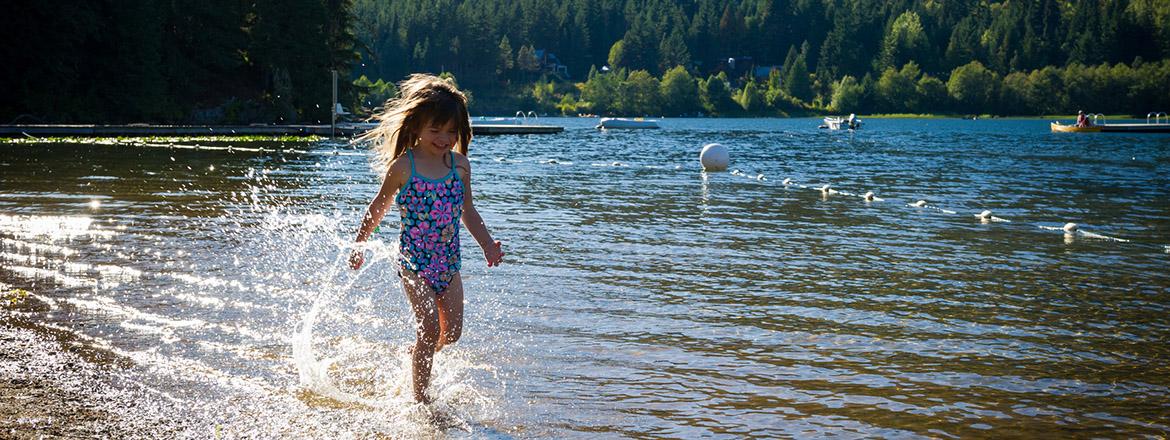
Recreational waters such as oceans, lakes, rivers, and their associated beaches, attract large numbers of users engaging in primary contact activities (e.g., swimming, water skiing, surfing, paddle boarding etc.) and secondary contact activities (e.g., boating, fishing). Partaking in activities in natural recreational waters that offer enjoyment, exercise, and connection to the outdoors, can also present risks of injury, illness, or death. Some hazards include:
- Physical hazards: Accidental drowning, injuries associated with sharp materials, rocks, logs, or other debris, and dangers related with substrates (e.g., muddy sediments), cold, or heat, can all result in injury. Events that move debris such as storms or flooding can change the physical hazards present at a recreational water from one season to the next.
- Biological hazards: Exposure to microorganisms (e.g., pathogenic bacteria, viruses, and protozoa) via accidental ingestion of water, emersion in water causing direct contact with skin, eyes, ears, or nose, and exposure via cuts or wounds can cause illness. Beach-related illnesses can include gastrointestinal illness, skin infection (e.g., swimmers’ itch), and ear, eye, nose, or throat infections. Biological contamination is most often associated with human or animal fecal matter released into natural waters via diffuse pollution and point source inputs of wastewater.
- Chemical hazards: Exposure to natural and artificial chemical contaminants (e.g., oil or chemical spills or effluents) can result from accidental ingestion, inhalation, or dermal contact with contaminated water. Exposure to toxins from freshwater blooms of blue-green algae (cyanobacteria) can cause rashes, nausea, vomiting, or more serious kidney or liver damage, and has been associated with illness and deaths of animals consuming contaminated water or clumps of bloom material. In marine waters, phycotoxins released during red tide events could present a risk to recreational shellfish harvesters.
Climate change may alter the nature and frequency of public health risks associated with recreation waters, with more engagement with natural waters during warm and dry weather, and the changing nature of risks throughout the year. Low water levels during summer could increase the risks of diving injuries, while water use following storms or floods could increase exposure to contaminants or debris. Changes to temperature and precipitation patterns could influence the frequency and severity of cyanobacterial blooms, or contamination of waters with sewage or other terrestrial sources of biological or chemical contamination. Public health guidance can inform safe use of recreational waters and inform policies to reduce public health risks. The resources presented below provide information on identifying physical, biological, and chemical hazards in recreational waters, and tools for monitoring and managing recreational waters to reduce the risks to users.
Understanding environmental hazards in recreational waters
- Predicting the environmental drivers of recreational water quality in Canada (Sanchez and Desta, 2024)
This webinar recording, presented in the NCCEH Environmental Health Seminar Series, examines the environmental drivers of beach water quality, presenting results from beaches in four regions across Canada. (See previous 2021 webinar on Toronto and Niagara, and publication by Sanchez et al. 2021).
- Cyanobacteria in freshwater(NCCEH, 2024)
This NCCEH topic page provides a curated list of guidance and resources related to cyanobacteria and cyanotoxins in recreational and drinking water sources.
- Risk of human illness from recreational exposure to microbial pathogens in freshwater bodies: A systematic review (Adhikary et al., 2022)
This review article summarizes the types of illnesses most commonly associated with contact with recreational freshwaters.
- Health risks to children from exposure to fecally-contaminated recreational water (Wade et al., 2022)
This study analyzes pooled data from several US beachgoers to compare health endpoints for different age groups following exposure to recreational waters. Children are found to be at elevated risk of swimming-associated illness than other groups.
- Monitoring, managing, and communicating risk of harmful algal blooms (HABs) in recreational resources across Canada (Rashidi et al., 2021)
This article reports on findings of an environmental scan of provincial and territorial protocols for monitoring, managing, and communicating on HABs in Canada
- Evaluating health risks associated with exposure to ambient surface waters during recreational activities: A systematic review and meta-analysis (Russo et al., 2020)
This review article summarizes the types of exposures and illness most associated with difference types of recreational activities in natural waters (e.g., swimming, sports contact, sand contact)
- Outbreaks associated with untreated recreational water — California, Maine, and Minnesota, 2018–2019 (Vanden Esschert et al., 2020)
This article provides examples of outbreaks associated with untreated recreational waters. These were associated with infection with Shigella, norovirus, and Shiga toxin-producing E. coli.
- Drinking and recreational water exposures among Canadians: Foodbook Study 2014–2015 (Janicki et al., 2018).
This article reports on a Canada-wide survey to collect baseline data on water exposures by province, demographic, and timeframe of exposures to inform public health strategies.
- Global report on drowning: Preventing a leading killer (WHO, 2014)
This report emphasizes the risk factors associated with drowning (poor swimmers, consuming alcohol, natural events such as storms and flooding) and measures that can reduce drowning risks.
Public health guidelines for recreational waters
- Guidelines for Canadian recreational water quality: Summary document (Health Canada, 2024)
This guidance document provides the key information contained in the six guideline technical documents for recreational water quality management in Canada. The full technical documents are available at the following links:- Microbiological sampling and analysis (2024)
- Understanding and managing risks in recreational waters (2023)
- Indicators of fecal contamination (2023)
- Microbiological pathogens and other biological hazards (2023)
- Cyanobacteria and their toxins (2022)
- Physical, aesthetic and chemical characteristics (2022)
- Guidelines for understanding and managing risks in recreational waters: beach sand management and best practices (Health Canada, 2023)
This guidance document outlines the public health risks from beach sand and the best practices for management of beach sand to protect recreational water quality and public health.
- Canadian drowning prevention plan (Drowning Prevention Research Centre, 2022)
This guidance document reviews the public health approach to drowning prevention in Canada, focusing on seven (7) key areas: alcohol/substance related drowning; children 1 to 4 years; Indigenous peoples; new Canadians; northern, rural and cold water; recreational boating and PFD/lifejacket use; and supervised settings.
- Guidelines on recreational water quality. Volume 1: Coastal and fresh waters (WHO, 2021)
These guidelines provide a comprehensive review of the injury and illness risks associated with recreational use of natural waters, and measures to monitor and control these risks for national and local authorities and others tasked with ensuring the safety of recreational waters.
- Preventing drowning: An implementation guide (WHO, 2017)
This report provides an overview of evidence-based strategies and interventions for reducing drowning in recreational waters.
Monitoring and managing safe recreational waters
- Waterborne disease outbreak investigation toolkit (US CDC 2025)
This toolkit provides a section dedicated to outbreak investigation in recreational waters, including a description of detection, investigation, and control considerations for outbreaks in untreated natural waters (oceans, lakes, and rivers).
- Technical support materials: Developing alternative recreational criteria for waters contaminated by predominantly non-human fecal sources (US EPA 2024)
This guidance document provides advice on quantitative microbial risk assessment (QMRA) for recreational waters where fecal contributions are mostly non-human sources and may need to be adjusted based on the sources of fecal indicator bacteria (FIB) and pathogens.
- Sanitary surveys for recreational waters (US EPA 2023)
This website provides guidance on conducting sanitary surveys for recreational marine and freshwater sites developing and using predictive tools for managing beaches.
- The swim guide (Swim Drink Fish Canada, 2022)
This website provides a searchable map with detailed information on beaches across Canada, and elsewhere in the world, with safety and weather information, monitoring status, and water quality information (historical or current).
- Alberta safe beach protocol (Alberta Health, 2022)
This guidance document sets out a program to assess and manage risks to health associated with recreational waters, including water quality standards for reducing public health risks to bathers and instructions on developing a Recreational Water Safety Plan (RWSP).
- Beach water monitoring practices and challenges in Ontario Public Health units (Heasley et al., 2022)
This article reports on a survey of public health professionals responsible for beach water management in Ontario to determine how monitoring practices differ across jurisdictions. See more on predictive models for microbial quality (Heasley et al., 2021).
- Models for predicting beach water quality (USEPA, 2021)
This webpage provides information and resources related to predictive modelling, including how to develop a model, how to use predictive models for notifications, and a list of existing models. See also: WHO Quantitative microbial risk assessment (QMRA) guidelines
Emerging areas of research
- Environmental predictors of Escherichia coli concentration at marine beaches in Vancouver, Canada: a Bayesian mixed-effects modelling analysis (Desta et al., 2024)
This article reports on a study to assess the combination of environmental factors that best predicts E. coli concentrations at public beaches in Metro Vancouver using microbial water quality data and environmental data from 2013 to 2021.
- The impact of outdoor blue spaces on the health of the elderly: A systematic review (Wang and Sani, 2024)
This review article examines the beneficial health effects of blue spaces for the elderly, with implications for planning and design of recreational waters as public health resources for older people.
- Enhanced detection of viruses for improved water safety (Hayes et al., 2023)
This article reports on the application of granular active carbon (GAC) passive sampling for monitoring viruses of concern in freshwater environments.
- First evidence of free-living Naegleria species in recreational lakes of Alberta, Canada (Dey et al., 2023)
This article reports on a survey of recreational lakes in Alberta during the summer bathing period to determine the presence or absence of Naegleria amoeba. N. fowleri was not detected but other Naegleria species were, indicating the northern expansion of some species.
- Monitoring coliphages to reduce waterborne infectious disease transmission in the One Water framework (Fitzmorris-Brisolara et al., 2022)
This review article examines the evidence for monitoring fecal indicator viruses to complement the monitoring of bacterial indicators in recreational waters to improve public health protection
- Natural recreational waters and the risk that exposure to antibiotic resistant bacteria poses to human health (Leonard et al., 2022)
This narrative review examines the current state of the knowledge and key research gaps on antimicrobial resistant (AMR) and exposure and transmission via natural recreational waters. (See also Nappier et al., 2020 on AMR in recreational waters)
- Drowning risk and climate change: A state-of-the-art review (Sindall et al., 2022)
This review article examines literature on how climate change may contribute to changes in drowning risks globally, identifying knowledge gaps and recommendations for further research.
- Freshwater blue space and population health: An emerging research agenda (McDougall et al., 2020)
This article examines some of the positive physical and mental health outcomes associated with access and exposure to freshwater blue space and identifies knowledge gaps for future research on blue-health.
Inclusion of external resources in NCCEH Subject Guides is for information only and does not constitute an endorsement of the organization, author, or content. This list is not intended to be exhaustive. Omission of a resource does not preclude it from having value.
Related Resources
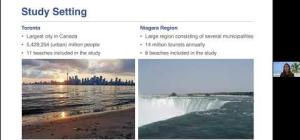
Environmental factors associated with freshwater recreational water quality in Toronto and Niagara
 view
view