

Cyanobacteria in recreational freshwaters: Understanding exposures and health effects

Key Messages |
|
Health effects from recreational exposure
Dermal exposures and health effects
Inhalation exposures and health effects
Reducing health effects
|
Introduction
Cyanobacteria, commonly referred to as blue-green algae, are a group of photosynthetic bacteria that can propagate in lakes, ponds, and rivers, forming blooms. Cyanobacterial blooms are often referred to as harmful algal blooms (HABs), due to the ability of some cyanobacteria to produce cyanotoxins that present a health hazard to humans and animals.1 Decaying blooms can also cause rapid depletion of dissolved oxygen in water, which can cause sudden death of fish. HABs are most prolific during the summer and early autumn in Canada when recreational water use is also at a maximum. Health Canada has established guidelines for assessing water quality and managing risks of exposure to cyanobacteria in recreational freshwaters,2 and has set a guideline limit for one group of cyanotoxins, microcystins (MC). This limit (10 µg/L) is intended to be protective of the most vulnerable population (children) exposed via accidental ingestion of water during activities such as swimming.
While other indicators of bloom intensity (e.g., cell count, biovolume, or chlorophyll-a concentration) can be used alone or in combination with the MC guideline, there is some uncertainty over the health risks associated with recreational exposures to cyanobacteria and their toxins more broadly. This includes the risks for people with frequent low-level exposures, such those involved in rowing, boating, or waterside occupations, or people living nearby affected water bodies, exposed via pathways other than ingestion such as dermal contact or inhalation.
The aim of this rapid review is to synthesize the evidence on adverse human health events that have been associated with recreational exposures to cyanobacterial blooms and summarize what is known about the health effects of non-ingestion exposures to cyanotoxins or cyanobacterial material.
The scope of this review does not include recreation exposures to marine waters or marine phytoplankton such as Karenia brevis, or brevetoxins, or drinking water exposures. For further information on these topics, see our other NCCEH resources:
- Red tides and health risks for recreational water users
- Cyanobacteria and drinking water: occurrence, risks, management, and knowledge gaps for public health.
Methodology
A rapid academic literature search was performed to identify peer-reviewed literature reporting on human health effects resulting from recreational exposures to cyanobacteria or cyanotoxins (e.g., hepatotoxins (microcystins, cylindrospermopsins, nodularins), neurotxoins (anatoxins, saxotoxins), and endotoxins etc.) in freshwater environments. Searches include EBSCOhost databases (comprises Medline, CINAHL, Academic Search Complete, ERIC, etc.) and searches in ResearchGate, Google Scholar, and Google. Search terms covered recreational activities that could result in ingestion, direct contact, or inhalation exposures (e.g., wading, splashing, swimming, boating, kayaking, rowing, canoeing, diving, floating, bathing, fishing, immersion). Epidemiological reports and field studies were sought, but relevant studies assessing the effects of exposure to cyanobacteria or cyanotoxins in-vitro were also included for dermal and inhalation exposures. Language was limited to English documents and geography was limited to freshwater environments (e.g., lakes, rivers, ponds) and primarily Canada, United States, Australia, and Europe; however, other areas were considered where additional health information on potential effects of cyanobacterial exposures was available. Studies focussing on drinking water and marine exposures were excluded. Variants and Boolean operator combination of key search terms were used (a full list of search terms is available upon request). The primary search included results up to July 2023. Bibliographies and citations of key articles were used to retrieve additional literature via forward and backward chaining, along with supplemental searches as necessary. An internet search was performed for additional grey literature and government resources. The results of the review were synthesized narratively by a single reviewer, and the synthesis was subjected to internal and external review.
Background
Appearance of blooms in freshwater systems
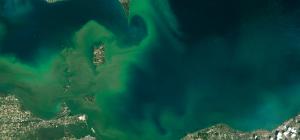
Under ideal environmental conditions, cyanobacteria can propagate to form blooms. These can range in appearance from densely coloured water or surface scums to resembling spilled paint, grass clippings, or benthic mats on river or lake bottoms.3,4 Blooms are often green or blue-green but can also appear as red, purple, or brown.5 Substances such as green algae, duckweed, pine pollen, or even turbidity arising from surface runoff can sometimes be confused with cyanobacteria.
The diverse appearance of blooms means there is often uncertainty in identifying whether cyanobacteria is present. Many public agency websites use only one or two pictures of clearly identifiable blooms; however, greater awareness of atypical bloom appearance is needed. Some agencies include more extensive images galleries and guidance to help people identify blooms such as BC Algae Watch, Alberta Health Services, others with extensive image libraries4 and video guides.
Drivers of blooms
Drivers of cyanobacterial blooms include nutrients (phosphorus and nitrogen), warm water temperature (typically > 20-25°C),5 and sufficient light to drive photosynthesis. Blooms are more frequent in eutrophic (nutrient rich) than in oligotrophic (nutrient poor) water bodies, especially those with shallow, calm waters, low flushing rates, and temperature stratification.6 Together these conditions allow nutrients to accumulate and be released periodically, such as during lake turnover, stimulating growth.7-9 Ecological factors such as grazing, competition, or natural pathogens of cyanobacteria can affect growth and proliferation.9,10
Bloom season in Canada usually begins in late spring and extends into fall. Blooms can occasionally form at other times of year and some species can survive in colder water (e.g., < 15°C) or under ice, particularly in eutrophic lakes.11-13 Once a lake has experienced a bloom, a recurrence is more likely. Various factors such changing land use patterns and climate change could increase the occurrence of blooms in the future, due to synergistic effects of increased nutrient loading from surface runoff and agricultural and sewage pollution, alongside warming. Longer bloom seasons are already being observed in some locations.14-18 However, various factors such as stratification, alkalinity, humic acid content, and other physical, biological, and chemical characteristics, could determine how specific water bodies may respond to drivers of bloom events in the future.19,20
Cyanotoxins in freshwater systems
Cyanotoxins can be released into the water either by living cells or when cells die and burst, and toxins can sometimes persist long after a bloom has dissipated. Although less than 5% of cyanobacterial species are known to produce cyanotoxins,21 a high proportion of HABs (e.g., > 50%) contain one or more toxin producers,22,23 and some species can produce multiple toxins.
Detailed information on cyanotoxins including common producers, target organs, and health effects via ingestion, are well covered in other publications so are only briefly described here.2,22,24-27
Cyanotoxins can cause adverse health effects ranging from minor to severe in exposed humans and animals.2,25,28 They are often grouped by the primary organ they affect.29-32 Hepatotoxins such as microcystins (MC), cylindrospermopsins (CYN), and nodularins (NOD) primarily affect the liver. Neurotoxins such as anatoxins (ATX), saxitoxins (SAX), and β-methylamino-L-alanine (BMAA) primarily affect the nervous system. Many species of cyanobacteria, even non-toxin producers, have endotoxins, or lipopolysaccharides (LPS), on their cell surfaces. These can act as dermatoxins, causing irritant, allergic, or inflammatory effects.27,33,34
In Canada, and elsewhere, the most widely monitored group of cyanotoxins is MC.2,5,32 There are over 275 chemical variants of MC,35 but one variant, MC-LR, forms the basis of toxicity assessments. MC is the only cyanotoxin for which a Canadian recreational water guideline exists. The guideline of 10 µg/L for total MC (intracellular and extracellular) applies to a total of all measurable MC variants. Other cyanotoxins are rarely included in monitoring activities, but are sometimes detected in research studies or tested for in response to an event.36 For example, ATX has been confirmed or suspected in several animal deaths, including pet dogs in rivers or lakes that likely ingested benthic cyanobacterial material presumed to contain high concentrations of ATX.37-40
Results
Types of recreational exposures
The possible routes of exposure to cyanobacteria and their toxins in bloom-affected recreational waters can vary by the type and concentration of toxin present and the nature of the activity.41 The activity type will determine the intensity and duration of exposure, but also the potential for concurrent routes of exposures by accidental ingestion, direct dermal exposure, or inhalation of aerosolized cells or toxins.
- Primary contact activities: Usually involve full body immersion in water, such as swimming, diving, water skiing, and windsurfing, etc. Primary activities carry the highest risk due to multiple exposure pathways, including the most hazardous – ingestion. Accidental swallowing can occur due to sudden or repeated immersion of the head in water. The exposure duration may be prolonged and a large dermal surface area is exposed.
- Secondary contact activities: Usually involve limited direct water contact, such as during rowing, canoeing, fishing, etc., where there could be incidental dermal exposure of hands or feet contacting the water, or wet clothing. Inhalation exposure is also possible over a long duration but ingestion is unlikely. Some boating activities, such as kayaking, that involve rolling or significant splashing could lead to inadvertent ingestion of small quantities of water and greater dermal contact.
- Beachside activities: Usually involve no water contact and occur beside or near the beach, such as walking, running, or cycling. Inhalation exposure is possible.
During primary contact activities, children are more likely than adults to be exposed by ingestion as they tend to spend proportionately more time in the water and swallow more water per kg of body weight, either deliberately or accidently.42 Swimmers are more likely to accidently ingest water than people participating in secondary contact activities.43 One study found that less than 2% of rowers, canoers, and kayakers swallowed a teaspoon (5 mL) of water or more compared with over 53% of swimmers ingesting a mean of 10 mL per hour.44 Swimmers also have more extensive dermal exposure, with full body immersion increasing the likelihood of broken skin or wounds being exposed. Cyanobacterial material can also become caught between clothing and skin, causing cells to burst and release toxins directly onto skin. Any material in contact with the skin that can absorb and retain water could allow exposure to persist after direct water contact has ceased.
All types of activities could result in inhalation exposures. Aerosols containing cyanobacterial cells or toxins can be generated by wind, waves, or activities such as powerboating that generate spray.2,43 Persons involved in activities in or on the water may be exposed to a higher concentration of aerosols, but aerosols can also be transported by wind, exposing beachgoers, event spectators, or people further away.45-47 Inhalation exposure may be greater for people engaged in strenuous exercise, causing them to breath more heavily.
Health effects from recreational exposures to cyanotoxins
The adverse health effects for humans and animals exposed to cyanotoxins can range from minor irritation, fever, or self-limiting gastrointestinal (GI) illness to more severe symptoms such as organ failure, tumor growth, neurotoxicity, or death. 2,25,28,48,49 Respiratory, gastrointestinal, renal, and cardiovascular systems effects may occur via mechanisms such as oxidative stress, inflammation responses, interference with cell signalling, or endocrine disruption.28,48
Most of what is known about recreational exposures to cyanotoxins is associated with exposures to MC via ingestion. Acute exposure to MC via ingestion can cause joint and muscle pain, rash, mouth ulcers, ear and eye irritation, headache, gastrointestinal symptoms, respiratory symptoms, and fever.1,27,28,30,50-52 Chronic exposure may result in adverse health effects related to impaired liver function,53,54 dyslipidemia,55 or possible tumour promotion.56 For ATX, there is limited epidemiological evidence of recreational exposure to ATX causing serious acute or chronic health impacts in humans.57 However, animal studies indicate that ATX can easily cross biological membranes in various systems, causing muscles to be continuously stimulated,26,58 and could cause neurological symptoms, fatigue, brain hypoxia, heart or respiratory failure, and death, which has been observed in exposed animals including pet dogs. While the possible health effects of other cyanotoxins, CYN, SAX, BMAA, and NOD via ingestion exposure are widely reported in the literature, there is limited evidence of recreational exposures causing acute human illness, and even less information on the effects of chronic exposure.1,2,25-27,50,59
Despite the limited epidemiological evidence for health effects from recreational exposures to cyanotoxins other than MC, the WHO has established recreational water guidelines for ATX (60 µg/L), SAX (30 µg/L), and CYN (6 µg/L).52
Epidemiological studies and reviews
There have been several global reviews of events of human exposures to cyanobacteria or cyanotoxins resulting in acute human illness.34,60,61 Of the reported events related to recreational exposures, most occurred following swimming in lakes, with a few examples occurring in rivers.62-64 Despite cyanobacterial blooms affecting hundreds of Canadian recreational waters each year, only five case reports of human illness following recreational exposure to HABs in Canada were found in the literature, all occurring between 1951-1970 following primary contact activities.60
Many of the studies reporting on recreational exposures globally find that reported human illnesses were usually mild to moderate and self limiting, with few examples of severe illnesses following recreational exposure.42,62,63,65-77 People who spent more time in the water (> 60 mins) and were exposed to higher concentrations of cyanobacteria (e.g., > 5000 cells/mL) were more likely to experience symptoms.68
Studies reporting on more serious outcomes of hospitalization or death following recreational HAB exposure were examined to identify the type of activity, characteristics of the affected person(s), health outcomes, and information on the suspected toxin if available, as summarized in Table 1. Most of the cases occurred in young people (< 18 yrs) during primary contact activities (e.g., swimming), where accidental ingestion may have occurred. Microcystin was the suspected toxin in most cases. In two cases tampon use during swimming may have exacerbated the symptoms by prolonging exposure to absorbed toxins from the water.64
While most people fully recovered, there was one suspected human death reported in a boy in the US, initially suspected to be related to ATX poisoning, but later deemed to be inconclusive.25,78
Table 1 Case reports of serious human health effects following acute exposure to cyanobacteria
|
Year |
Location |
Activity |
Affected population |
Symptoms |
Outcome |
Suspected toxin |
|
195966 |
Saskatchewan, Canada |
Swimming |
Adult male |
Headache, nausea, and severe gastrointestinal symptoms. |
Hospitalized for 24h. Fully recovered. |
Suspected Microcystis cells found in patient’s stool. |
|
198979 |
Rudyard, England |
Canoeing (Barrel roles, heads immersed in water) |
Eight teenage male army recruits
|
Sore throat, headache, abdominal pain, dry cough, diarrhoea, vomiting, and blistered mouths. Two teens who swallowed water had more severe symptoms, malaise, pleuritic pain, fever. One suffered confusion and hallucinations. |
Two recruits hospitalized for pneumonia. All fully recovered. |
Microcystis aeruginosa and MC-LR detected in bloom material. |
|
200225,78 |
Wisconsin, USA |
Playing in a golf course pond |
Five teenage boys |
Three of the boys had minor symptoms. Two boys who were fully immersed and accidently ingested water had more severe symptoms. One suffered severe diarrhoea and abdominal pain. The second suffered nausea, vomiting, shock, seizure, acute heart failure and death. |
One fatality. Four fully recovered. |
Initial stool and blood from the fatal case appeared to indicate Anabaena flos-aquae and ATX-a, later identified to be phenylalanine. Cause of death was inconclusive. |
|
200780 |
Salto Grande Dam, Argentina |
Jet skiing (Immersion for >2h, ingested water) |
19-year-old male |
Symptoms included gastrointestinal symptoms, nausea, vomiting, weakness, Worsened to respiratory, renal, and liver problems. |
Hospitalized for 20 d, including three days in ICU. Fully recovered. |
Intense bloom of Microcystis spp. |
|
201181 |
Kansas, USA |
Swimming
|
17-year-old male |
Sore throat, cough, malaise, headache, and fever. |
Both hospitalized for three days. Both fully recovered. |
M. aeruginosa and microcystins were detected in the lake. |
|
Water skiing (Ingested water) |
38-year-old male |
Headache, joint pain, fatigue, sore throat, fever, chills, and diaphoresis. |
||||
|
201582 |
Montevideo, Uruguay |
Repeated recreational activity at a beach |
Three adults and 20-month old child. |
Self-limiting gastrointestinal symptoms for the adults. Severe symptoms for the child including jaundice, elevated liver enzymes, respiratory symptoms, liver failure. |
Child hospitalized with respiratory support; liver failure leading to liver transplant. All fully recovered. |
Microcystis spp. bloom was present and MC up to 8.2 mg/L was reported. |
|
2014-201664 |
Maumee River and Maumee Bay, Lake Erie, USA |
Swimming |
Case 1 (2016): 16-year-old girl
|
Rash, headache, fever, vomiting, diarrhea, and severe respiratory distress. A male sibling also developed mild self limiting symptoms that resolved. |
Hospitalized with worsening symptoms two weeks after exposure. Fully recovered. |
Events occurred in areas where cyanobacterial blooms were present or reported shortly after the event.
Tampon-use during swimming for Cases 1 and 2 may have caused contaminated water to be absorbed, prolonging exposure and subsequent symptoms experienced. |
|
Case 2 (2015): 14-year-old girl
|
Rash, fever, vomiting, diarrhea, and dehydration. No ingestion of water reported. |
Hospitalized in ICU for treatment. Fully recovered. |
||||
|
Case 3 (2014): Seven-year-old girl; history of asthma |
Decreased responsiveness, tachycardia, and severe respiratory distress. |
Hospitalized in ICU with mechanical intubation; prolonged hospital stay. Fully recovered. |
Surveillance studies and reports
Surveillance studies and reviews of health claims and poison centre data provide additional information on the scope and scale of acute health effects associated with recreational exposure to HABs. For example, a review of US electronic health claims data between January 2009 and April 2019 identified 144 hospital or emergency department visits that occurred on the same day as a HAB exposure (freshwater or marine).83 Respiratory effects were reported most frequently, followed by neurological symptoms, skin and eye irritation, and gastrointestinal symptoms. Elsewhere, a survey of a subset of callers to five US poison centres exposed to HABs between May and October 2019 also found that gastrointestinal and respiratory symptoms were frequently reported.84
Some studies suggest that there is underreporting of illnesses related to HAB exposure. For example, a 2015 pilot active surveillance study of recreational water users in New York state85 identified three times as many HAB-associated illnesses in just 16 counties than would typically be reported statewide annually, indicating that passive surveillance activities are missing many cases. Most illnesses occurred following swimming, and rash was the most frequently reported symptom followed by respiratory irritation and gastrointestinal symptoms.
The One Health Harmful Algal Bloom System (OHHABS), hosted by the US CDC, reports on voluntary data submitted by US state and territorial health departments and partners on HAB occurrence and associated human and animal illnesses. Fewer than 20 states reported to the OHHABS system between 2016 and 2021, recording several hundred HAB events annually.86-89 Most events (75-90%) occurred in freshwaters, and were associated with between 63 and 117 human illnesses (suspected, probable, and confirmed) each year. More than half of the reported human cases reported gastrointestinal symptoms, which could be related to accidental ingestion of water.43 General symptoms (e.g., headache, fever, fatigue) were the next most frequently reported, followed by dermatologic, and irritant symptoms (e.g., ear, nose, throat).
Animals are sometimes unfortunate sentinels of human health hazards in recreational waters. The OHHABS captures animal illnesses and deaths, which number from hundreds to thousands each year and mostly occur in wildlife, with large mortality events of fish, birds, and bats contributing to the high numbers. In the reporting years 2021-2023, between 27 and 48 pets (>95% dogs) and up to 25 livestock (cattle) were reported each year, many of which died.
Surveillance systems such as OHHABS can improve our understanding of the extent of HAB exposure and the most common health effects experienced. These systems also face some limitations, such as identifying the type or concentration of toxins present, exposure duration or pathways, and confirmatory testing of cases.
Non-ingestion exposures to cyanotoxins and cyanobacteria and their health effects
Most recreational water guidance considers dermal and inhalation exposures to present negligible risk compared with ingestion of toxins. However, dermal or inhalation exposures have been less widely studied and could cause different health effects or affect some groups more severely. This could include people with underlying health conditions or those who experience repeated low-level exposures, such as those who live, work, or train (e.g., competitive watersports) on or near affected waterbodies. This section provides an overview of the evidence on possible health effects of dermal or inhalation exposures.
Dermal exposures
Surveillance data indicates that dermatologic effects are often reported following exposure to a HAB. Between 27% and 42% of cases reported to the OHHABS’s platform experienced one or more dermatologic effects, including rash, itching, redness, swelling, irritation, blistering, or allergic-type reactions. Knowledge gaps exist on how the duration of skin exposure, the type of contact (full body immersion or incidental), or the type of toxins (e.g., cyanotoxin or LPS) influence dermatologic effects.2,43
Effects of cyanotoxins on skin
A few studies have investigated the mechanisms by which cyanotoxins absorb via the skin or illicit dermal reactions. In general, hydrophobic and smaller cyanotoxin molecules are predicted to absorb more readily.27 MC and CYN are not considered to pose a serious health risk from dermal exposure, due to their hydrophilic nature and large molecule size, which limit absorption potential.27,50 This is supported by in-vitro studies that demonstrate relatively inefficient skin penetration or cytotoxic effects at environmentally relevant concentrations of cyanotoxins.90 In-vitro studies applying MC to skin have identified minimal effects, except at high concentrations (e.g., 1.5 µg/mL),91 and long exposure durations (e.g., 96 h).92 Similarly for CYN, limited effects were observed in in-vitro studies on guinea pig skin91 and in a mouse ear swelling test, except at high doses (e.g., >50 µg/mL purified CYN) and a long exposure (> 24 h).93 Greater cytotoxic effects of CYN exposure were observed in human keratinocytes as exposure doses increased from 0.1 to 10 µg/mL and beyond 24 h exposure.94 The same study found limited cytotoxic effects for human keratinocytes exposed to ATX-a, except at the highest exposure dose (e.g., 10 µg/mL) and for exposures beyond 24 h.94 No studies on effects of BMAA, NOD, or SAX on skin tissue were identified.
To date, there is limited data to suggest cyanotoxins elicit serious dermatologic effects. Skin that is damaged, sunburned, soaked in water for a long duration, or skin of younger people, could absorb toxins more readily and may be more susceptible.50,92 Cyanotoxin exposure may cause the expression of cytokines leading to inflammatory responses.95 These responses, carcinogenic effects, and the effects of persistent low-level dermal exposures have not been widely studied.
Effects of cyanobacterial cells or LPS on skin
Some dermatologic effects following exposure to cyanobacterial blooms could be caused by cellular endotoxins (e.g., LPS), which are present even when cyanotoxins are not. Much of what is known about cyanobacterial LPS is gained from studies of gram-negative bacteria (e.g., Salmonella), that also produce these compounds. Gram-negative bacterial LPS are typically more potent than cyanobacterial LPS, producing irritant and allergenic responses, fever, septic shock syndrome, inflammation, and promotion of cytokine production.33,96-98 A bloom may contain a mixture of both cyanobacteria and other bacteria, and more than one type of LPS could be present, affecting human health in different ways.97 Only a few studies have assessed dermatologic responses to cyanobacterial cellular material (Table 2). These indicate that most people experience only mild responses, but some people with existing skin conditions or sensitivities may react more strongly.
Table 2 Studies assessing dermatologic responses to exposure to cyanobacterial cells
|
Exposure |
Effect |
Ref |
|
Human skin patch tests: whole and lysed cells; multiple species |
|
Pilotto et al. 200496 |
|
Mice abdominal skin: lyophilized cells 2% w/v |
|
Stewart et al., 2006a93 |
|
Human skin patch test: cyanobacteria, cyanobacterial LPS, algal suspension |
|
Stewart et al., 2006b99 |
|
Human skin prick test: detoxified extracts of 9 cyanobacteria species, 1:20 w/v |
|
Bernstein et al., 2011100 |
Inhalation exposures
Surveillance data indicates that respiratory effects are commonly reported following exposure to a HAB, ranging from mild effects including sore throat, cough, and hay-fever like symptoms to more serious respiratory distress. The contribution of inhalation exposures to irritation or more serious respiratory effects through inflammatory responses or other mechanisms has not been widely studied. There is evidence, however, that toxins and cellular material can be inhaled on or near bloom-affected water bodies.
Detection of cyanotoxins and cellular material in air and human exposures
Changes to air quality that have been detected during bloom include increased PM2.5,101 volatile organic compounds,102 and the presence of cyanotoxins including MC, CYN, ATX-a, BMAA, and LPS. Cyanotoxins and cyanobacteria can become aerosolized via physical disturbances (e.g., power boats, wind, waves).2,46 Factors such as humidity, fog, water pH, and temperature can affect the formation or persistence of these aerosols,103-105 and wind can allow aerosols to be transported beyond the HAB boundaries.106 Smaller compounds and cyanobacteria (e.g., picocyanobacteria of < 2 µm) and hydrophobic compounds may be more likely to aerosolize (e.g., some MC variants). More hydrophilic ones and larger compounds (e.g., CYN)104 are less likely to aerosolize, and those that are susceptible to UV degradation (e.g., ATX-a) may not persist under intense sunlight, even if aerosolized.
Studies that have measured concentrations of cyanotoxins in water and air concurrently are listed in Table 3 and suggest that concentrations of toxins detected in water may not always be a good predictor of concentrations detected in air.101,107 The concentrations of toxins measured in air are considered negligible compared with those found in water, and based on what is known from toxicity assessments for ingestion exposures, acute intoxication via inhalation of ambient air near a HAB is unlikely. However, given that humans inhale many thousands of litres of air per day, chronic exposure to low doses in air could be more important for people exposed frequently or over a long duration, such as those in waterside occupational, recreational, or residential settings.48
Table 3 Studies reporting on detection on cyanotoxins in water and air during a bloom
|
Location |
Toxin |
Concentration in water |
Concentration in air |
Ref |
|
Small lake in northeast US |
MC |
2-5 µg/L |
<0.1 ng/m3 |
Backer et al., 2008108 |
|
Two lakes in California, US |
MC |
15-357 µg/L |
<LOD-2.9 ng/m3 |
Backer et al., 201045 |
|
Walker’s Pond, US |
MC |
0.001-0.006 µg/L |
0.33-0.71 ng/m3 |
Carter, 2022104 |
|
BMAA |
0.26-0.41 µg/L |
14.74-80.91 ng/m3 |
||
|
ATX-a |
0.01-1.07 µg/L |
2.64-8.85 ng/m3 |
||
|
Lower Mill Pond, US |
MC |
0.002-0.006 ng/L |
0.26-0.50 ng/m3 |
|
|
BMAA |
<LOD-0.2 µg/L |
8.49- 50.16 ng/m3 |
||
|
ATX-a |
0.01-5.40 µg/L |
2.35-9.78 ng/m3 |
||
|
Mona Lake, US |
MC |
>200 µg/L |
50 ± 20 ng/m3 |
Olson et al., 2020105 |
|
MC-LR |
76.4 µg/L |
40 ± 20 ng/m3 |
||
|
MC-RR |
114.8 µg/L |
0.7 ± 0.4 ng/m3 |
||
|
Capaum Pond, US |
ATX-a |
21.0 µg/L |
0.16 ng/m3 |
Sutherland et al., 2021106 |
|
Five freshwater bodies (Czechia) |
MC |
0.3-13.5 ng/L (104-105 cells/mL) |
< 35-415 fg/m3 10-1000 cells/m3 |
Laboha et al., 2023107 |
|
LPS |
< 10-119 EU/mL |
0.13-0.64 EU/m3 |
||
|
Lake Forsyth, New Zealand |
NOD |
9.9 µg/L (max) |
0.0002-0.0162 ng/m3 |
Wood and Dietrich, 201146 |
|
Lake Rotorua, New Zealand |
MC |
2140 µg/L (max) |
0.0009-0.0018 ng/m3 |
|
|
Nakdong River, S. Korea |
MC |
64.2 µg/L |
6.8 ng/m3 |
Lee et al., 2022109 |
|
BMAA |
8.0 µg/L |
16.1 ng/m3 |
Previous studies have detected cyanotoxins in personal air samplers and nasal swabs of water users engaged in swimming, water skiing, jet skiing, or boating,45 and in people residing or working near water bodies experiencing blooms.110 Persons with direct contact with the water (outdoor workers, rowers, kayakers) are likely exposed to higher concentrations, but detectable MC has also been found in nasal passages of nearby residents with no direct water contact.110
It is difficult to estimate how concentrations in air relate to uptake of toxins via inhalation and toxic effects. Backer et al. (2010) estimated that based on detected concentrations of MC in air (0.1 to 0.4 ng/m3) and average exposure time (109 minutes), an adult study participant inhaled 0.8 ng MC per recreational session.45 However, the study found no MC in blood serum, indicating no uptake of toxins into the body at these concentrations. This exposure level is much lower than the tolerable daily intake (TDI) of 17 ng/m3 per day for inhalation of MC-LR estimated by Sun et al. (2023) for an average adult and inhalation volume of 7 m3 per day.111 Wood and Dietrich also estimated a maximum exposure limit in air of 4.58 ng/m3 MC, based on a higher average ventilation volume associated with exercise of 30.3 L/min for 24 h.46 This breathing rate is about five times higher than resting, and unlikely to be sustained for 24 h.
Effects of inhalation exposures to cyanotoxins or LPS on human health
Few studies have reported on the health effects following exposure to cyanotoxins via inhalation, with only one study reporting on the occurrence of nasal lesions in mice exposed to high inhalation doses of MC-LR.112
Most of the studies identified were in-vitro studies testing cellular responses in airway tissues exposed to different cyanotoxins. In-vitro studies of human airway epithelia cells exposed to MC-LR found no significant cytotoxic effects,113 but indicators of inflammatory responses have been observed.114 Some cytotoxic effects were observed in in-vitro studies of human bronchial epithelial cells exposed to CYN,115,116 with longer exposures being more harmful. Endotoxins could also trigger respiratory symptoms,117 and one in-vitro study of human bronchial epithelial cells exposed to cyanobacterial LPS found indicators of pro-inflammatory and cytotoxic effects.107 Airway epithelia tissues and other mucosal linings may be more sensitive to cyanotoxins such as ATX-a, that can stimulate acetylcholine receptors; however, inhalation exposures to ATX have not been widely studied.94
No studies assessing the effects of chronic inhalation exposure to cyanotoxins or cellular material were identified. Most of the current understanding of the health effects of chronic exposure to cyanotoxins relates to exposures via ingestion, and focuses on microcystin,22,32,48 with health endpoints related to liver function and tumour promotion.53-56 Some researchers have hypothesized about the links between chronic exposure to BMAA and neurodegenerative diseases.109,118-121 The results in Table 3 indicate that inhalation exposures to BMAA and other cyanotoxins can occur; however, further study is needed to understand whether frequent low-level exposures via inhalation or other exposure routes could result in chronic health effects, even without direct water contact.
Summary
The risks associated with recreational exposure to cyanobacteria in lakes and rivers can vary by the type of water contact, the location, and the season, with some indications that bloom season may be getting longer. Common symptoms associated with recreational exposure to HABs were found to vary in different surveillance studies; however, all studies reported that gastrointestinal symptoms and respiratory symptoms commonly occur. Additional symptoms sometimes included irritation (e.g., skin, eye, nose, throat) and general symptoms of headache, fever, and fatigue, among others.
Cases of serious health effects or death following recreational exposures usually involved full body immersion in water and accidental ingestion of cyanotoxins, and often involved children (< 18 yrs). While there are few such examples in the literature, there is also likely underreporting. Canada lacks a surveillance system for capturing cyanobacterial illnesses for both humans and animals, and many illnesses will go unreported; however, sources such as poison centres may provide useful data for tracking the health impacts of HABs in the future.122
There has been limited investigation of the health effects from non-ingestion routes of exposure during recreational activities. Evidence suggests that cyanotoxins, particularly MC, do not absorb well into human skin, and health effects from dermal exposure may occur only after lengthy exposures. Cellular material (LPS) may induce inflammation and allergenic responses, even in the absence of toxins, which may affect persons with sensitive skin, wounds, and sunburns, or younger people, more. Further study is needed to understand the mechanisms of toxic effects, including how absorbent materials in direct contact with skin or other body parts (e.g., tampons or bandages) could prolong exposure to absorbed toxins or cells.64
Several surveillance studies have demonstrated that people engaged in activities near bloom-affected waters can inhale aerosolized cyanobacteria and toxins. The health impacts of inhalation exposure have not been widely studied but the experimental evidence suggests that inflammatory and cytotoxic effects are possible and may be more concerning for people with underlying health conditions. Several knowledge gaps remain in understanding the effects of chronic low-level exposure to aerosolized cyanobacteria and toxins.
Existing monitoring and surveillance activities of HABs tend to be reactive;123 however, proactive steps before and during bloom season such as increased signage and media campaigns at bloom hotspots could be beneficial. Public guidance could include advice for citizen scientists on recognizing and reporting blooms through platforms such as BC Algae Watch, avoiding primary contact during blooms, and taking precautions during secondary or beachside activities. This could include using protective equipment (e.g., waterproof gloves, footwear) during boating, fishing, or wading, reducing intense exercise, or wearing a mask near the water when aerosol generation is likely during a bloom (e.g., turbulence, wind, humidity, fog). Water users should also be informed about the actions to take in case of accidental contact, such as removing wet clothing, washing skin with soap and water, and monitoring for symptoms. With bloom season getting longer in some locations and bloom occurrence predicted to be more frequent in future, greater awareness of the public health hazards is needed, especially for higher-risk groups such as children and those with underlying health conditions.
Further study is ongoing in Canada, including a nationwide study on the burden of recreational water illness due to cyanobacteria and their toxins in freshwater systems. Studies such as these will help to further our understanding of HABs and inform public health approaches to managing recreational exposures in the future.
Acknowledgements
We acknowledge the valued input from those who assisted in the production and review of this document including: Michele Wiens, Information Specialist, NCCEH; Michael Lee, Epidemiologist, BC Centre for Disease Control; and Dr. Binyam Negussie Desta, Postdoctoral Research Fellow in the School of Occupational and Public Health at Toronto Metropolitan University.
References
- Zhang Y, Whalen JK, Cai C, Shan K, Zhou H. Harmful cyanobacteria-diatom/dinoflagellate blooms and their cyanotoxins in freshwaters: a nonnegligible chronic health and ecological hazard. Water Res. 2023 Apr;233:119807. Available from: https://doi.org/10.1016/j.watres.2023.119807.
- Health Canada. Guidelines for Canadian recreational water quality. Cyanobacteria and their toxins. Guideline technical document. Ottawa, ON: Government of Canada; 2022 Feb. Available from: https://www.canada.ca/en/health-canada/services/publications/healthy-living/guidance-canadian-recreational-water-quality-cyanobacteria-toxins.html.
- Quiblier C, Wood S, Echenique-Subiabre I, Heath M, Villeneuve A, Humbert J-F. A review of current knowledge on toxic benthic freshwater cyanobacteria-ecology, toxin production and risk management. Water Res. 2013 Oct 01;47(15):5464-79. Available from: https://doi.org/10.1016/j.watres.2013.06.042.
- Interstate Technology Regulatory Council. Visual guide to common harmful cyanobacteria. Washington, DC: ITRC; 2022. Available from: https://hcb-1.itrcweb.org/appendix-a/.
- Miller T, Beversdorf L, Weirich C, Bartlett S. Cyanobacterial toxins of the Laurentian Great Lakes, their toxicological effects, and numerical limits in drinking water. Mar Drugs. 2017;15(6):160. Available from: https://doi.org/10.3390/md15060160.
- Chorus I, Bartram J. Toxic cyanobacteria in water: a guide to their public health consequences, monitoring and management. New York, NY: E & FN Spon; 1999. Available from: https://apps.who.int/iris/handle/10665/42827.
- Vincent WF. Effects of climate change on lakes. In: Likens GE, editor. Lake ecosytem ecology: a global perspective. Cambridge, MA: Academic Press; 2009. p. 65-70.
- Orihel Diane M, Bird David F, Brylinsky M, Chen H, Donald Derek B, Huang Dorothy Y, et al. High microcystin concentrations occur only at low nitrogen-to-phosphorus ratios in nutrient-rich Canadian lakes. Can J Fish Aquat Sci. 2012;69(9):1457-62. Available from: http://dx.doi.org/10.1139/f2012-088.
- Pick FR. Blooming algae: a Canadian perspective on the rise of toxic cyanobacteria. Can J Fish Aquat Sci. 2016 Jul;73(7):1149-58. Available from: https://doi.org/10.1139/cjfas-2015-0470.
- Merel S, Walker D, Chicana R, Snyder S, Baurès E, Thomas O. State of knowledge and concerns on cyanobacterial blooms and cyanotoxins. Environ Int. 2013;59:303-27. Available from: https://doi.org/10.1016/j.envint.2013.06.013.
- Haig HA, Chegoonian AM, Davies J-M, Bateson D, Leavitt PR. Marked blue discoloration of late winter ice and water due to autumn blooms of cyanobacteria. Lake Reserv Manage. 2022 Jan;38(1):1-15. Available from: https://doi.org/10.1080/10402381.2021.1992544.
- Gabyshev VA, Sidelev SI, Chernova EN, Vilnet AA, Davydov DA, Barinova S, et al. Year-round presence of microcystins and toxin-producing Microcystis in the water column and ice cover of a eutrophic lake located in the continuous permafrost zone (Yakutia, Russia). Toxins. 2023;15(7):467. Available from: https://doi.org/10.3390/toxins15070467.
- Reinl KL, Harris TD, North RL, Almela P, Berger SA, Bizic M, et al. Blooms also like it cold. Limnol Oceanogr Lett. 2023;8(4):546-64. Available from: https://doi.org/10.1002/lol2.10316.
- Winter JG, DeSellas AM, Fletcher R, Heintsch L, Morley A, Nakamoto L, et al. Algal blooms in Ontario, Canada: increases in reports since 1994. Lake Reserv Manage. 2011;27(2):107-14. Available from: https://doi.org/10.1080/07438141.2011.557765.
- Ontario Ministry of the Environment Conservation and Parks. Minister’s annual report on drinking water 2018. Toronto, ON: Government of Ontario; 2018. Available from: https://www.ontario.ca/page/ministers-annual-report-drinking-water-2018.
- Hayes NM, Haig HA, Simpson GL, Leavitt PR. Effects of lake warming on the seasonal risk of toxic cyanobacteria exposure. Limnol Oceanogr Lett. 2020;5(6):393-402. Available from: https://doi.org/10.1002/lol2.10164.
- Paterson AM, Rühland KM, Anstey CV, Smol JP. Climate as a driver of increasing algal production in Lake of the Woods, Ontario, Canada. Lake Reserv Manage. 2017 Oct;33(4):403-14. Available from: https://doi.org/10.1080/10402381.2017.1379574.
- United States Environmental Protection Agency. National lakes assessment: the third collaborative survey of lakes in the United States. Washington, DC: US EPA; 2022. Available from: https://nationallakesassessment.epa.gov/webreport.
- Richardson J, Miller C, Maberly SC, Taylor P, Globevnik L, Hunter P, et al. Effects of multiple stressors on cyanobacteria abundance vary with lake type. Glob Change Biol. 2018;24(11):5044-55. Available from: https://doi.org/10.1111/gcb.14396.
- Perlov D, Reavie ED, Quinlan R. Anthropogenic stressor impacts on hypolimnetic dissolved oxygen in Lake Erie: a chironomid-based paleolimnological assessment. J Great Lakes Res. 2023 May. Available from: https://doi.org/10.1016/j.jglr.2023.04.006.
- Percival SL, Williams DW. Chapter five - cyanobacteria. In: Percival SL, Yates MV, Williams DW, Chalmers RM, Gray NF, editors. Microbiology of waterborne diseases second edition. London: Academic Press; 2014. p. 79-88. Available from: https://doi.org/10.1016/B978-0-12-415846-7.00005-6.
- Health Canada. Guidelines for Canadian drinking water quality: guideline technical document – cyanobacterial toxins. Ottawa, ON: Government of Canada; 2018. Available from: https://www.canada.ca/en/health-canada/services/publications/healthy-living/guidelines-canadian-drinking-water-quality-guideline-technical-document-cyanobacterial-toxins-document.html.
- US Centers for Disease Control and Prevention. OHHABS data. Atlanta, GA: US CDC; 2024 [updated Feb 23, 2024]; Available from: https://www.cdc.gov/ohhabs/about/index.html.
- Otero P, Silva M. The role of toxins: impact on human health and aquatic environments. In: Lopes G, Silva M, Vasconcelos V, editors. The pharmacological potential of cyanobacteria. Online: Academic Press; 2022. p. 173-99. Available from: https://doi.org/10.1016/B978-0-12-821491-6.00007-7.
- Chorus I, Testai E. Exposure to cyanotoxins. Understanding it and short-term interventions to prevent it. In: Chorus I, Welker M, editors. Toxic cyanobacteria in water: a guide to their public health consequences, monitoring and management. 2 ed. New York, NY: CRC Press; 2021. p. 333-67. Available from: https://www.taylorfrancis.com/chapters/oa-edit/10.1201/9781003081449-5/exposure-cyanotoxins-ingrid-chorus-martin-welker.
- Christensen VG, Khan E. Freshwater neurotoxins and concerns for human, animal, and ecosystem health: a review of anatoxin-a and saxitoxin. Sci Total Environ. 2020 Sep;736:139515. Available from: https://doi.org/10.1016/j.scitotenv.2020.139515.
- Codd GA, Testai E, Funari E, Svirčev Z. Cyanobacteria, cyanotoxins, and human health. In: Hiskia A, Triantis T, Antoniou M, Kaloudis T, Dionysiou D, editors. Water treatment for purification from cyanobacteria and cyanotoxins. Online: John Wiley & Sons Ltd.; 2020. Available from: https://doi.org/10.1002/9781118928677.ch2.
- Otten TG, Paerl HW. Health effects of toxic cyanobacteria in U.S. drinking and recreational waters: Our current understanding and proposed direction. Curr Environ Health Rep. 2015 Mar;2(1):75-84. Available from: https://doi.org/10.1007/s40572-014-0041-9.
- Ritter L, Solomon K, Sibley P, Hall K, Keen P, Mattu G, et al. Sources, pathways, and relative risks of contaminants in surface water and groundwater: a perspective prepared for the Walkerton inquiry. J Toxicol Environ Health A. 2002 Jan 11;65(1):1-142. Available from: https://doi.org/10.1080/152873902753338572.
- United States Environmental Protection Agency. Cyanobacteria and cyanotoxins: Information for drinking water systems. Washington, DC: US EPA; 2014 Sep. Report No.: EPA-810F11001. Available from: https://www.epa.gov/sites/production/files/2014-08/documents/cyanobacteria_factsheet.pdf.
- Falconer IR, Humpage AR. Health risk assessment of cyanobacterial (blue-green algal) toxins in drinking water. Int J Environ Res Public Health. 2005 Apr;2(1):43-50. Available from: https://doi.org/10.3390/ijerph2005010043.
- Carmichael WW, Boyer GL. Health impacts from cyanobacteria harmful algae blooms: implications for the North American Great Lakes. Harmful Algae. 2016 Apr;54:194-212. Available from: https://doi.org/10.1016/j.hal.2016.02.002.
- Singh A, Babele PK. Dynamics of harmful cyanobacterial blooms and their toxins: environmental and human health perspectives and management strategies. In: Singh PK, Kumar A, Singh VK, Shrivastava AK, editors. Advances in cyanobacterial biology: Academic Press; 2020. p. 301-17. Available from: https://doi.org/10.1016/B978-0-12-819311-2.00020-6.
- Chorus I, Welker M. Toxic cyanobacteria in water: a guide to their public health consequences, monitoring and management. 2 ed. New York, NY: World Health Organization; 2021. Available from: http://www.jlakes.org/uploadfile/news_images/hpkx/2021-06-08/9781003081449-2021pdf.pdf.
- Bouaïcha N, Miles CO, Beach DG, Labidi Z, Djabri A, Benayache NY, et al. Structural diversity, characterization and toxicology of microcystins. Toxins (Basel). 2019 Dec 7;11(12). Available from: https://doi.org/10.3390/toxins11120714.
- Perri KA, Sullivan JM, Boyer GL. Harmful algal blooms in Sodus Bay, Lake Ontario: a comparison of nutrients, marina presence, and cyanobacterial toxins. J Great Lakes Res. 2015 Jun;41(2):326-37. Available from: https://doi.org/10.1016/j.jglr.2015.03.022.
- Puschner B, Hoff B, Tor ER. Diagnosis of anatoxin-a poisoning in dogs from North America. J Vet Diagn Invest. 2008;20(1):89-92. Available from: https://doi.org/10.1177/1040638708020001.
- McCarron P, Rafuse C, Scott S, Lawrence J, Bruce MR, Douthwright E, et al. Anatoxins from benthic cyanobacteria responsible for dog mortalities in New Brunswick, Canada. Toxicon. 2023 May;227:107086. Available from: https://doi.org/10.1016/j.toxicon.2023.107086.
- Valadez-Cano C, Reyes-Prieto A, Beach DG, Rafuse C, McCarron P, Lawrence J. Genomic characterization of coexisting anatoxin-producing and non-toxigenic Microcoleus subspecies in benthic mats from the Wolastoq, New Brunswick, Canada. Harmful Algae. 2023 May;124:102405. Available from: https://doi.org/10.1016/j.hal.2023.102405.
- Johnston LH, Huang Y, Bermarija TD, Rafuse C, Zamlynny L, Bruce MR, et al. Proliferation and anatoxin production of benthic cyanobacteria associated with canine mortalities along a stream-lake continuum. Sci Total Environ. 2024 Mar;917:170476. Available from: https://doi.org/10.1016/j.scitotenv.2024.170476.
- Adhikary RK, Mahfuj MS-E, Starrs D, Croke B, Glass K, Lal A. Risk of human illness from recreational exposure to microbial pathogens in freshwater bodies: a systematic review. Expo Health. 2022 Jun;14(2):325-43. Available from: https://doi.org/10.1007/s12403-021-00447-z.
- Weirich CA, Miller TR. Freshwater harmful algal blooms: toxins and children's health. Curr Probl Pediatr Adolesc Health Care. 2014 Jan;44(1):2-24. Available from: https://doi.org/10.1016/j.cppeds.2013.10.007.
- United States Environmental Protection Agency. Recommended human health recreational ambient water quality criteria or swimming advisories for microcystins and cylindrospermopsin. Washington, DC: US EPA; 2019 May. Available from: https://www.epa.gov/sites/default/files/2019-05/documents/hh-rec-criteria-habs-document-2019.pdf.
- Dorevitch S, Panthi S, Huang Y, Li H, Michalek AM, Pratap P, et al. Water ingestion during water recreation. Water Res. 2011 Feb;45(5):2020-8. Available from: https://doi.org/10.1016/j.watres.2010.12.006.
- Backer LC, McNeel SV, Barber T, Kirkpatrick B, Williams C, Irvin M, et al. Recreational exposure to microcystins during algal blooms in two California lakes. Toxicon. 2010 May;55(5):909-21. Available from: https://doi.org/10.1016/j.toxicon.2009.07.006.
- Wood SA, Dietrich DR. Quantitative assessment of aerosolized cyanobacterial toxins at two New Zealand lakes. J Environ Monit. 2011;13(6):1617-24. Available from: http://dx.doi.org/10.1039/C1EM10102A.
- Facciponte DN, Bough MW, Seidler D, Carroll JL, Ashare A, Andrew AS, et al. Identifying aerosolized cyanobacteria in the human respiratory tract: a proposed mechanism for cyanotoxin-associated diseases. Sci Total Environ. 2018 Dec;645:1003-13. Available from: https://doi.org/10.1016/j.scitotenv.2018.07.226.
- Lad A, Breidenbach JD, Su RC, Murray J, Kuang R, Mascarenhas A, et al. As we drink and breathe: adverse health effects of microcystins and other harmful algal bloom toxins in the liver, gut, lungs and beyond. Life. 2022;12(3):418. Available from: https://doi.org/10.3390/life12030418.
- Cheung MY, Liang S, Lee J. Toxin-producing cyanobacteria in freshwater: a review of the problems, impact on drinking water safety, and efforts for protecting public health. J Microbiol. 2013 Feb;51(1):1-10. Available from: https://doi.org/10.1007/s12275-013-2549-3.
- Nielsen MC, Jiang SC. Can cyanotoxins penetrate human skin during water recreation to cause negative health effects? Harmful Algae. 2020 Sep;98:101872. Available from: https://doi.org/10.1016/j.hal.2020.101872.
- Qi YL, Rosso L, Sedan D, Giannuzzi L, Andrinolo D, Volmer DA. Seven new microcystin variants discovered from a native Microcystis aeruginosa strain - unambiguous assignment of product ions by tandem mass spectrometry. Rapid Commun Mass Spectrom. 2015 Jan;29(2):220-4. Available from: http://dx.doi.org/10.1002/rcm.7098.
- World Health Organization. Guidelines on recreational water quality. Geneva, Switzerland: WHO; 2021. Available from: https://apps.who.int/iris/rest/bitstreams/1356051/retrieve.
- Chen J, Xie P, Li L, Xu J. First identification of the hepatotoxic microcystins in the serum of a chronically exposed human population together with indication of hepatocellular damage. Toxicol Sci. 2009;108(1):81-9. Available from: https://doi.org/10.1093/toxsci/kfp009.
- Li Y, Chen J-a, Zhao Q, Pu C, Qiu Z, Zhang R, et al. A cross-sectional investigation of chronic exposure to microcystin in relationship to childhood liver damage in the Three Gorges Reservoir region, China. Environ Health Perspect. 2011;119(10):1483-8. Available from: https://doi.org/10.1289/ehp.1002412.
- Feng S, Cao M, Tang P, Deng S, Chen L, Tang Y, et al. Microcystins exposure associated with blood lipid profiles and dyslipidemia: a cross-sectional study in Hunan Province, China. Toxins. 2023;15(4):293. Available from: https://doi.org/10.3390/toxins15040293.
- International Agency for Research on Cancer. Cyanobacterial peptide toxins. IARC Monographs 94. Lyon, France: IARC; 2010. Available from: https://publications.iarc.fr/_publications/media/download/2876/45bfc509b9fb1b0329ab8d2a8079691b166dc0a6.pdf.
- Colas S, Marie B, Lance E, Quiblier C, Tricoire-Leignel H, Mattei C. Anatoxin-a: overview on a harmful cyanobacterial neurotoxin from the environmental scale to the molecular target. Environ Res. 2021 Feb;193:110590. Available from: https://doi.org/10.1016/j.envres.2020.110590.
- Fastner J, Beulker C, Geiser B, Hoffmann A, Kröger R, Teske K, et al. Fatal neurotoxicosis in dogs associated with tychoplanktic, anatoxin-a producing tychonema sp. in mesotrophic Lake Tegel, Berlin. Toxins. 2018;10(2):60. Available from: https://doi.org/10.3390/toxins10020060.
- Lee J, Lee S, Jiang X. Cyanobacterial toxins in freshwater and food: important sources of exposure to humans. Annu Rev Food Sci Technol. 2017 Feb 28;8:281-304. Available from: https://doi.org/10.1146/annurev-food-030216-030116.
- Wood R. Acute animal and human poisonings from cyanotoxin exposure - a review of the literature. Environ Int. 2016 May;91:276-82. Available from: https://doi.org/10.1016/j.envint.2016.02.026.
- Svirčev Z, Lalić D, Bojadžija Savić G, Tokodi N, Drobac Backović D, Chen L, et al. Global geographical and historical overview of cyanotoxin distribution and cyanobacterial poisonings. Arch Toxicol. 2019 Sep;93(9):2429-81. Available from: https://doi.org/10.1007/s00204-019-02524-4.
- Williamson M, Corbett S. Investigating health risks from riverine blooms of blue green algae. NSW Public Health Bulletin 1993;4(3):27-9. Available from: https://www.phrp.com.au/issues/volume-4-issue-3/investigating-health-risks-from-riverine-blooms-of-blue-green-algae/.
- El Saadi O, Steffensen D. Epidemiological evidence of algal toxins in drinking water and recreational waters. Melbourne, Australia: Urban Water Research Association of Australia; 1996 Sep. Available from: https://water360.com.au/wp-content/uploads/2023/01/19563C1.pdf.
- French BW, Kaul R, George J, Haller ST, Kennedy DJ, Mukundan D. A case series of potential pediatric cyanotoxin exposures associated with harmful algal blooms in Northwest Ohio. Infect Dis Rep. 2023;15(6):726-34. Available from: https://doi.org/10.3390/idr15060065.
- Heise HA. Symptoms of hay fever caused by algae. J Allergy. 1949 Sep;20(5):383-5. Available from: https://doi.org/10.1016/0021-8707(49)90029-5.
- Dillenberg H, Dehnel M. Toxic waterbloom in Saskatchewan, 1959. Can Med Assoc J. 1959 Nov 26;83:1151-54. Available from: https://www.ncbi.nlm.nih.gov/pmc/articles/PMC1938929/pdf/canmedaj00867-0022.pdf.
- Billings WH. Water-associated human illness in Northeast Pennsylvania and its suspected association with blue-green algae blooms. In: Carmichael WW, editor. The water environment: algal toxins and health. Boston, MA: Springer US; 1981. p. 243-55. Available from: https://doi.org/10.1007/978-1-4613-3267-1_18.
- Pilotto LS, Douglas RM, Burch MD, Cameron S, Beers M, Rouch GJ, et al. Health effects of exposure to cyanobacteria (blue–green algae) during recreational water–related activities. Aust N Z J Public Health. 1997;21(6):562-6. Available from: https://doi.org/10.1111/j.1467-842X.1997.tb01755.x.
- Codd GA, Bell SG, Kaya K, Ward CJ, Beattie KA, Metcalf JS. Cyanobacterial toxins, exposure routes and human health. Eur J Phycol. 1999;34(4):405-15. Available from: https://doi.org/10.1080/09670269910001736462
- Wilding T. Rotorua Lake Algae Report. Whakatane, New Zealand: Environment Bay of Plenty; 2000. Available from: https://docs.niwa.co.nz/library/public/EBOPer2000-06.pdf.
- Johnston BR, Jacoby JM. Cyanobacterial toxicity and migration in a mesotrophic lake in western Washington, USA. Hydrobiologia. 2003 Mar;495(1):79-91. Available from: https://doi.org/10.1023/A:1025496922050.
- Rapala J, Robertson A, Negri AP, Berg KA, Tuomi P, Lyra C, et al. First report of saxitoxin in Finnish lakes and possible associated effects on human health. Environ Toxicol. 2005;20(3):331-40. Available from: https://doi.org/10.1002/tox.20109.
- Dziuban E, Liang J, Craun G, Hill V, Yu P, Painter J, et al. Surveillance for waterborne disease and outbreaks associated with recreational water United States, 2003-2004. MMWR. 2006 Dec 22;55(SS12):1-24.
- Walker S, Lund J, Schumacher D, Brakhage P, McManus B, Miller J, et al. Nebraska experience. In: Hudnell HK, editor. Cyanobacterial harmful algal blooms: state of the science and research needs. New York, NY: Springer; 2008. p. 139-52. Available from: https://doi.org/10.1007/978-0-387-75865-7_6.
- Hilborn E, Roberts V, Backer L, DeConno E, Egan J, Hyde J, et al. Algal bloom–associated disease outbreaks among users of freshwater lakes — United States, 2009–2010. MMWR. 2014;63(1):11-25. Available from: https://cfpub.epa.gov/si/si_public_record_report.cfm?Lab=NHEERL&dirEntryId=275376.
- Levesque B, Gervais MC, Chevalier P, Gauvin D, Anassour-Laouan-Sidi E, Gingras S, et al. Prospective study of acute health effects in relation to exposure to cyanobacteria. Sci Total Environ. 2014 Jan 01;466-467:397-403. Available from: https://doi.org/10.1016/j.scitotenv.2013.07.045.
- Stewart I, Webb PM, Schluter PJ, Fleming LE, Burns JW, Jr., Gantar M, et al. Epidemiology of recreational exposure to freshwater cyanobacteria--an international prospective cohort study. BMC Public Health. 2006 Apr;6:93. Available from: https://doi.org/10.1186/1471-2458-6-93.
- Behm D. Coroner cites algae in teen's death. Milwaukee Journal Sentinel. 2003 Sep 5. Available from: https://www.whoi.edu/science/B/redtide/notedevents/bluegreen/bluegreen_9-5-03.html.
- Turner P, Gammie A, Hollinrake K, Codd G. Pneumonia associated with contact with cyanobacteria. Br Med J. 1990;300(6737):1440-1. Available from: https://doi.org/10.1136/bmj.300.6737.1440.
- Giannuzzi L, Sedan D, Echenique R, Andrinolo D. An acute case of intoxication with cyanobacteria and cyanotoxins in recreational water in Salto Grande Dam, Argentina. Mar Drugs. 2011;9(11):2164-75. Available from: https://doi.org/10.3390/md9112164.
- Trevino-Garrison I, DeMent J, Ahmed FS, Haines-Lieber P, Langer T, Ménager H, et al. Human illnesses and animal deaths associated with freshwater harmful algal blooms—Kansas. Toxins. 2015;7(2):353-66. Available from: https://doi.org/10.3390/toxins7020353.
- Vidal F, Sedan D, D’Agostino D, Cavalieri ML, Mullen E, Parot Varela MM, et al. Recreational exposure during algal bloom in Carrasco Beach, Uruguay: a liver failure case report. Toxins. 2017;9(9):267. Available from: https://doi.org/10.3390/toxins9090267.
- Lavery A, Backer L, Daniel J. Evaluation of electronic health records to monitor illness from harmful algal bloom exposure in the United States. J Environ Health. 2021 May;839:8-14. Available from: https://stacks.cdc.gov/view/cdc/120917.
- Lavery AM, Kieszak SM, Law R, Bronstein AC, Funk AR, Banerji S, et al. Harmful algal bloom exposures self-reported to poison centers in the United States, May–October 2019. Public Health Rep. 2023 Jan. Available from: https://doi.org/10.1177/00333549221146654.
- Figgatt M, Hyde J, Dziewulski D, Wiegert E, Kishbaugh S, Zelin G, et al. Harmful algal bloom-associated illnesses in humans and dogs identified through a pilot surveillance system - New York, 2015. MMWR. 2017 Nov 3;66(43):1182-4. Available from: https://doi.org/10.15585/mmwr.mm6643a5.
- Roberts V, Vigar M, Backer L, Veytsel G, Hilborn E, Hamelin E, et al. Surveillance for harmful algal bloom events and associated human and animal illnesses — One Health Harmful Algal Bloom System, United States, 2016–2018. MMWR. 2020;69:1889-94. Available from: http://dx.doi.org/10.15585/mmwr.mm6950a2.
- US Centers for Disease Control and Prevention. Summary report – One Health Harmful Algal Bloom System (OHHABS), United States, 2019. Atlanta, GA: US Department of Health and Human Services; 2021. Available from: https://www.cdc.gov/habs/data/2019-ohhabs-data-summary.html.
- US Centers for Disease Control and Prevention. Summary report – One Health Harmful Algal Bloom System (OHHABS), United States, 2020. Atlanta, GA: US Department of Health and Human Services; 2022. Available from: https://www.cdc.gov/habs/data/2020-ohhabs-data-summary.html.
- US Centers for Disease Control and Prevention. Summary report – One Health Harmful Algal Bloom System (OHHABS), United States, 2021. Atlanta, GA: US Department of Health and Human Services; 2023. Available from: https://www.cdc.gov/habs/data/2021-ohhabs-data-summary.html.
- Kemppainen B, Mehta M, Stafford R, Riley N, Clark C. In vitro and in vivo measurement of percutaneous penetration of low molecular weight toxins of military interest. Annual report. Frederick, Maryland: US Army Medical Research and Development Command; 1989 Dec 15. Available from: https://apps.dtic.mil/sti/tr/pdf/ADA222475.pdf.
- Torokne A, Palovics A, Bankine M. Allergenic (sensitization, skin and eye irritation) effects of freshwater cyanobacteria—experimental evidence. Environ Toxicol. 2001;16(6):512-6. Available from: https://doi.org/10.1002/tox.10011.
- Kozdęba M, Borowczyk J, Zimoląg E, Wasylewski M, Dziga D, Madeja Z, et al. Microcystin-LR affects properties of human epidermal skin cells crucial for regenerative processes. Toxicon. 2014 Mar;80:38-46. Available from: https://doi.org/10.1016/j.toxicon.2014.01.003.
- Stewart I, Seawright AA, Schluter PJ, Shaw GR. Primary irritant and delayed-contact hypersensitivity reactions to the freshwater cyanobacterium Cylindrospermopsis raciborskii and its associated toxin cylindrospermopsin. BMC Dermatol. 2006 Mar 31;6(1):5. Available from: https://doi.org/10.1186/1471-5945-6-5.
- Adamski M, Zimolag E, Kaminski A, Drukała J, Bialczyk J. Effects of cylindrospermopsin, its decomposition products, and anatoxin-a on human keratinocytes. Sci Total Environ. 2021 Apr;765:142670. Available from: https://doi.org/10.1016/j.scitotenv.2020.142670.
- Swinburne A, Augustine J, Eason T, Robillard M. Cyanobacterial toxins and components induce expression of pro-inflammatory cytokines/chemokines and secretion of soluble cell receptors in a 3D skin cell model. J Immunol. 2023 May;210(1). Available from: https://doi.org/10.4049/jimmunol.210.Supp.144.02.
- Pilotto L, Hobson P, Burch MD, Ranmuthugala G, Attewell R, Weightman W. Acute skin irritant effects of cyanobacteria (blue-green algae) in healthy volunteers. Aust N Z J Public Health. 2004;28(3):220-4. Available from: https://doi.org/10.1111/j.1467-842X.2004.tb00699.x.
- Skočková V, Vašíček O, Sychrová E, Sovadinová I, Babica P, Šindlerová L. Cyanobacterial harmful bloom lipopolysaccharides induce pro-inflammatory effects in immune and intestinal epithelial cells in vitro. Toxins. 2023;15(3):169. Available from: https://doi.org/10.3390/toxins15030169.
- Smith JL, Boyer GL, Zimba PV. A review of cyanobacterial odorous and bioactive metabolites: Impacts and management alternatives in aquaculture. Aquaculture. 2008 Aug;280(1):5-20. Available from: https://doi.org/10.1016/j.aquaculture.2008.05.007.
- Stewart I, Robertson IM, Webb PM, Schluter PJ, Shaw GR. Cutaneous hypersensitivity reactions to freshwater cyanobacteria – human volunteer studies. BMC Dermatol. 2006 Apr;6(1):6. Available from: https://doi.org/10.1186/1471-5945-6-6.
- Bernstein JA, Ghosh D, Levin LS, Zheng S, Carmichael W, Lummus Z, et al. Cyanobacteria: an unrecognized ubiquitous sensitizing allergen? Allergy Asthma Proc. 2011;32(2):106-10. Available from: https://doi.org/10.2500/aap.2011.32.3434.
- Plaas HE, Paerl RW, Baumann K, Karl C, Popendorf KJ, Barnard MA, et al. Harmful cyanobacterial aerosolization dynamics in the airshed of a eutrophic estuary. Sci Total Environ. 2022 Dec;852:158383. Available from: https://doi.org/10.1016/j.scitotenv.2022.158383.
- Liu M, Wu T, Zhao X, Zan F, Yang G, Miao Y. Cyanobacteria blooms potentially enhance volatile organic compound (VOC) emissions from a eutrophic lake: field and experimental evidence. Environ Res. 2021 Nov;202:111664. Available from: https://doi.org/10.1016/j.envres.2021.111664.
- Plaas HE, Paerl HW. Toxic cyanobacteria: a growing threat to water and air quality. Environ Sci Technol. 2021;55(1):44-64. Available from: https://doi.org/10.1021/acs.est.0c06653.
- Carter H. Investigation of multiple cyanotoxins in toxic lake aerosols. Durham, NH: University of New Hampshire; 2022. Available from: https://scholars.unh.edu/cgi/viewcontent.cgi?article=2657&context=thesis.
- Olson NE, Cooke ME, Shi JH, Birbeck JA, Westrick JA, Ault AP. Harmful algal bloom toxins in aerosol generated from inland lake water. Environ Sci Technol. 2020 Apr;54(8):4769-80. Available from: https://doi.org/10.1021/acs.est.9b07727.
- Sutherland J, Turcotte R, Molden E, Moriarty V, Kelly M, Aubel M, et al. The detection of airborne anatoxin-a (ATX) on glass fiber filters during a harmful algal bloom. Lake Reserv Manage. 2021 Apr;37(2):113-9. Available from: https://doi.org/10.1080/10402381.2021.1881191.
- Labohá P, Sychrová E, Brózman O, Sovadinová I, Bláhová L, Prokeš R, et al. Cyanobacteria, cyanotoxins and lipopolysaccharides in aerosols from inland freshwater bodies and their effects on human bronchial cells. Environ Toxicol Pharmacol. 2023 Mar;98:104073. Available from: https://doi.org/10.1016/j.etap.2023.104073.
- Backer LC, Carmichael W, Kirkpatrick B, Williams C, Irvin M, Zhou Y, et al. Recreational exposure to low concentrations of microcystins during an algal bloom in a small lake. Mar Drugs. 2008 Jun;6(2):389-406. Available from: https://doi.org/10.3390/md20080018.
- Lee S, Choi B, Kim SJ, Kim J, Kang D, Lee J. Relationship between freshwater harmful algal blooms and neurodegenerative disease incidence rates in South Korea. Environ Health. 2022 Nov;21(1):116. Available from: https://doi.org/10.1186/s12940-022-00935-y.
- Schaefer AM, Yrastorza L, Stockley N, Harvey K, Harris N, Grady R, et al. Exposure to microcystin among coastal residents during a cyanobacteria bloom in Florida. Harmful Algae. 2020 Feb;92:101769. Available from: https://doi.org/10.1016/j.hal.2020.101769.
- Sun Y-F, Guo Y, Xu C, Liu Y, Zhao X, Liu Q, et al. Will “air eutrophication” increase the risk of ecological threat to public health? Environ Sci Technol. 2023 Jul;57(29):10512-20. Available from: https://doi.org/10.1021/acs.est.3c01368.
- Benson JM, Hutt JA, Rein K, Boggs SE, Barr EB, Fleming LE. The toxicity of microcystin LR in mice following 7 days of inhalation exposure. Toxicon. 2005 May;45(6):691-8. Available from: https://doi.org/10.1016/j.toxicon.2005.01.004.
- Brózman O, Kubickova B, Babica P, Laboha P. Microcystin-LR does not alter cell survival and intracellular signaling in human bronchial epithelial cells. Toxins. 2020;12(3):165. Available from: https://doi.org/10.3390/toxins12030165.
- Breidenbach JD, French BW, Gordon TT, Kleinhenz AL, Khalaf FK, Willey JC, et al. Microcystin-LR aerosol induces inflammatory responses in healthy human primary airway epithelium. Environ Int. 2022 Nov;169:107531. Available from: https://doi.org/10.1016/j.envint.2022.107531.
- Kubickova B, Laboha P, Hildebrandt J-P, Hilscherová K, Babica P. Effects of cylindrospermopsin on cultured immortalized human airway epithelial cells. Chemosphere. 2019 Apr;220:620-8. Available from: https://doi.org/10.1016/j.chemosphere.2018.12.157.
- Vennmann J, Edelmann J, Gudra C, Ziesemer S, Hildebrandt J-P. The cyanotoxin cylindrospermopsin slows down cell cycle progression and extends metaphase duration in immortalised human airway epithelial cells. Toxicon. 2022 Apr;209:28-35. Available from: https://doi.org/10.1016/j.toxicon.2022.01.013.
- Annadotter H, Cronberg G, Nystrand R, Rylander R. Endotoxins from cyanobacteria and gram-negative bacteria as the cause of an acute influenza-like reaction after inhalation of aerosols. Ecohealth. 2005 Sep;2(3):209-21. Available from: https://doi.org/10.1007/s10393-005-5874-0.
- Stommel EW, Field NC, Caller TA. Aerosolization of cyanobacteria as a risk factor for amyotrophic lateral sclerosis. Med Hypotheses. 2013 Feb;80(2):142-5. Available from: https://doi.org/10.1016/j.mehy.2012.11.012.
- Nunes-Costa D, Magalhães JD, G-Fernandes M, Cardoso SM, Empadinhas N. Microbial BMAA and the pathway for parkinson’s disease neurodegeneration. Front Aging Neurosci. 2020 Feb;12. Available from: https://doi.org/10.3389/fnagi.2020.00026.
- Andrew AS, Caller TA, Tandan R, Duell EJ, Henegan PL, Field NC, et al. Environmental and occupational exposures and amyotrophic lateral sclerosis in New England. Neurodegener Dis. 2017;17(2-3):110-6. Available from: https://doi.org/10.1159/000453359.
- Chernoff N, Hill DJ, Diggs DL, Faison BD, Francis BM, Lang JR, et al. A critical review of the postulated role of the non-essential amino acid, β-N-methylamino-L-alanine, in neurodegenerative disease in humans. J Toxicol Environ Health B. 2017 May;20(4):183-229. Available from: https://doi.org/10.1080/10937404.2017.1297592.
- Bloch RA, Faulkner G, Hilborn ED, Wismer T, Martin N, Rhea S. Geographic variability, seasonality, and increase in ASPCA animal poison control center harmful blue-green algae calls - United States and Canada, 2010-2022. Toxins. 2023;15(8):505. Available from: https://doi.org/10.3390/toxins15080505.
- Rashidi H, Baulch H, Gill A, Bharadwaj L, Bradford L. Monitoring, managing, and communicating risk of harmful algal blooms (HABs) in recreational resources across Canada. Environ Health Insights. 2021;15. Available from: https://doi.org/10.1177/11786302211014401.
Citation
Related Resources


Environmental factors associated with freshwater recreational water quality in Toronto and Niagara
 view
view