

New guidance supports safe operation of public cold plunge venues


Cold water immersion has surged in popularity in recent years. From wellness centres and spas to fitness facilities and recovery clinics, cold water immersion is becoming an increasingly popular activity across North America. As public interest continues to increase, regulators, operators, and public health professionals are faced with an important question: how can these facilities be operated safely?
To help address this need, the Council for the Model Aquatic Health Code (CMAHC) has released the Model Aquatic Health Code Cold-Water Venue Guidance, a comprehensive resource that provides recommendations for the design, construction, operation, maintenance, and inspection of public cold-water venues. The guidance applies to both permanently installed systems and smaller manufactured cold plunge units, providing a practical framework for managing risks while supporting safe public use.
While research into the potential benefits of cold-water immersion is ongoing, these facilities present several unique public health considerations. The NCCEH evidence brief, Cold plunge tanks: Considerations for environmental public health, identified significant knowledge gaps around disinfection practices and regulatory oversight of cold-plunge units. The Evidence brief highlighted concerns related to waterborne pathogens, physiological responses to cold exposure, slips and falls, and suction and entrapment hazards.
Unlike traditional pools and hot tubs, cold plunge systems operate at low temperatures that slow disinfection. This can allow pathogens to persist if water treatment is not properly managed. The NCCEH review noted that stand-alone cold-plunge units without recirculation or automated disinfection systems may need to be drained, cleaned, and disinfected between users to reduce infection risks. The review also emphasized the need for clearer guidance to support environmental public health professionals responsible for inspecting these facilities.
Public Health Ontario’s recent FAQ: Cold plunge tanks and pools document similarly underscores the importance of considering both infection and injury risks in cold water environments. The document notes that cold shock can occur within minutes of immersion and that lower water temperatures may slow the rate at which chlorine and other disinfectants inactivate pathogens. It emphasizes the importance of operator training, user education, hygiene practices, and effective water quality management in reducing health and safety risks.
The new CMAHC guidance addresses the challenges of maintaining safe cold-water venues through a range of operational recommendations. These include maintaining effective water circulation and disinfection, implementing risk management procedures, providing clear signage, ensuring safe entry and exit, and considering the distinct needs of both single-user and multi-user systems. The document also highlights cold shock response, cardiovascular stress, and drowning risk as key safety concerns that operators must understand and communicate to users.
The CMAHC Cold-Water Venue Guidance represents an important step forward in filling a gap that many public health practitioners, regulators, and facility operators have identified. By bringing together current evidence, operational experience, and public health expertise, the document offers a practical resource for regulators, operators, and environmental public health professionals working to support the safe operation of cold-water venues.
Citation
Related Resources


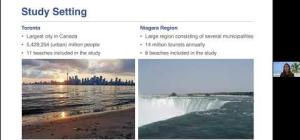
Environmental factors associated with freshwater recreational water quality in Toronto and Niagara
 view
view