

Environmental predictors of recreational water quality in Canada

Introduction
Fecal contamination in recreational waters poses health risks, such as gastrointestinal, respiratory, eye, skin, and ear infections. It also leads to aesthetic concerns, other related health implications, reduced beach usage, and potential economic losses. Public health authorities monitor water using fecal indicator bacteria (FIB); however, current advisories often rely on previous day’s results.
Canada has recently revised its national guidelines (2023) for monitoring recreational water quality in fresh and marine bodies. However, most jurisdictions in Canada continue to rely on culture-based testing for FIB and set current beach advisories based on the previous day's results. This may not always accurately reflect rapidly changing water conditions.
In 2020, our team at the School of Occupational and Public Health, Toronto Metropolitan University, initiated research to identify environmental factors predicting historical fecal contamination (E. coli) levels at beaches in Ontario (Toronto and Niagara Region), British Columbia (Metro Vancouver) and Manitoba (Lake Winnipeg). We also developed site-specific real-time water quality predictive models. Predictive modelling for recreational water quality estimates the probability of E. coli levels exceeding national guideline thresholds, using environmental data (e.g., weather, historical water quality) to forecast unsafe conditions and protect public health.
The outcomes of the research project include publications in peer-reviewed journals for each region (Ontario - Toronto and Niagara Region, Ontario - Niagara Region, British Columbia – Metro Vancouver, and Manitoba), and a webinar to discuss findings: Predicting the environmental drivers of recreational water quality in Canada | National Collaborating Centre for Environmental Health | NCCEH - CCSNE. This blog highlights key findings at each site and the complex interplay between environmental factors and E. coli levels in water bodies. Incorporating insights from these findings can enhance predictive models and improve beach management practices.
Freshwater beaches
1. Ontario – Toronto
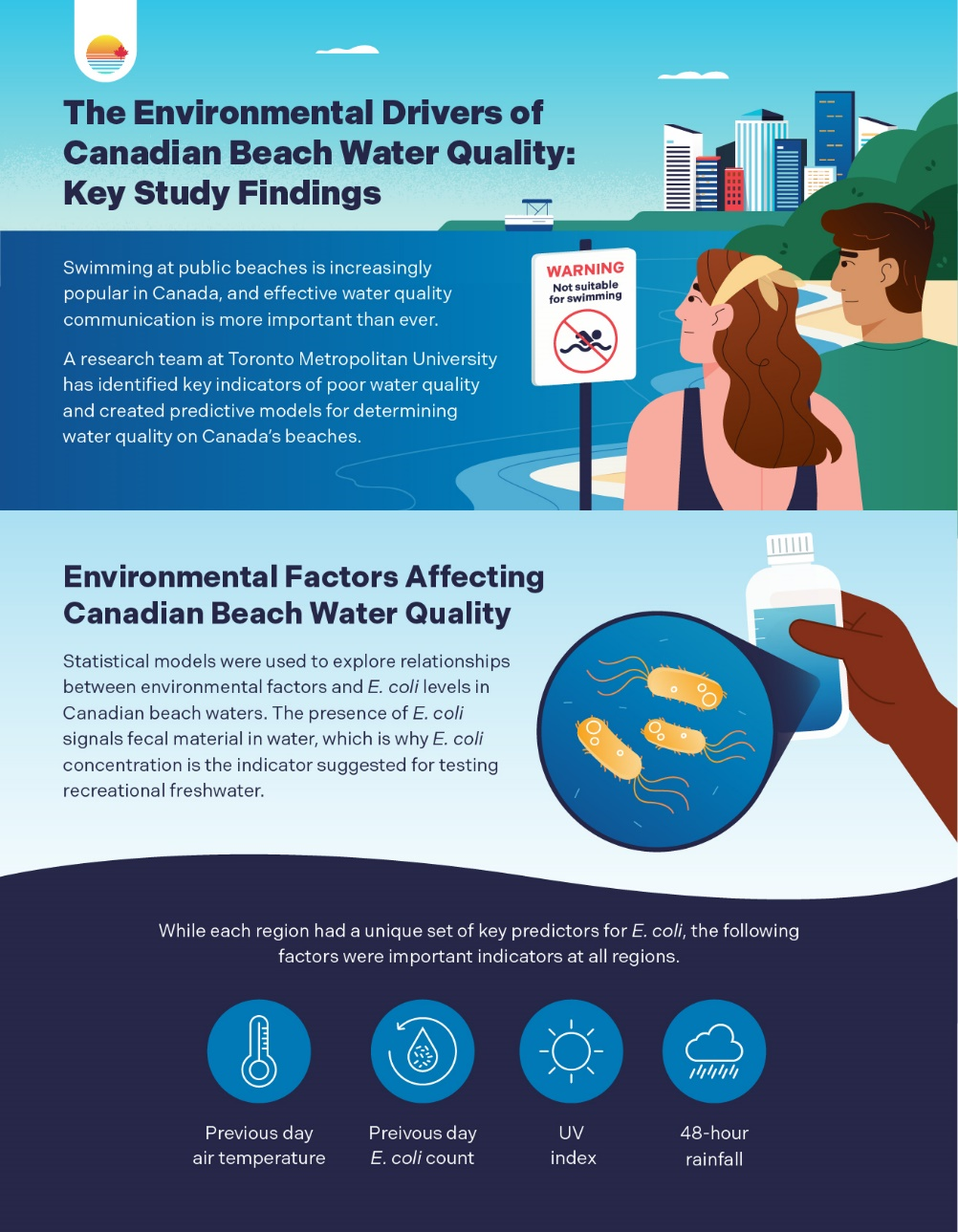
Our study of 11 Toronto beaches from 2008 to 2019 revealed key insights into E. coli levels and their environmental determinants. The results revealed beach-specific characteristics that prompt the need for tailored beach-specific management approaches. Several factors were found to increase E. coli levels:
- air and water temperatures
- turbidity (measured directly or visually observed)
- waterfowl counts
- rainfall, and
- stream discharge.
Conversely, solar irradiance and water level were found to have a negative association with E. coli levels.
2. Ontario – Niagara Region
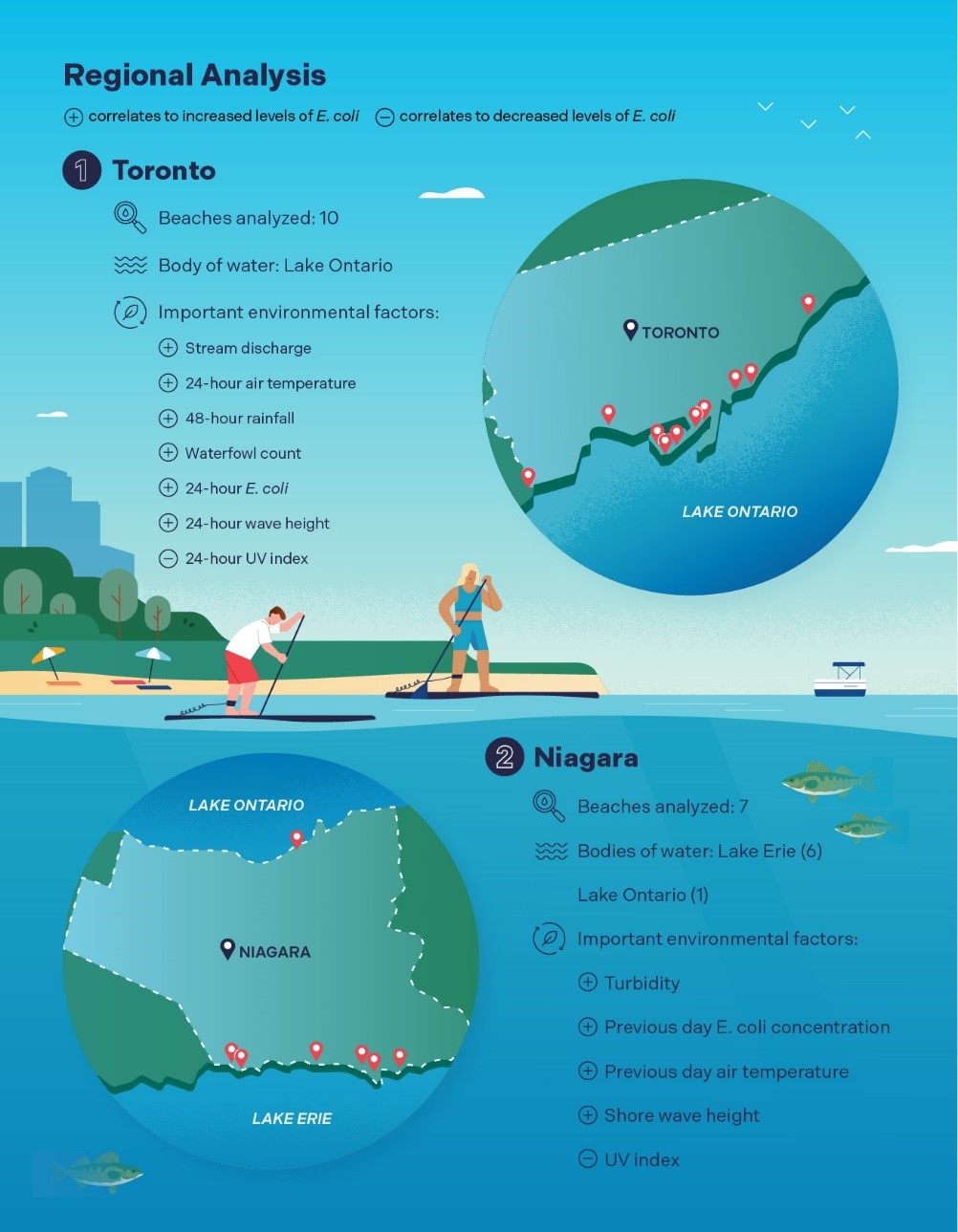
Seven Niagara region beaches were examined for the relationship between environmental factors and E. coli counts. In the Niagara region, key findings for positive associations with E. coli counts included:
- air temperature
- turbidity (measured directly or visually)
- wave height, and
- water level.
However, rainfall was found to have a negative association with E. coli.
Several insights were found through a path analysis. Turbidity acted as an intermediary factor for other environmental variable effects on E. coli counts. These included rainfall and streamflow, both having a positive indirect effect on E. coli. Streamflow was also identified as a mediator for the indirect effect of the previous day’s air temperature. These findings show complex interactions between environmental factors and E. coli levels in beach waters.
3. Manitoba
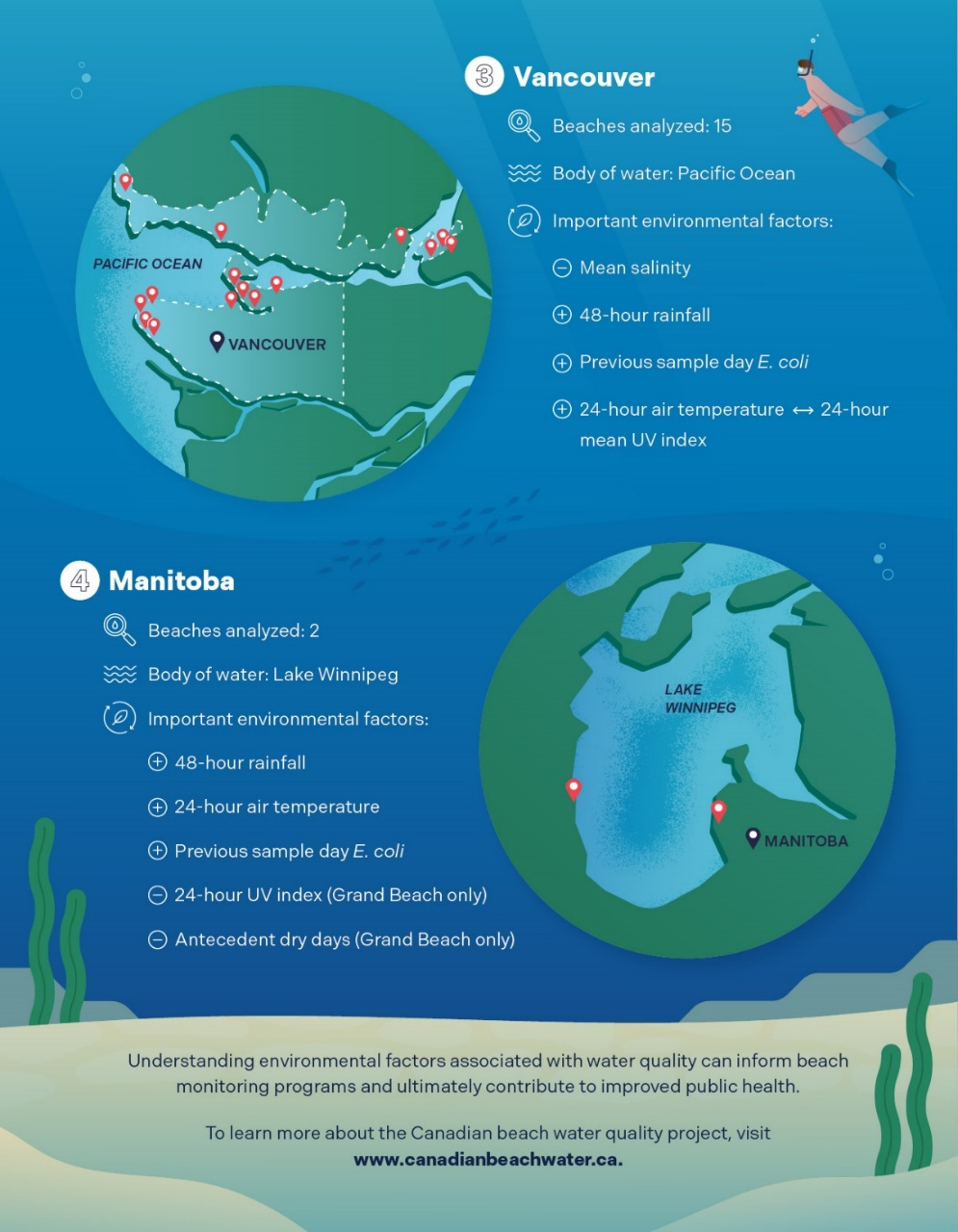
We analyzed historical environmental and water quality data from 2007 to 2021 at two popular Manitoba beaches on Lake Winnipeg. We found annual fluctuations in contamination sources and E. coli levels at these two beaches. Additionally, there were environmental predictors of higher E. coli levels. These included:
- higher rainfall in the preceding 48 hours
- the previous day's average air temperature, and
- the previous sample day's coli concentration.
Notable for Grand Beach were specific factors that correlated with a higher probability of E. coli threshold exceedances or higher concentrations. These factors included: lower average UV levels in the previous 24 hours, and longer antecedent dry days.
Marine water beaches
4. British Columbia – Metro Vancouver
We analyzed historical microbial marine water quality data (2013-2021) from 15 Metro Vancouver beaches to identify factors influencing E. coli concentrations. Factors associated with higher E. coli levels included:
- elevated coli concentrations in the previous samples
- increased rainfall in the preceding 48 hours, and
- higher 24-hour average air temperatures (when the ultraviolet (UV) index was moderate to high).
Conversely, higher mean salinity levels were associated with lower E. coli levels.
The significant variations in environmental predictors and their impacts on E. coli levels across beaches underscore the necessity for beach-specific management strategies, tailored management approaches, and targeted invention measures. Intervention measures may include implementing renovations to regulate stream discharge, maintaining beach cleanliness, and reducing waterfowl populations through ecologically sound strategies. It's also important to focus on adaptability of beach water management programs for extreme weather events as part of climate change preparedness initiatives.
Real-time recreational water quality predictive modelling
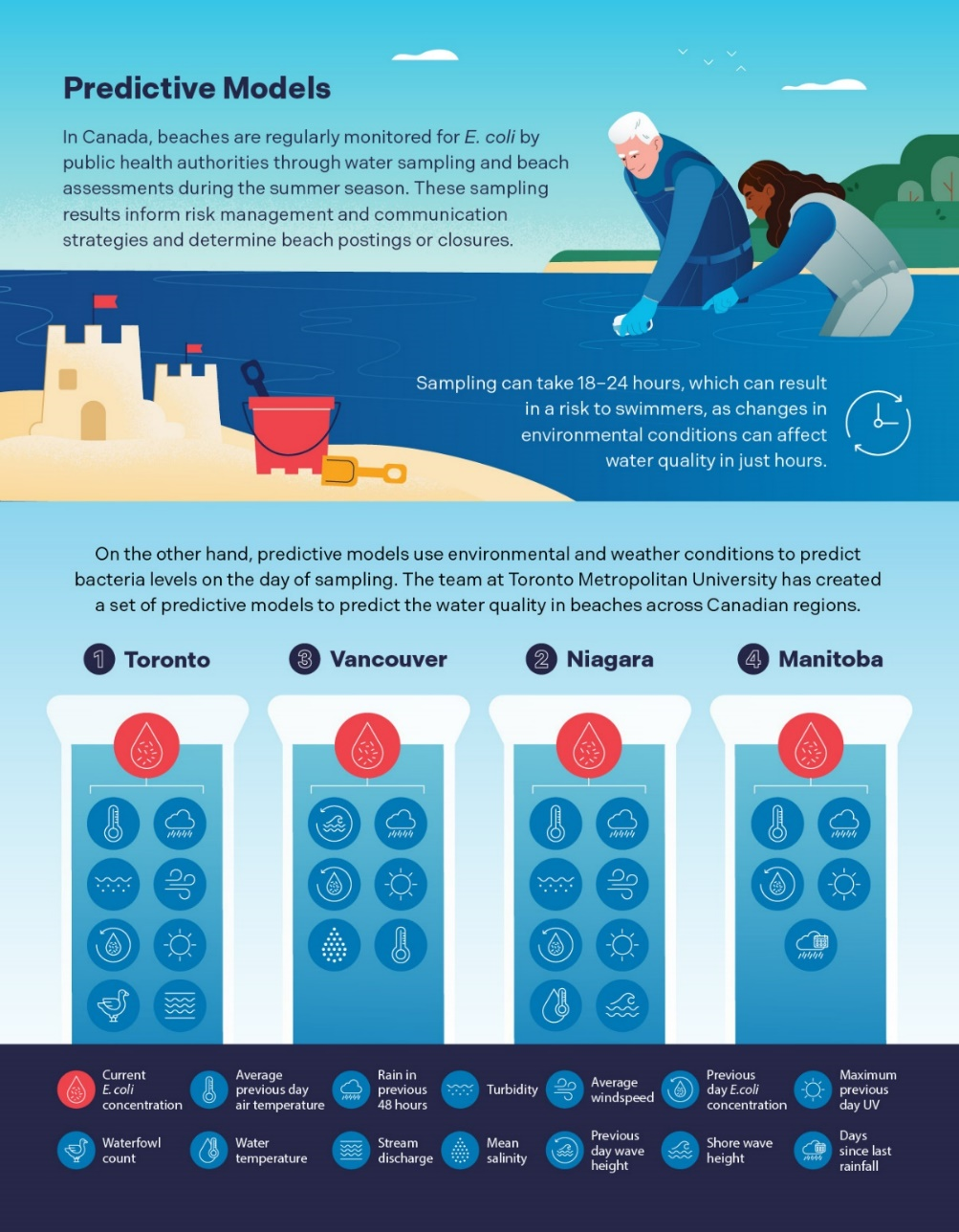
We developed user-friendly, beach-specific Bayesian Network graphic predictive models. These models will aid public health authorities in making informed risk management decisions for recreational water quality. The approach involves an AI-based graphical model that uses probability-driven event prediction and represents probabilistic relationships among the variables of interest. This method eliminates illogical and improbable relationships among the factors included in the model. The predictive models are still being evaluated and finalized, and will soon be made accessible through a free, user-friendly, and interactive web app that will enable retrospective testing for their predictive accuracy.
Canadian Beach Cohort Study
We identified a knowledge gap regarding the risk of recreational water illnesses in Canada, particularly concerning the incidence of acute gastrointestinal illness (AGI). Our mixed-method research, initiated with a pilot study in 2022 and currently undertaking a nationwide study (refer to the study protocol for details), addresses critical gaps in the burden of recreational water illness across Canada. This study aims to establish baseline illness risk data for popular freshwater and marine beaches. Additionally, we seek to identify the key sources of fecal contamination contributing to AGI rates among beachgoers. By using an integrative approach by combining environmental, health, and socio-behavioural data on beachgoer risk perceptions and behaviours, findings will inform beach water and risk management policies and strategies. Our focus is on pollution prevention and public awareness, with the ultimate goal of influencing Canada's recreational water quality guidelines and policies.
Harmful algal blooms in recreational waters across Canada
Harmful algal blooms (HABs) are another significant environmental determinant of health in recreational waters. HABs are increasingly common in Canadian freshwater bodies used for recreational purposes, and these blooms can produce toxins that pose risks to human and animal health. However, there is limited data on the associated health risks. In 2024, we launched a study aimed at investigating the health risks associated with cyanobacterial blooms in Canadian recreational waters. The focus is on four popular freshwater beaches in Ontario, Manitoba, and Nova Scotia, Canada (refer to the study protocol for details). We adopted a One Health approach that encompassed recreational water users of all ages and their pet dogs, and are combining qualitative and quantitative research methods to gather comprehensive data on recreational water user risk perceptions and behaviours that could inform evidence-based risk communication and management strategies.
Summary
Swimming at public beaches is becoming increasingly popular among Canadians. However, poor water quality significantly increases recreational users' risk of acute gastrointestinal and other illnesses. Understanding the environmental factors influencing water quality and the associated health risks is crucial to guiding beach monitoring programs and improving public health outcomes. Our research team is dedicated to tackling these challenges through focused studies and is eager to collaborate with relevant institutions or stakeholders to enhance beach safety and safeguard public health.
Biographies
Dr. Binyam Desta, MIPH, PhD, is a Postdoctoral Fellow in the School of Occupational and Public Health at Toronto Metropolitan University. He held a postdoctoral position in the School of Public Health Sciences at the University of Waterloo, where he completed his Ph.D. in Public Health and Health Systems. His research interests include investigating the risk factors and the burden of infectious diseases, particularly foodborne, waterborne, and acute respiratory illnesses.
Dr. Johanna Sanchez, MIPH, PhD is a Senior Research Associate at the School of Occupational and Public Health at Toronto Metropolitan University an Honorary Fellow at the Faculty of Medicine at the University of Queensland and Canadian Technical Advisor for TAP-EDM, Canada's Technical Assistance Partnership Expert Deployment Mechanism of Global Affairs Canada. Her research interests include investigating enteric infection and the effect on health outcomes, particularly in the area of water, hygiene and sanitation. She has conducted research with the Bill and Melinda Gates Foundation and the International Centre for Diarrheal Disease Research in Dhaka, Bangaldesh (icddr,b) in densely populated settings in low- and middle-income countries.
Rachel Jardine is a Research Assistant at Toronto Metropolitan University in the School of Occupational and Public Health. She has an MPH in Epidemiology from the University of Toronto and a BASc in Public Health from Toronto Metropolitan University. Her research interests include investigating the risk factors and burden of communicable diseases with a focus on pediatric populations.
Dr. Jordan Tustin is an Associate Professor at Toronto Metropolitan University in the School of Occupational and Public Health. She has a PhD in Epidemiology from the Dalla Lana School of Public Health, University of Toronto, is a Canadian Field Epidemiologist fellow, a CIHR Public Health Policy fellow, a Certified Canadian Public Health Inspector, and was awarded a Queen Elizabeth II Diamond Jubilee Medal for her service to public health in Canada and abroad. She has extensive field experience in communicable disease investigations and response and her research interests lie broadly in the field of environmental and public health with special interest in communicable diseases.
Dr. Ian Young is an Associate Professor in the School of Occupational and Public Health at Toronto Metropolitan University. He has a PhD in epidemiology from the University of Guelph and is a Certified Canadian Public Health Inspector. He has previously worked as an epidemiologist with the Public Health Agency of Canada and food safety expert with the Food and Agriculture Organization of the United Nations. His research focuses on reducing the environmental public health burden of food-borne, water-borne and zoonotic diseases through epidemiology, mixed-methods, and knowledge synthesis research.