

Avian influenza A(H5N1) in dairy farms: An update on public health and food safety concerns

Since 2020, a global outbreak of highly pathogenic avian influenza (HPAI) A(H5N1) has caused widespread infection of poultry and wild bird populations, with spillover into wild and domestic mammals. In March 2024, A(H5N1) was detected in goats and dairy cows and their milk for the first time in the United States (US). One dairy farm worker was also infected following contact with infected cows. To date, no cattle or human cases have been detected in Canada, and the situation is being monitored carefully by regulatory agencies. Building on our previous 2022 blog and 2023 evidence brief about the A(H5N1) outbreak, this blog provides an update on the situation as of April 2024, and addresses key questions about transmission pathways and food safety.
Background to the current avian influenza A(H5N1) outbreak (2020-2024)
The current A(H5N1) outbreak, dominated by clade 2.3.4.4b, has been the most persistent and pervasive ever seen, circulating in many parts of the world and affecting a much wider diversity of commercial and wild birds than previously documented. The virus has spread to many terrestrial and marine mammals, often with fatal outcomes. Twenty-eight human infections with A(H5N1) have been detected between 2020 and March 2024, including eight deaths.
Transmission of HPAI is known to occur via multiple pathways. Among birds, transmission occurs via direct contact and fecal-oral routes, via contaminated water, feed, or bedding. Infections among wild carnivores and domestic dogs were likely caused by scavenging on infected bird carcasses, and cats in Poland and Korea were also likely infected via food sources. Transmission from birds to mammals, including humans, has typically resulted from direct and prolonged contact with infected birds or contaminated environments. HPAI viruses have not been found to replicate well in the upper respiratory tract of humans to date. Despite a few isolated examples of human-to-human transmission, there have been no examples of sustained onward transmission among humans.
While there is no confirmation of sustained mammal to mammal transmission in the wild, some mass mortality events (e.g., sea-lions) raise concerns about the potential for new modes of transmission in mammals.
US dairy farms outbreak (2024)
Following the detection of A(H5N1) clade 2.3.4.4b in dairy herds in Texas in March 2024, suspected cases have since been confirmed in dairy herds in several other states. Asymptomatic cows from infected herds that were shipped to other states may have been the source of some spread. There has been little to no mortality reported among infected cows, but milk production is reduced and changes in milk consistency have been observed. To date, no infections in beef herds have been detected.
The mode of transmission of A(H5N1) to cows in the current outbreak is still unknown but the following pathways are being investigated:
- Wild birds: Cows may have initially been exposed to the virus in feed or water contaminated by wild migratory birds. Deceased pigeons, blackbirds, and grackles were also found on the same farm as infected cows. Some infected US dairy farms are located near infected poultry farms, but there has been no reporting on infections resulting from contact with poultry
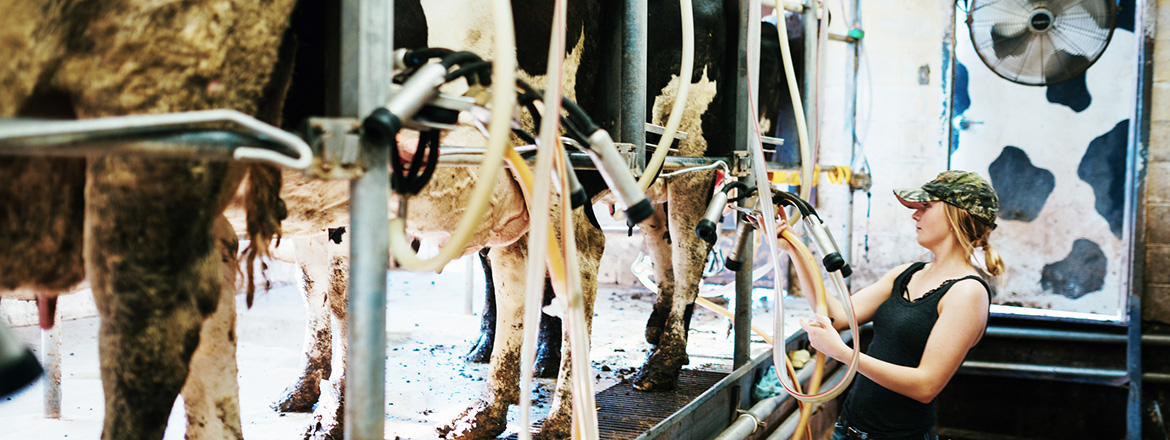
- Milking: Milking equipment and people doing the milking could be a source of cross-contamination, particularly because milking equipment is not always disinfected between cows. Testing of infected cows has revealed high levels of virus in milk, but little or no virus in nasal swabs or blood serum, suggesting milk could be a source of contamination of equipment, surfaces, or other fomites.
Multiple chains of transmission could have occurred on the affected farms, and transmission between cows may have occurred through mechanical means. The infection of a Texas dairy farm worker in March 2024 is the second human case of A(H5N1) recorded in the US and has been confirmed as clade 2.3.4.4b. The mode of transmission is being investigated, however the worker experienced only mild conjunctivitis, which resolved quickly. Infected barn cats were detected at three of the affected Texas dairy farms, and it is unknown whether cats were infected via wild birds, cows, or some other source. Viral sequencing from wild birds, cows, cats, and the human case in Texas show a common ancestor, indicating occurrence of a single spillover event, and not multiple jumps from birds to other species.
While the public health risk remains low, the spillover of A(H5N1) to cows has renewed concerns about adaptation of the virus to mammals and its pandemic potential. Ongoing global surveillance of HPAI viruses tracks both spread and genetic changes that could indicate adaptation to humans. Indeed, analysis of viral sequences from the US cows do not indicate genetic changes that increase adaptation for mammalian infection. While the viral sequence from the infected dairy worker shows a change in the polymerase gene PB2 that is associated with adaptation to mammalian hosts, this specific change has not been linked with any onward spread in humans.
Implications for food safety
The Canadian Food Inspection Agency (CFIA) does not consider HPAI to be a food safety concern and there is no evidence to suggest any commercial cattle in Canada have been affected by A(H5N1). Globally, no confirmed cases of human infection with A(H5N1) via food have ever been reported.
The following safeguards in Canada’s food supply chain ensure the safety of dairy and poultry products brought to market:
- Only milk from healthy dairy cows or other livestock is permitted to enter the milk supply chain.
- Pasteurization kills pathogens, including influenza viruses. Raw (unpasteurized) milk is not permitted for sale in Canada.
- Infected and high-risk poultry premises are subject to quarantine and movement controls, and infected and exposed birds are humanely destroyed. Infected poultry does not enter the food supply.
Pasteurized milk and milk products, including pasteurized cheeses remain safe to consume. Consumption of unpasteurized milk poses inherent risks of pathogen exposure and is not recommended.
There is no evidence of A(H5N1) infection risks from eating cooked poultry or eggs. Safe food handling guidelines for meat, eggs, and dairy should always be followed. This includes washing hands after handling raw meat or eggs, not eating cracked or dirty eggs, preventing cross-contamination of surfaces, containers, or utensils, and cooking meat and eggs to a safe internal temperature. Additional guidelines are available for people who hunt wild birds or collect eggs in the wild.
Response and prevention measures
The USDA Animal and Plant Health Inspection Service (APHIS) has not declared a need to depopulate infected dairy herds, but has made several recommendations for biosecurity, monitoring of exposed or sick animals, and minimizing movements of cattle. There have been no recalls of milk products in the US due to this outbreak, and the US Food and Drug Administration (FDA) has recommended that raw milk from infected and exposed cows should not be sold or used to manufacture raw milk products. Discarded raw milk from infected cows should not fed to other animals (e.g., calves or cats), or disposed of without being heat treated first.
New Canadian guidance is available on monitoring for HPAI in livestock. While no cases have been detected in Canadian livestock, producers should monitor for signs, such as decreased milk production, thicker milk consistency, decreased feed consumption, abnormal feces, lethargy, dehydration, and fever. All premises that keep animals should take measures to keep wild birds away from animals, water, food sources, and bedding. Specific advice is available for poultry producers on essential biosecurity measures.
People who keep small flocks or pet birds can reduce A(H5N1) risks by preventing contact with wild birds, maintaining a clean environment, and checking flocks for signs of illness. Members of the public should avoid direct contact with wild birds and prevent pets from contact with live or dead birds. The US CDC has issued updated guidance on appropriate PPE for people who work with animals suspected or known to be infected with HPAI viruses and new advice for veterinarians handling sick cats.
Keeping up to date and remaining vigilant
Currently, all major public health agencies, including the Public Health Agency of Canada, US CDC, WHO, and European ECDC consider the risk to human health from A(H5N1) to be low for the general public, and low to moderate for highly exposed occupations or groups (e.g., farm workers on infected farms), However, continued vigilance is needed.
The US CDC has provided additional interim guidance, including infection prevention and control measures for various groups who may be exposed to the virus. The Canadian Animal Health Surveillance System (CAHSS) now has a dedicated webpage for the dairy industry to follow this US outbreak. The CFIA provides updates on the avian influenza situation, including the status of outbreaks by province and the HPAI – Wild Birds dashboard, reports on detections in wild birds and mammals. Sick or dead wild birds, or other wildlife, can be reported to the relevant provincial or territorial agency.
The first detection of A(H5N1) in US dairy cows and milk, and transmission to a dairy worker, represents a concerning new step for the evolving virus and requires environmental public health professionals and industry to review and revise their understanding of transmission pathways and risks, and to take measures to prevent further spread. This includes being prepared to respond to changing patterns of infection and pathologies for a variety of species. It remains of utmost importance that all efforts are made to eliminate opportunities for A(H5N1) to become more transmissible and pathogenic to humans.