

Flooding and health impacts: Preparedness, response, recovery, and prevention

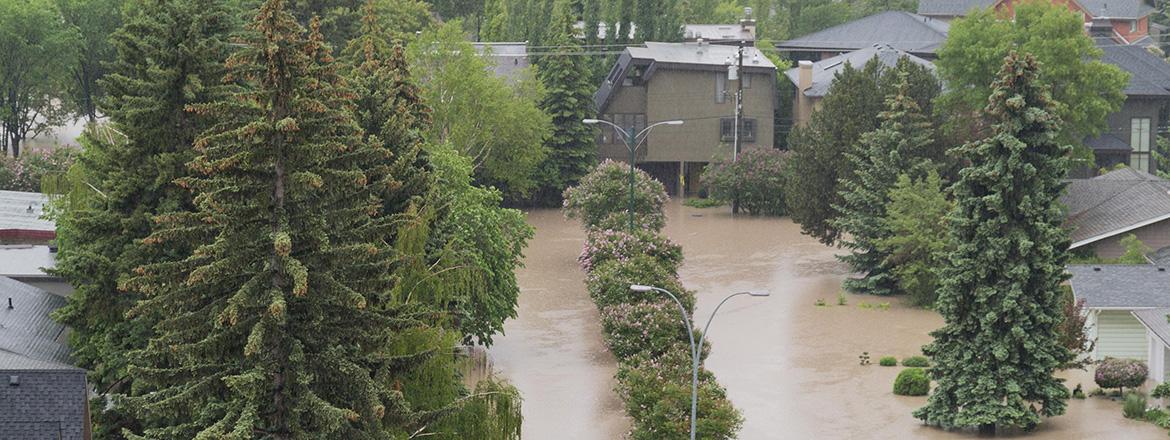
Climate change is driving an increase in daily extreme precipitation in Canada, which when combined with other landscape factors, such as urbanization, deforestation, and loss of wetlands, can result in flood events. From an environmental health perspective, flooding increases the risks of harm and disease due to physical hazards, water and food contamination, mould, and numerous other physical, biological, and chemical hazards. The populations most at risk from the health and community impacts of flooding include Indigenous Peoples, low-income households, seniors, people with disabilities, and those with chronic health conditions. Residents of remote or poorly serviced communities are also at increased risk, where exposure is higher and capacity to prepare for, respond to, and recover from floods is often limited. Extreme flood events may also result in evacuation and long-term displacement from homes and social support networks, adversely affecting health and well-being.
This subject guide provides a collection of key resources on the health impacts of flooding and populations who are disproportionately affected, such as Indigenous communities. Key points of interest range from public alerting, flood risk education campaigns, and new mapping resources, to addressing re-entry hazards, home remediation, water, and food safety concerns. Longer-term recovery resources are included that focus on mental health in the aftermath after a flood. We also include built environment design approaches for the prevention of health risks from extreme flooding.
Health and community impacts of flooding
This section provides resources on who is most impacted by flooding in Canada, how climate change is increasing flood risk, and the key health and community consequences.
- The intersection of flooding and deprivation: A study of neighbourhoods (Foran et al., 2025)
This study by Statistics Canada finds that neighbourhoods in British Columbia, Alberta, Manitoba, Ontario, Quebec, and New Brunswick, affected by flooding in Canada are more likely to experience higher levels of socio‑economic deprivation and vulnerability. There is evidence that flooding can exacerbate existing inequalities over time.
- Person-days under emergency order: A research brief on wildfire and flood evacuation mandates in British Columbia (Raker and Zhang, 2025)
This research brief quantifies the scale and duration of wildfire and flood evacuation orders in British Columbia, showing that floods can result in large numbers of cumulative evacuation person‑days and disproportionately affect certain communities such as Indigenous communities and low-income residents.
- The first public report of the National Risk Profile Section 6 hazard: Floods (Public Safety Canada, 2024)
This report section summarizes types of floods, flood risk management, who and what is at risk, and who is disproportionately at risk, for example Indigenous Peoples, low-income households, rural and remote communities. The resource also covers how flood risk is changing, the National Risk Profile flood risk assessment results, and gaps in flood resilience.
- From risk to resilience (BC Ministry of Health, 2024)
This report provides provincial lessons on flooding in British Columbia, which is becoming more frequent and severe due to climate change, causing significant health, infrastructure, and environmental impacts. The report emphasizes there are disproportionate effects on Indigenous Peoples and other groups susceptible to flood impacts, while underscoring the need for coordinated, cross-sector‑ approaches that respect Indigenous rights, knowledge, and leadership in building resilience.
- Climate change and floods fact sheet (Canadian Climate Institute, 2024)
This fact sheet provides evidence related to climate driven short‑duration rainfall, flash‑flood risks, and implications for infrastructure and communities.
- Inondations (Institut national de santé publique du Québec, 2024)
This webpage presents public health information on flooding, and outlines key health risks, affected populations, and the factors that influence exposure and impacts. It also highlights practical prevention and mitigation measures to support decision‑making and protect population health.
- Exploring spatial heterogeneity and environmental injustices in exposure to flood hazards using geographically weighted regression (Chakraborty et al., 2022)
This study examines spatially uneven flood-related environmental injustices across Canada, finding that flood risk in Canada is disproportionately higher among females, lone-parent households, Indigenous Peoples, South Asians, older adults, other visible minorities, and residents experiencing economic insecurity.
- Climate change, floods, and your health (Public Health Agency of Canada, 2021)
This webpage provides evidence on the short and long‑-term‑ dangers related to flooding such as drowning, disease spread, food and water contamination, mould, and carbon monoxide poisoning.
- Environmental health effects attributed to toxic and non-infectious agents following hurricanes, cyclones, flash floods, and major meteorological events(Erickson et al., 2019)
This narrative review considers the complex issue of contamination in flood waters, outlining the wide range of infectious and non-infectious hazards and some of the work done around monitoring and assessing vulnerability to these hazards.
- Health risks of flood disasters (Paterson et al., 2018)
This short commentary provides a quick overview of the most common acute health impacts of flood events, including drowning, trauma, exacerbation of chronic health conditions, mental health disorders, damage to health infrastructure and increases in cutaneous, gastrointestinal, respiratory, and vector-borne diseases.
- Naturally occurring asbestos in an outdoor setting (Miller and Wiens, 2018)
This NCCEH evidence brief presents the health risks of exposure to naturally occurring asbestos, which can be deposited through flooding, and describes how to assess risk and collect samples.
- No calm after the storm: A systematic review of human health following flood and storm disasters (Saulnier et al., 2017)
This systematic review analyzed morbidity and mortality linked to floods or storm disasters with attention to how the burden of disease varies during different phases after floods and storms. The review included 113 studies and found that poisonings, wounds, gastrointestinal infections, and skin or soft tissue infections all increased after storms and that gastrointestinal infections were more frequent after floods. Most health changes occurred within four weeks of floods or storms.
Indigenous-centred resources
The resources below provide Indigenous‑centred evidence, guidance, and case studies on flooding that highlight disproportionate flood risks, health and social impacts, and the consequences of repeated evacuation of First Nations communities. This section also includes resources that emphasize the importance of Indigenous knowledge, and community‑led, culturally grounded approaches to flood mapping and hazard identification, emergency planning, and climate resilience.
- Indigenous engagement guidelines for flood mapping (Natural Resources Canada, 2024)
These guidelines, which supports the Flood Hazard Identification and Mapping Program (see above), provide practical guidance for flood-mapping practitioners to engage Indigenous communities early and respectfully, include Indigenous knowledge, and build fair partnerships for better decision-making.
- For our future: Indigenous resilience report (Natural Resources Canada, 2024)
This Indigenous-led assessment report highlights flooding as a climate impact that intersects with colonial legacies, land stewardship, water governance, and community well‑being, rather than as a stand‑alone technical hazard.
- Climate change and Indigenous Peoples’ health in Canada (NCCIH, 2022)
This report highlights how climate change–driven flooding disproportionately harms the physical, mental, cultural, and spiritual health of First Nations, Inuit, and Métis Peoples, emphasizing colonialism and land disruption as root causes, and the importance of Indigenous-led flood adaptation and response.
- Health and social impacts of long-term evacuation due to natural disasters in First Nations communities: A summary of lessons for public health (NCCPH, 2021)
This summary document details the public health lessons gained from two case studies of Indigenous communities that experienced catastrophic events necessitating long-term displacement. The cases studies examined the experiences of the Ashcroft Indian Band during the Elephant Hill Wildfire (2017) and the Siksika Nation during the Bow River flood (2013).
- Important flood safety information (First Nations Health Authority, 2021)
This website provides flooding advice and resources for First Nations communities on how to stay safe and be prepared.
- Leveraging hazard, exposure, and social vulnerability data to assess flood risk to Indigenous communities in Canada (Chakraborty et al., 2021)
This study uses hazard, exposure, and social vulnerability data to show that Indigenous communities in Canada face disproportionately high flood risk compared with non‑Indigenous communities, driven by both physical exposure and systemic inequities.
- Spring flooding and recurring evacuations of Kashechewan First Nation, northern Ontario, Canada (Khalafzai et al, 2021)
This study, based on interview data, shows that repeated spring flooding and evacuations in Kashechewan First Nation have heightened long-term physical, social, and psychological vulnerability despite improving short-term preparedness and coping capacity.
- A First Nation framework for emergency planning: A community-based response to the health and social effects from a flood (Montesanti et al., 2019)
This qualitative case study documents how Siksika Nation responded to the health and social impacts of the 2013 Alberta floods and describes the development of a culturally centred, community-based‑ emergency planning framework.
- Reconciling with Minoaywin: First Nations Elders’ advice to promote healing from forced displacement (Ballard, 2019)
This study by Indigenous scholar Myrle Ballard explores lived experience from Indigenous Elders about the 2011 forced displacement of seventeen First Nation communities in the Interlake region of Manitoba due to a human made diversion flood from the Fairford Dam after a one in 300 year spring run-off.
Preparedness and response
Preparedness and response depend heavily on public health communication and alerting, shelter, and evacuation preparation, voluntarily action by community members, and their understanding of who is at risk. This section offers toolkits and resources to assist with community engagement. It also includes resources that look at other means through which the risk of disasters can be more evenly shared between the public and private sectors.
- Flood risk (Government of Canada, 2026)
This toolkit provides resources on flood prevention and mitigation, as well as videos and infographics for quick dissemination via social media. This site also signpost to essential provincial and territorial flood resources.
- Floods and your safety (US CDC, 2026)
This website provides information about taking steps to prepare, stay safe during a flood, and protect health during recovery.
- Predicting and alerting coastal flooding (Government of Canada, 2025)
This website provides information about the new national alerting system replacing “storm surge” terminology to “coastal flooding”, with a broader, national coverage (Pacific, Arctic, St. Lawrence, Great Lakes). This resource is relevant for public warning, preparedness, and emergency management.
- Flood preparedness guide (PreparedBC, 2025)
This fillable guide and checklist provide practical household flood event planning content for BC residents.
- Toolbox for flood hazard education and information (Natural Resources Canada, 2025)
This toolbox offers practical tools to support public education and communication on flood hazards and flood mapping across all stages of flood risk management.
- Flood Hazard Identification and Mapping Program (Natural Resources Canada, 2025)
This website provides information about the nation‑wide mapping program improving hazard data for preparedness planning for the placement of evacuation routes, and land use planning.
- The interactive map Geo-Flooding (Government of Quebec, 2024)
This website provides public access to interactive maps and information showing where flood‑prone areas and river mobility zones exist across Québec, to help citizens and municipalities understand flood risk.
- After the flood. community response & recovery (Klassen et al., 2023)
This report documents the social, health, and community‑level impacts of the 2021 Abbotsford BC flooding. Highlights include lessons learned from local response and recovery efforts, the importance of coordination, equity‑centred supports, and long‑term recovery planning to strengthen community resilience after floods.
- Disaster shelter assessment (US Centers for Disease Control and Prevention, 2020)
This modifiable toolkit helps EPH professionals to rapidly assess shelter conditions on 10 general areas of environmental health ranging from basic food safety to pet wellness. The resources are also available in French and Spanish.
- Flood protection resources (INTACT Centre on Climate Adaptation, n.d.)
This toolkit from the University of Waterloo provides detailed resources and checklists to help homeowners install and maintain key flood protections. Information on understanding insurance coverage and accessing flood protection grants is also provided. Some resources are also available in French and Chinese.
Re-entry: Mitigation of short-term health risks and hazards
These resources address some of the immediate health hazards encountered when re-entering flood affected areas, which may be encountered in homes, but also businesses and public spaces like parks and playgrounds. Priority activities during re-entry include cleanup and disinfection, mould remediation and addressing food safety and water system safety concerns.
Re-entry hazards and assessing structural integrity
The flood zone poses many hazards to members of the public and environmental health practitioners who may be called upon to conduct site assessments, including debris, gas leaks, structural failures, live electrical wires, living and dead animals, and many others.
- Reopening outdoor public spaces after flooding (US Centers for Disease Control and Prevention, 2024)
This website provides suggestions for public health officials who must assess public parks and playgrounds and determine what action should be taken before reopening to the public.
- Flood zones are danger zones (BC Centre for Disease Control/NCCEH, 2021)
This website summarizes the primary physical, chemical, and microbiological risks for members of the public who are trying to re-enter a home in a flood zone. The resources provided within this document are specific to British Columbia.
- Post-disaster building assessment training (BC Housing, 2021)
This toolkit offers online resources and training to rapidly capacitate practitioners, enabling them to perform first-pass structural assessments on buildings impacted by flooding or other disasters.
- Re-entering your flooded home (US Centers for Disease Control and Prevention, 2020)
This website helps homeowners identify the major hazard encountered during clean up. Additional checklists for structural safety and for inspecting household utilities are provided by the American Red Cross.
- Guide to flood recovery (Canadian Red Cross, 2018)
This guide includes provides practical, step‑by‑step guidance to help households and communities recover safely after flooding, including health and safety precautions, cleanup, and rebuilding considerations.
- Emergency wound care after a natural disaster (US Centers for Disease Control and Prevention, 2017)
This factsheet emphasizes the importance of not only maintaining personal hygiene, but also quickly cleaning and covering wounds. Wounds exposed to floodwaters have a high likelihood of infection and rapid first aid can be critical.
Cleanup, disinfection, and dealing with indoor air quality hazards
Cleaning up a flooded building requires an action plan that encompasses the necessary information and personal protective equipment to prevent exposures to hazards such as mould, asbestos, carbon monoxide, pathogens, and contaminated dust.
- Flooded homes cleanup guidance (US EPA, 2026)
This webpage provides step‑by‑step guidance for safely re‑entering, cleaning, and remediating flooded homes, with a strong focus on protecting health during recovery. It highlights key hazards such as mould, bacteria, contaminated water, asbestos, lead paint, and generator use, and offers practical tools and videos to support safe cleanup after flooding.
- Flood cleanup to protect indoor air and your health (US EPA, 2026)
This webpage presents clear, health-focused guidance outlining the steps needed to reduce health risks during cleanup, removing items that can’t be cleaned, thoroughly cleaning, and completely drying homes. It includes an engaging and interactive virtual flooded home tour.
- Recovering after a flood (BC Government, 2025)
This webpage outlines key steps to take after a flood, including ensuring personal safety, assessing damage, avoiding health hazards such as contaminated water and mould, and accessing financial and recovery support.
- Flood cleanup: keep in mind indoor air quality (Health Canada, 2024)
This guide provides a step-by-step plan outline to safely and quickly clean, dry and ventilate homes ideally within 48 hours after a flood, to prevent mould, bacteria, and other contaminants from degrading indoor air quality and harming health.
- Mould: assessment, remediation and building for resilience (NCCEH, 2023)
This NCCEH subject guide offers resources specific to mould assessment and remediation, including both resources for public communication and education, as well as training resources for environmental public health professionals.
- After the flood: What to do when floodwaters recede (Government of Manitoba, 2022)
This guide provides step‑by‑step practical advice for safely returning home after a flood, including cleanup, mould prevention, water safety, and protecting personal health.
- Clean up safely after a disaster (US Centers for Disease Control and Prevention, 2021)
This website provides a comprehensive checklist related to personal protective equipment, using hazardous tools, heat exposure and exhaustion, and preventing mould.
- A field guide for flooded home cleanup (National Center for Healthy Housing, 2019)
This guide offers practical step-by-step advice on safe cleanup and repair, including low-cost methods to dry and restore homes.
- Asbestos (BC Centre for Disease Control, n.d.)
This webpage explains the risks associated with asbestos exposure, which may occur when a home’s drywall is damaged or must be removed. A qualified professional should only conduct asbestos removal.
Food safety and security
Flood events may threaten food safety through contamination of food products in homes and food businesses but may also threaten food security due to destruction of soils, farm animals, and facilities.
- Risk assessment for agricultural flooding events (BC Ministry of Agriculture, 2025)
This webpage provides guidance for producers to assess and manage food safety risks after flooding by identifying biological, chemical, and physical hazards affecting crops, soil, water sources, buildings, and equipment.
- Keep food safe after a disaster or emergency (US Centers for Disease Control and Prevention, 2025)
This website discusses what to do with perishable and non-perishable foods that may have been compromised during a power outage or have come into contact with flood water.
- Food safety after a flood (Government of Nova Scotia, n.d.)
This factsheet explains which foods to discard and how to safely clean and sanitize food contact items after flooding to prevent food‑borne illness.
- Post-disaster food assessment and salvaging best practices (Alberta Health Services, 2020)
This literature review examines the evidence and rationale underlying post-disaster food safety practices from Canada, the US and Australia. The review identifies those practices which are scientifically sound, and which are precautionary in nature, and flags several potential issues that require additional research.
- Managing the impact of floodwater contaminants on soil and produce in residential, community and school vegetable gardens (North Carolina State University Extension, 2020)
This guidance document helps small producers understand the risk associated with various parts of the plant and provides advice on how to mitigate risks due to mosquitos, clean up and contaminated soil.
- Farm flood readiness toolkit (Upland Agricultural Consulting, 2020)
This toolkit created on behalf of BC Ministry of Agriculture helps farmers assess their flood risk and put in place measures to limit damages, farm-related contamination, the loss of livestock, and disruption to the food system.
Water safety during flood events
Flood waters are highly contaminated and can compromise drinking water and wastewater utilities of all sizes. However, smaller systems, including private water wells and small community water systems are often most impacted.
- Water quality – reports and publications (Health Canada, 2025)
This webpage compiles national guidelines and technical resources that set standards for drinking water quality, including guidance on contaminants, boil water advisories, and water safety planning to protect public health.
- Be Well Aware - Ensure your well water is safe during and after emergencies (Government of Canada, 2024)
This guidance document explains the risks that floods pose to wells. Homeowners should also receive information on how to shock chlorinate and test their wells post-flooding.
- How to make water safe in an emergency (US Centers for Disease Control, 2024)
This webpage explains how to make safe water during emergencies such as floods, hurricanes, and water system failures.
- Guidelines for septic and onsite wastewater systems (US Centers for Disease Control and Prevention, 2024)
This toolkit aggregates resources from several US agencies with advice on how to manage sewage systems that may have been impacted by a flood event, and what to do before and during an emergency to limit risk to human health.
- Sewage systems and flooding: Safety, sanitation, and clean-up (Government of British Columbia, 2021)
This guidance document describes how to assess whether a septic system has been compromised by flood and steps to restore it to service.
- Finding safe water in an emergency (NCCEH, 2019)
This video helps residents understand their water needs in an emergency and how to source or collect water around their homes in a safe manner.
- Increased risks of waterborne disease outbreaks in Northern Ontario due to climate change (Wang et al, 2018)
This article focuses on heavy rainfall events, which can overwhelm small drinking water treatment systems, degrading water quality and increasing the risk of waterborne disease outbreaks.
Recovery: Longer-term health and community impacts
In addition to the acute health impacts related to flooding and the hazards encountered upon re-entry, individuals and communities may also experience long-term psychosocial impacts due to material loss, grief, displacement, and family separation. This section draws on the peer-reviewed literature to better understand these impacts and how to address them.
- Flooding and the risk of PTSD, depression, and anxiety: A systematic review and meta-analysis (Yakubu er al., 2026)
This systematic review and meta-analysis including 18 studies from developed and developing countries, found that exposure to flooding is associated with substantially increased odds of post‑traumatic stress disorder, depression, and anxiety.
- Psychosocial impacts: Resources for mitigation, response, and recovery (NCCEH, 2023)
This NCCEH subject guide provides general literature on the psychosocial impacts of disasters and examples of long-term psychosocial monitoring studies from Canadian disaster contexts.
- Sea level rise and public health implications (CLIMAtlantic and NCCEH, 2023)
This NCCEH project in partnership with CLIMAtlantic describes the public health risks to coastal communities due to sea-level rise and approaches for integrating public health-driven mitigation measures into adaptation plans for impacted communities.
- A guide to post-flooding community-level psychosocial response and recovery in Canada (Myre and Glenn, 2023)
This NCCEH report summarizes the findings from our pan-Canadian engagement with leaders in emergency response and recovery, which identified seven key public health practices for psychosocial recovery in the wake of a disaster. The accompanying webinar, held on March 30th, 2023, discusses the report’s findings and offers live discussion with an expert panel.
- Post-flooding community-level psychosocial impacts and priorities in Canada: A preliminary report (Glenn and Myre, 2022)
This NCCEH report draws on the literature, practice-based sources, and engagement with a pan-Canadian practice advisory committee to reveal some of the experiences, challenges, and priorities for action regarding the psychosocial impacts of floods and community recovery. A central takeaway is that flood impacts fall disproportionately on systemically marginalized populations, including Indigenous Peoples and communities, residents of rural and remote areas, and children and youth.
- Impact of climate change and wild weather on mental and physical health, lost time from work and the need to prepare (INTACT Centre for Climate Adaptation, 2021)
This NCCEH webinar discusses the less quantifiable aftermath impacts of extreme flooding events and provides Canadian examples of flood mitigation activities.
- Birth outcomes, pregnancy complications, and postpartum mental health after the 2013 Calgary flood: A difference in difference analysis (Hetherington et al., 2021)
This population‑based study found that exposure to the 2013 Calgary flood was associated with a small increase in gestational hypertension but no significant impacts on preterm birth, fetal growth, or postpartum depression or anxiety.
- Surface water flooding, groundwater contamination, and enteric disease in developed countries: a scoping review of connections and consequences (Andrade et al., 2018)
This systematic review identifies and synthesizes the literature on surface flooding, groundwater contamination, and human gastroenteric outcomes. The authors discuss strategies to increase awareness about potential sources of contamination and to motivate precautionary behaviour.
Built environment considerations for design for flood prevention and adaption
This section provides selected resources on how flood risk can be minimized by adaptation at the local, regional, and watershed scales.
- From flood risk to resilience: a B.C. flood strategy to 2035 (Government of BC, 2024)
This report describes B.C.’s province‑wide approach to reducing flood risks and safeguarding health, infrastructure, and communities through proactive and long‑term flood management.
- Nature-based solutions for flood mitigation in Canadian urban centers: A review of the state of research and practice (Zoghi et al., 2025)
This systematic review found that nature-based solutions can work well to improve flood resilience, however, translating research findings into practice has been slow. There also needs to be more combining of green and traditional grey infrastructure to increase the benefits.
- Guide for resilient infrastructure: : Protecting communities and infrastructure from flooding (Government of Canada, 2024)
This guide outlines practical, lifecycle-based measures to help communities, particularly Indigenous communities, reduce flood damage and strengthen resilience.
- Reducing urban flood risk through building- and lot-scale flood mitigation approaches: Challenges and opportunities (Sandlink and Binns, 2021)
This article shows that urban flooding poses significant health and well‑being risks, and that preventive, building‑ and lot‑scale measures can substantially reduce household flood exposure and associated physical and mental health impacts.
- Under one umbrella: Practical approaches for reducing flood risks in Canada (INTACT Centre, 2020)
This report synthesizes practical, evidence-based standards and actions that individuals, communities, businesses, and governments across Canada can implement immediately to reduce growing flood risks driven by climate change.
Inclusion of external resources in NCCEH Subject Guides is for information only and does not constitute an endorsement of the organization, author, or content. This list is not intended to be exhaustive. Omission of a resource does not preclude it from having value.
Related Resources
Public health practices to support psychosocial and mental health response and recovery post-flooding
 view
view
Post-flooding community-level psychosocial impacts and priorities in Canada: A preliminary report
 view
viewFires, floods & hurricanes: Protecting Canadians by identifying and managing threats to safe drinking water
 view
viewMonitoring health impacts of climate change: A GIS application to display real-time surveillance of environmental data and health outcomes combined with demographic information
 view
view