


Creating healthy community places and spaces with individuals with diverse abilities

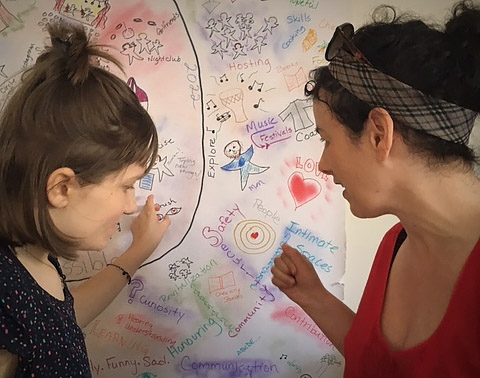
COVID-19 has impacted all of us, but disproportionately in priority populations such as those with a disability, notably those with intellectual disabilities. The American Association on Intellectual and Developmental Disabilities defines intellectual disability as characterized by significant limitations in both intellectual functioning and in adaptive behavior, which covers many everyday social and practical skills.1
Historically, those with intellectual disabilities have been separated and segregated from their local communities and have not been equally represented at decision making tables. COVID-19 has further exacerbated this exclusion and in many cases re-traumatized individuals with intellectual disabilities who have experienced isolation and loneliness in their lives. It is important to consider the lived experience and the needs of the most marginalized populations to create a truly equitable and accessible environment. The Public Health Agency of Canada (PHAC) has identified 36 core competencies for public health professionals and identifies essential skills, knowledge and attitudes necessary to address equity, social justice, determinants of health and community participation. At a local level, the ability of public health professionals to put into practice those core competencies require an understanding of where and how individuals with intellectual disabilities are impacted by the environment that surrounds them.
The Canadian Human Rights Commission statement on inequality has highlighted the impact that the pandemic has had on people with disabilities.2 Impacts such an inability to access services or programs, or facing significant short- and long-term consequences of COVID-19-related public health measures on their mental health and well-being, to facing barriers on a daily basis, to staying connected and feeling supported by the communities where they reside. 3
The United Nation’s General Assembly formally adopted the 17 Sustainable Development Goals in which disability is referenced eleven times, specifically as it relates to education, growth and employment, inequality, accessibility of community design features (housing, transportation, natural environment, green spaces), data collection and monitoring.4 Within Canada, the federal government has passed the Accessible Canada Act which addresses systemic barriers of accessibility. The Act, will by 2040 address identification and removal of barriers to; employment, the built environment, information and communication technologies, procurement of goods, services and facilities, design and delivery of programs and services, transportation.
Four provinces, Manitoba, BC, Ontario and Nova Scotia have passed similar legislation. British Columbia’s Bill 6 – 2021: Accessible British Columbia Act has established accessibility standards and regulations in a range of areas, helping ensure people with disabilities can fully participate in their communities. Under this new Act, a provincial accessibility committee must consider the principles of; inclusion adaptability, diversity, collaboration, self-determination, and universal design.
Across Canada, advocacy organizations and service agencies supporting and working alongside individuals with intellectual disabilities have campaigned for inclusion at all levels of community life. From the public health systems that serve the needs of all, to infrastructure designed for all, to policies and programs that include all. Moving away from making certain services accessible for specific populations, and instead thinking about universal design making spaces and programs and services accessible for the full spectrum and diversity of people in the community.
How could Public Health Professionals provide support?
The NCCEH blog, Accessibility for persons with disabilities during the COVID-19 pandemic identified how the environment affects the health and safety of people with disabilities. It offered potential action areas that could be reviewed applying a lens of someone with a disability. Another action area is identifying areas where public health professionals could help support individuals with an intellectual disability and their families to thrive in their communities.
At a community level, public health professionals provide a vital link to helping support the planning of communities and identification of the populations within a community. Planners and municipal decision makers can be supported through accessing health data and profiles of communities or regions. Alberta’s Environmental Public Health Information Network or Ontario’s Community Health Profiles Partnership are examples of available data at a community level.
The BC Centre for Disease Control (BCCDC) Handbook of Health Equity in Environmental Public Health Practice offers background information and resources to increase knowledge of health inequities as they relate to the natural and built environment and an understanding of how inequities impact environmental health practice. That knowledge can be an important tool in supporting a local government to include an equity-based, health in all policies approach to their planning processes.
Public health professionals have many resources available that provide the health rationale and evidence to advance healthy community planning for all segments of our population. Resources include the Healthy Built Environment Linkages Toolkit and Social Environments Framework.
The Healthy Built Environment (HBE) Toolkit, describes how community health is influenced by five key design features; neighbourhood design, housing, transportation systems, natural environments, and food systems. It makes the link between land use planning and the impact to health.
The BCCDC’s Social Environments Framework, a companion to the HBE Toolkit is a framework that was developed after a two-year review study and synthesizes over 2000 research associations and expert feedback. It supports relationships between social connectivity and 10 local areas assets such as civic engagement, housing, transportation, food systems, natural environments, local economies, and recreation.
This conceptual framework is an evidence-based, and expert informed tool that describes 10 local area planning realms, summarizes key research findings associated with improved social connections, and offers generic practice principles that have been further informed by content expert opinion.
These resources and others can support and identify features within the built and social environment that can promote universal access and inclusion for those with disabilities. To help support a local government in identifying equity and inclusion within their plans and programs.
Public health professionals with an inclusive lens on addressing disabilities
With the health evidence and resources now available, how could public health professionals provide support to those in the community with a disability? Public health professionals are already involved with community through their role in health protection and health promotion. But is there an opportunity to expand their role to;
- Help develop resources to support local governments in applying an accessibility, equitable and inclusive lens by providing a health perspective when developing community plans/programs/policies. An example is the Canadian Institute of Planners-Equity, Diversity and Inclusion Roadmap identifies action areas that planners intend to pursue to enhance equity, diversity and inclusion. Public health professionals can support planning by providing examples of health evidence, data, case studies etc. that have been highlighted in this blog.
- Participate in the development of advocacy and awareness tools to support those with diverse abilities to be champions of change in creating communities that are welcoming, accessible and inclusive. The BC Disability Toolbox or Manitoba’s-Manitoba Possible are examples of resources and projects that can support advocacy and awareness.
- Participate in community engagement sessions, to bring to the table key informants, community groups, other health portfolios with different area of health focus. BC’s PlanH offers case studies of cross sectorial initiatives involving a myriad of stakeholders.
- Support local governments to identify equity in a tangible way and embed an equity lens within the decision-making process. The Canadian Urban Environmental Health Research Consortium (CANUE) is developing a set of digital tools to help the public, environmental health professionals, and planners, to access, use and contribute to data on healthy urban environments. The goal is addressing the health, social and environmental inequities in policies and practices and make data on healthy neighbourhoods and communities in Canadian cities accessible to all.
Summary
COVID-19 has impacted all of us, but disproportionately in priority populations such as those with a disability, notably those with intellectual disabilities. There remain opportunities for public health professionals to work with and alongside agencies and local governments to identify features within the built and social environment that can promote universal access and inclusion for those with disabilities. Opportunities such as applying a health lens to community plans, advocating for health in all policies, sharing examples of cases studies or best practice with local government staff offers starting points for public health professionals.
References
- American Association on Intellectual and Developmental Disabilities Definition (aaidd.org)
- Canadian Human Rights Commission Inequality amplified by COVID-19 crisis (chrc-ccdp.gc.ca)
- Time to be Counted: COVID-19 and Intellectual and Developmental Disabilities June 2021 Time to be counted: COVID-19 and intellectual and developmental disabilities—an RSC Policy Briefing | TSpace Repository (utoronto.ca)
- United Nations, Department of Economic and Social Affairs Disability. The Sustainable Development Goals (SDGs) and Disability The Sustainable Development Goals (SDGs) and Disability | United Nations Enable
Resources
- BCCDC Health Equity & Environmental Public Health - Through an Equity Lens includes a handbook, videos, workshop toolkit, and other resources to help the environmental public health system promote equity
- The Chief Public Health Officer of Canada’s Report on the State of Public Health in Canada 2020 - From Risk to Resilience: AN EQUITY APPROACH to COVID-19
- Time to be counted: COVID-19 and intellectual and developmental disabilities—an RSC Policy Briefing (June 2021)
- Supports for people with intellectual and developmental disabilities during the COVID-19 pandemic from their own perspective (NIH, Nov 2020)
- Conference Board of Canada - Community Well Being-A Framework for Design Professionals
Author
Pam Moore is a retired public health inspector who previously was the Healthy Built Environment (HBE) Specialist for the Interior Health Authority in BC. She is recognized as a pioneer in finding common ground among community members, local governments and other agencies to identify strategies, policies and an understanding of the elements of community well-being. She has designed and delivered multiple health and HBE related training and capacity building workshops and programs for public health professionals.
Citation
Related Resources
Citizen perspectives on built, policy, and social environment changes aimed at healthy eating and active living
 view
viewCommunity-based participatory research approach to transforming protection for priority populations from extreme temperatures
 view
viewPractices and inspiration for sustainable transportation equity: Case studies from Canadian cities
 view
viewINTerventions, Equity, Research and Action in Cities Team (INTERACT): Research and knowledge translation for scaling our understanding of health and the built environment
 view
view